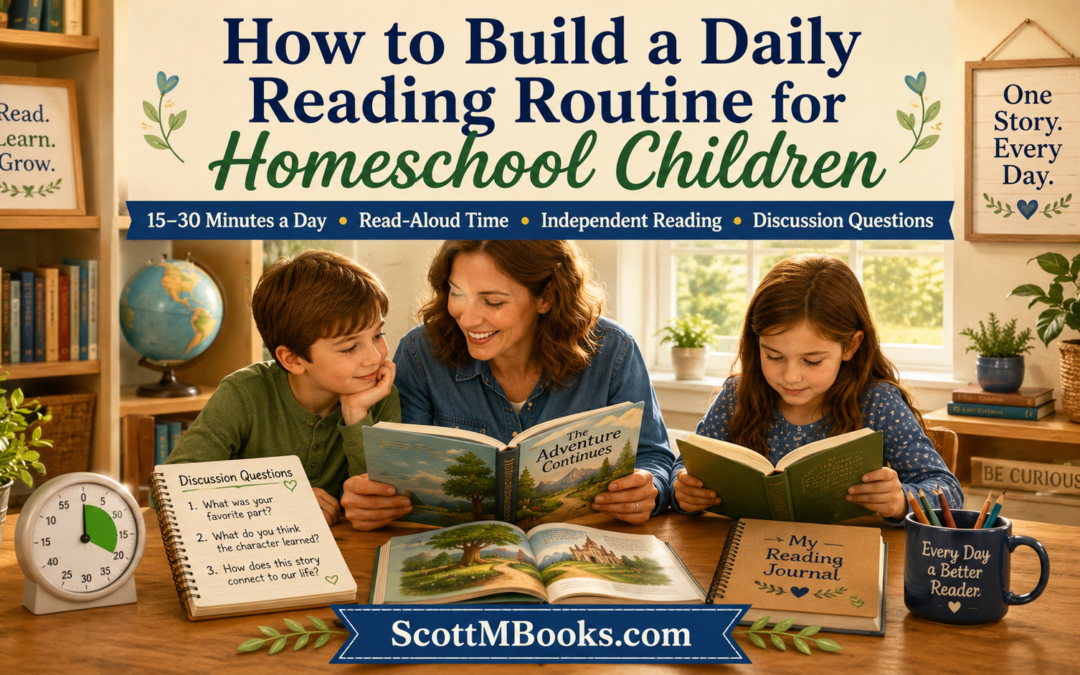
Building a daily reading routine is one of the most valuable habits a homeschool family can create. Reading does not need to take hours each day to make a difference. In fact, setting aside just 15–30 minutes daily can help children grow in vocabulary, comprehension, imagination, confidence, and character. A consistent reading routine gives children structure while also creating a peaceful time for learning, connection, and reflection.
For homeschool families, reading can become the heart of the day. It can be used to introduce new ideas, strengthen language skills, teach life lessons, and encourage meaningful conversations. Whether a child is just beginning to recognize words or already reading independently, a simple daily routine can help make books a natural and enjoyable part of home education.
Why a Daily Reading Routine Matters
Children benefit from consistency. When reading happens at the same time each day, it becomes a habit instead of something extra to squeeze in. A short daily reading time can help children improve focus, build listening skills, expand vocabulary, and develop a stronger love for books.
Reading also supports character development. Stories give children examples of kindness, responsibility, courage, patience, friendship, and compassion. When children read about characters making choices, facing challenges, helping others, or learning from mistakes, they begin to think about their own actions and feelings. This makes reading one of the most useful tools in homeschooling because it teaches both academic and personal growth.
Start with 15–30 Minutes a Day
A reading routine does not need to be complicated. Start with a short, manageable amount of time. For younger children, 15 minutes may be enough. Older children may be able to focus for 20–30 minutes. The goal is not to rush through a book, but to create a peaceful and predictable reading habit.
A simple routine might look like this:
5–10 minutes: Read aloud together
5–10 minutes: Independent reading or looking through the book
5–10 minutes: Short discussion questions or a simple activity
This structure keeps reading balanced. Children get to hear fluent reading, practice reading on their own, and talk about what they learned.
Begin with Read-Aloud Time
Read-aloud time is one of the best parts of a homeschool reading routine. Even children who can read independently still benefit from hearing stories read aloud. When parents read with expression, children hear the rhythm of language, learn new words, and better understand the emotions in a story.
Choose books that are age-appropriate, positive, and meaningful. Books from ScottMBooks.com, such as Turtle Points, the Thomas Loves Series, the Lily Series, and the Sally Series, work well for read-aloud time because they include gentle stories, relatable characters, and character-building lessons.
During read-aloud time, encourage children to listen carefully. You can pause briefly to ask, “What do you think will happen next?” or “How do you think the character feels?” These small questions keep children engaged without interrupting the flow of the story too much.
Add Independent Reading
After read-aloud time, give children a few minutes for independent reading. This can look different depending on the child’s age and reading ability. Younger children may look at the pictures and retell the story in their own words. Beginning readers may read a few sentences or pages aloud. Older children may read a chapter quietly on their own.
Independent reading helps children build confidence. It gives them a chance to explore books at their own pace. If a child struggles with reading, keep this time encouraging and low-pressure. The goal is progress, not perfection.
Parents can also allow children to choose from a small selection of books. Choice helps children feel ownership over reading. When children are interested in the book, they are more likely to stay engaged.
Use Short Discussion Questions
A daily reading routine becomes even more meaningful when children talk about what they read. Discussion does not need to feel like a test. It can be a simple conversation at the table, on the couch, or during snack time.
Here are some easy questions parents can ask after reading:
Who was the story about?
Where did the story take place?
What happened first, next, and last?
What problem did the character face?
How did the character solve the problem?
What lesson did the story teach?
How did the character show kindness, courage, patience, or responsibility?
What would you have done in the same situation?
These questions help children practice comprehension, sequencing, critical thinking, and emotional understanding. They also help parents see whether their child understood the story.
Keep the Routine Simple
One reason reading routines fail is that they become too complicated. Parents may feel they need a full lesson plan every day. While worksheets and activities can be helpful, the most important part is consistency.
A simple daily routine is enough:
Read together.
Let the child read or look through the book.
Ask a few questions.
Connect the story to real life.
Some days you may add a writing prompt, drawing activity, vocabulary word, or comprehension worksheet. Other days, a short conversation may be enough. The routine should support your homeschool day, not overwhelm it.
Choose the Best Time of Day
Every family has a different rhythm. Some children read best in the morning when they are fresh. Others enjoy reading after lunch, during quiet time, or before bed. The best time is the time you can keep consistently.
Here are a few good options:
Morning reading: Helps start the homeschool day calmly
After-lunch reading: Works well as a transition into quiet learning
Afternoon reading: Gives children a peaceful break
Bedtime reading: Builds family connection and ends the day with a story
Try one time for a week and see how it works. If it feels rushed or stressful, choose another time.
Create a Reading Space
A special reading space can make daily reading feel inviting. It does not have to be fancy. A small basket of books, a comfortable chair, a blanket, and good lighting are enough. Children enjoy routines more when the space feels calm and welcoming.
You might create a homeschool reading corner with:
A small bookshelf or book basket
A cozy chair or floor pillow
A reading journal
Colored pencils
Bookmarks
A kindness or character chart
A few favorite books within reach
When children know where reading happens, it becomes part of the daily homeschool rhythm.
Add a Reading Journal
A reading journal is a simple way to track progress and encourage reflection. Children can write or draw about what they read each day. Younger children can draw their favorite part of the story. Older children can write a sentence, summary, or lesson learned.
A reading journal entry might include:
Title of the book
Favorite character
Favorite part
New word learned
Lesson from the story
One question about the book
A drawing of the scene
This helps children remember what they read and gives parents a record of growth over time.
Connect Reading to Character
Books are a wonderful way to teach values in a natural way. After reading, ask your child how the story connects to daily life. For example, if a character helped someone, ask, “How can we help someone today?” If a character showed courage, ask, “When do we need courage?” If a character cared for an animal, ask, “How do we show responsibility for living things?”
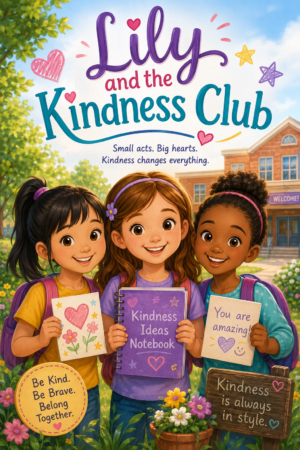
Stories such as Turtle Points, the Thomas Loves Series, the Lily Series, and the Sally Series give homeschool families many opportunities to talk about kindness, courage, patience, responsibility, friendship, and compassion. These lessons help children understand that reading is not only about words on a page. It is also about becoming thoughtful and caring people.
Sample 15-Minute Reading Routine
If your homeschool day is busy, start with this simple 15-minute plan:
Minutes 1–7: Parent reads aloud
Minutes 8–11: Child reads, looks at pictures, or retells the story
Minutes 12–15: Ask two or three discussion questions
This short routine is easy to maintain and still valuable. It builds consistency and keeps reading from feeling overwhelming.
Sample 30-Minute Reading Routine
For families who want a fuller lesson, try this 30-minute plan:
Minutes 1–10: Read aloud together
Minutes 11–15: Child reads independently or retells the story
Minutes 16–20: Discuss the characters, setting, problem, and lesson
Minutes 21–25: Choose one vocabulary word or writing prompt
Minutes 26–30: Draw a favorite scene or complete a short reflection
This routine gives parents a complete mini-lesson using one book or chapter.
Make It Enjoyable
The goal of a daily reading routine is not just to complete schoolwork. The goal is to help children love reading. Keep the mood positive. Celebrate small progress. Let children ask questions. Allow them to laugh, wonder, imagine, and connect with the story.
If a child is tired, keep it short. If a child is excited about the story, read a little longer. If a child wants to draw instead of write, that can still be a meaningful response. Flexibility helps reading stay enjoyable.
Final Thoughts
A daily reading routine can become one of the most meaningful parts of homeschooling. By setting aside just 15–30 minutes each day, parents can help children build reading skills, strengthen comprehension, grow vocabulary, practice independent reading, and reflect on important life lessons.
Read-aloud time builds connection. Independent reading builds confidence. Discussion questions build understanding. Together, these simple habits help children grow as readers and as people.
At ScottMBooks.com, families can find children’s books and activities designed to support reading, character-building, and homeschool learning. With a simple daily routine, one story each day can help children develop stronger minds, kinder hearts, and a lifelong love of books.
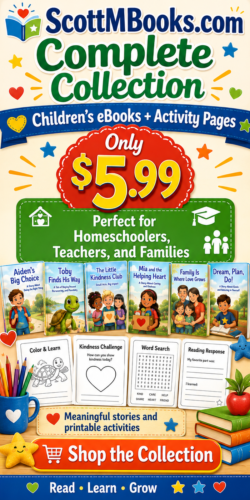
Visit ScottMBooks.com to explore children’s books, free reading resources, activity pages, and homeschool-friendly materials for young readers.