Read-aloud time is one of the simplest and most powerful habits a homeschool family can build into the day. Whether it lasts ten minutes after breakfast, twenty minutes before lunch, or a quiet half hour before bedtime, reading aloud gives children more than exposure to books. It helps them listen, think, imagine, connect, and grow.
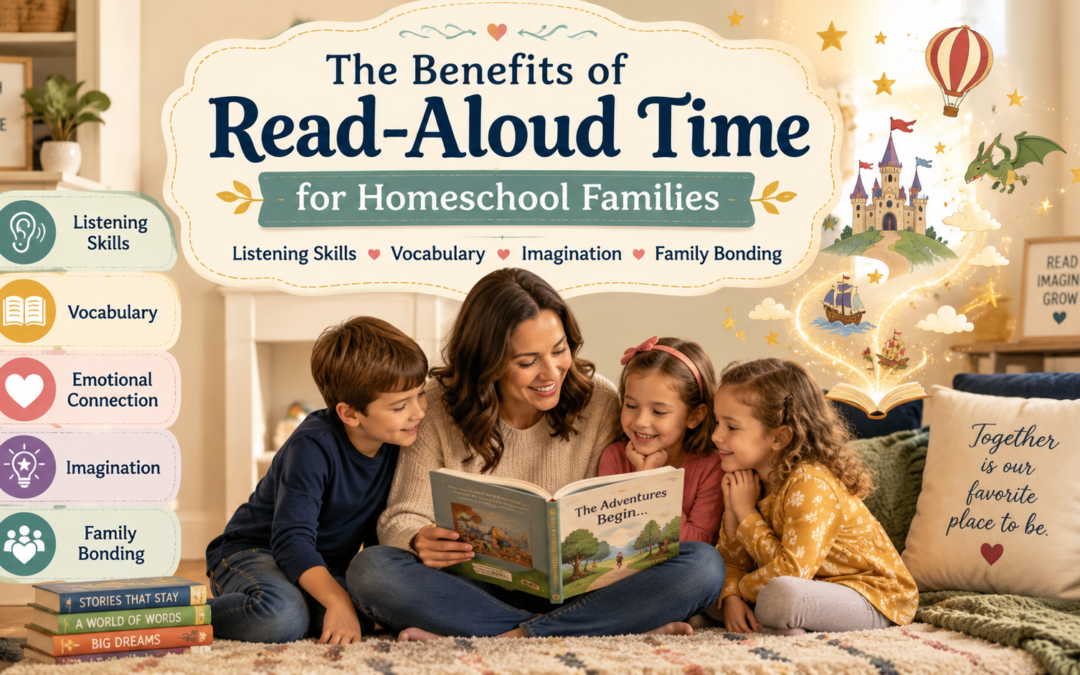
One of the first benefits of read-aloud time is the development of listening skills. When children listen to a parent read, they learn to follow a story from beginning to end. They hear how sentences flow, how characters speak, and how events connect. This strengthens attention span and helps children practice focusing without needing a screen, worksheet, or constant activity. Over time, children begin to listen for details, predict what might happen next, and remember important parts of the story.
Reading aloud also builds a child’s vocabulary. Children often hear words in books that they may not hear in everyday conversation. A story might introduce words about emotions, nature, friendship, courage, responsibility, or problem-solving. When parents pause to explain a new word, ask what it might mean, or connect it to something the child already knows, vocabulary grows naturally. Children begin to understand not only what words mean, but how they are used in real situations.
Another important benefit is the emotional connection created between parent and child. Homeschooling can be busy, with lessons, chores, errands, and activities filling the day. Read-aloud time creates a calm moment where everyone slows down. A parent’s voice becomes part of the learning experience. Children feel safe, loved, and included. Stories can also open the door to conversations about feelings, choices, kindness, mistakes, forgiveness, and courage.
Read-aloud time also strengthens a child’s imagination. Unlike television or video, a book asks children to picture the story in their own minds. They imagine the characters, settings, sounds, colors, and emotions. This kind of thinking helps children become more creative writers, stronger readers, and deeper thinkers. A simple story about a child helping an animal, making a new friend, or learning responsibility can inspire children to imagine what they would do in the same situation.
For homeschool families, reading aloud can also become a meaningful form of family bonding. Siblings of different ages can gather around the same story. Younger children enjoy the pictures and rhythm of the words, while older children can discuss the lesson, theme, or character choices. A shared book becomes a shared memory. Families can laugh together, wonder together, and talk together long after the chapter ends.
Parents can make read-aloud time even more meaningful by adding a few short discussion questions after reading:
What was your favorite part of the story?
How did the character feel?
What lesson did the story teach?
What would you have done in that situation?
How can we practice that same kindness or courage today?
Read-aloud time does not need to be complicated. It does not require a perfect schedule or a long lesson plan. Even 15–30 minutes a day can make a lasting difference. When homeschool families make reading aloud part of their routine, they give children the gift of language, imagination, emotional understanding, and closeness.
In the end, read-aloud time is more than reading words from a page. It is a daily invitation to listen, learn, feel, dream, and grow together as a family.