Using Stories to Teach Courage and Confidence
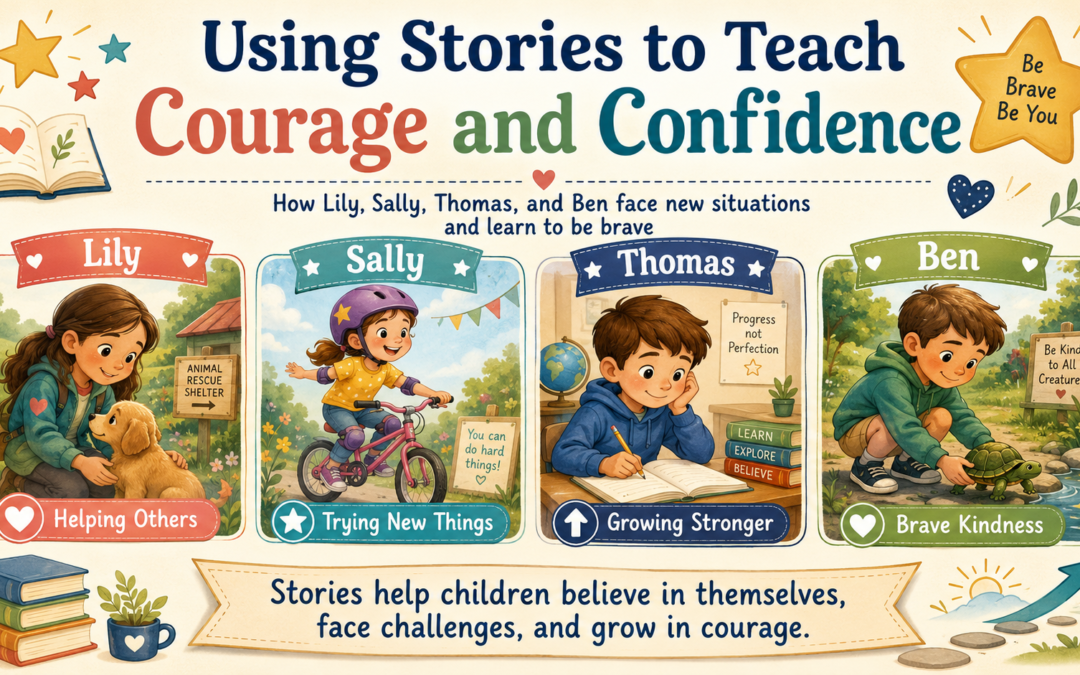
Stories are one of the best ways to teach children about courage and confidence. When children read about characters who feel nervous, uncertain, or unsure, they begin to understand that bravery does not mean never being afraid. Bravery means facing something new, trying again, helping others, and growing stronger through experience. Through characters like Lily, Sally, Thomas, and Ben, children can see that courage often begins with small steps.
Courage Begins with New Situations
Children face new situations all the time. A new place, a new responsibility, a new friendship, or a new challenge can feel big to a young reader. Stories help children see that these feelings are normal. When a character feels nervous at first but keeps going, children learn that fear does not have to stop them.
Lily, Sally, Thomas, and Ben each show this in different ways. Their stories remind children that courage is not always loud or dramatic. Sometimes it looks like trying something for the first time, speaking kindly to someone new, helping when something feels uncertain, or believing they can do more than they first thought.
Lily: Courage Through Responsibility and Care
Lily often shows courage by stepping into unfamiliar situations with a willing heart. Whether she is helping at a rescue center, learning new responsibilities, or facing unexpected challenges, Lily grows by being willing to learn. She may not know exactly what to do at first, but she listens, tries, and keeps going.
This teaches children that confidence is often built through action. Lily’s bravery is not about being fearless. It is about showing up, paying attention, and doing her best even when something feels new. Children can learn that courage often grows when they choose to help, care, and stay calm.
Sally: Courage Through Trying New Things
Sally is a wonderful example of a child learning courage through everyday experiences. She often finds herself in situations that require her to be patient, responsible, and brave. Whether she is making new friends, exploring a new place, caring for a puppy, or trying something unfamiliar, Sally learns that courage is built one choice at a time.
Her stories show children that confidence grows when they keep trying. Sally may begin a situation with questions or uncertainty, but she learns that she is capable. That message is powerful for young readers. It helps them understand that they do not need to have everything figured out before taking the next step.
Thomas: Confidence in Everyday Growth
Thomas shows children that courage can be found in ordinary childhood moments. His adventures often involve learning, growing, and facing feelings that many children understand. Whether he is exploring, solving a problem, learning how to get along with others, or dealing with disappointment, Thomas represents the child who is still discovering his strengths.
This is important because many children build confidence through small successes. Thomas helps young readers see that trying, learning, and improving all matter. His journey reminds children that confidence does not happen all at once. It grows when they practice, make mistakes, and realize they can handle more than they thought.
Ben: Brave in Kindness and Purpose
Ben’s courage stands out because it is deeply connected to kindness and purpose. He sees a need, cares deeply, and takes action. His bravery is not just about doing something hard; it is about doing something meaningful. Ben teaches children that courage can come from compassion. When we care about others, we often find the strength to do things we might not have done otherwise.
His story helps children understand that being brave can mean helping, noticing, and acting with a kind heart. Ben’s example shows that confidence grows when children feel that what they do matters. Even small actions can build a strong sense of purpose.
Stories Help Children See Themselves
One reason stories are so effective in teaching courage is that children often see themselves in the characters. A child who feels shy may connect with a character who has to make a new friend. A child who feels unsure may connect with a character who is trying something new. A child who worries about making mistakes may find comfort in a story where a character learns and keeps going.
This connection helps children understand that bravery is possible for them too. They begin to think:
- I felt like that before.
- I might be able to do that too.
- It is okay to be nervous and still try.
That is where confidence begins.
Talking About Courage After Reading
Parents and homeschool families can make these lessons even stronger by discussing the story after reading. A few simple questions can help children think about courage in a personal way:
- What was the character afraid of or unsure about?
- What helped the character be brave?
- Did the character grow by the end of the story?
- What did the character learn about themselves?
- Have you ever felt the same way?
- What is something brave you have done?
These questions help children move from simply hearing the story to applying the lesson in their own lives.
Courage and Confidence Grow Together
Courage and confidence are closely connected. Courage is often the first step. A child tries something new, speaks up, helps someone, or keeps going through a challenge. Then confidence begins to grow because the child sees that they can do hard things.
That is why stories like those of Lily, Sally, Thomas, and Ben are so meaningful. They give children examples of bravery that feel real and reachable. They show that courage can be gentle, steady, and learned. They remind children that confidence is not something a person is simply born with. It is something built through experience, effort, and heart.
Final Thought
Using stories to teach courage and confidence is a powerful way to help children grow emotionally and socially. Through Lily, Sally, Thomas, and Ben, children see that bravery can appear in many forms: trying something new, helping others, facing uncertainty, and believing in themselves.
When children read stories like these, they do more than follow a plot. They learn how to face their own challenges with a little more hope and a little more strength. And over time, those story lessons can help shape children into more confident, caring, and courageous people.