How Books Help Children Understand Feelings and Choices
Books do more than teach children how to read. They also help children understand themselves, other people, and the choices they make each day. For homeschool families, stories can be a gentle and meaningful way to teach social-emotional learning at home. Through characters, problems, feelings, and lessons, children can see examples of kindness, courage, patience, responsibility, friendship, and forgiveness in a way that feels natural and memorable.
When children read or listen to a story, they are invited into someone else’s experience. They get to see what a character feels, why the character acts a certain way, and what happens as a result of those choices. This helps children begin to understand that feelings and actions are connected. A character may feel nervous and choose to ask for help. Another character may feel angry and learn to calm down before speaking. A child may see a character make a mistake, apologize, and try again. These moments can open important conversations between parents and children.
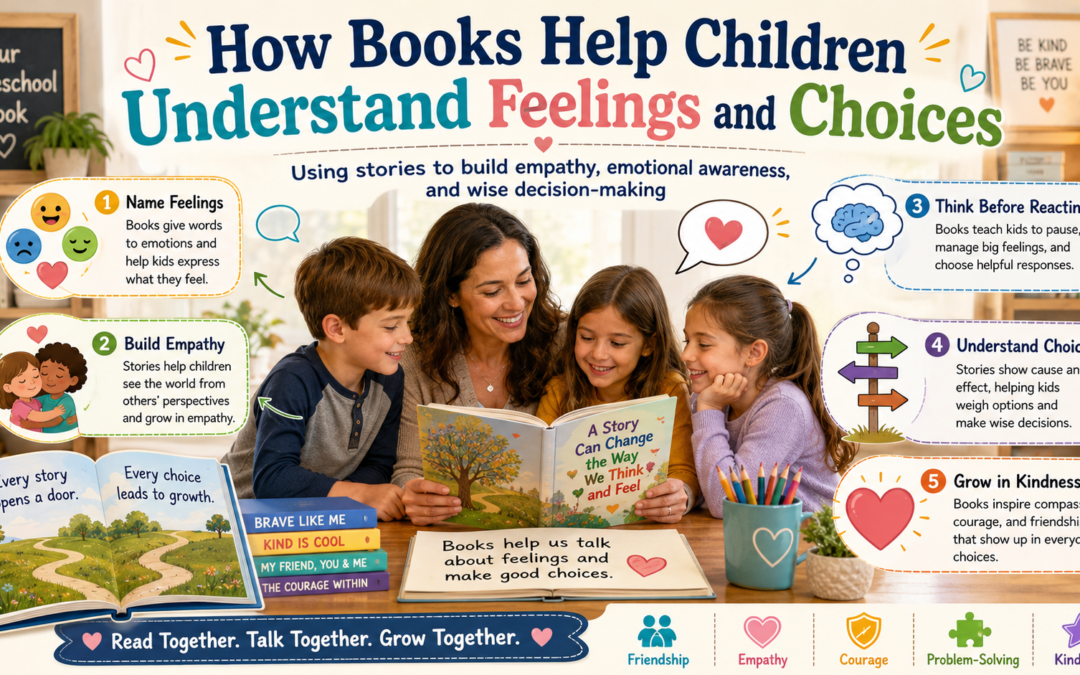
Books Help Children Name Their Feelings
One of the first steps in emotional growth is learning how to name feelings. Young children may know they feel “bad” or “upset,” but they may not yet have the words to explain whether they feel disappointed, embarrassed, worried, jealous, lonely, or afraid. Stories give children examples of these emotions in action.
When a character feels sad because a friend moves away, is nervous about trying something new, or is proud after completing a hard task, children begin to connect words with emotions. Parents can pause during reading and ask simple questions such as:
How do you think the character feels right now?
What made the character feel that way?
Have you ever felt like that before?
These questions help children build emotional vocabulary. The more children can name their feelings, the better they can talk about them and manage them.
Books Teach Children That Feelings Are Normal
Children sometimes believe that uncomfortable feelings are wrong or something to hide. Books help them see that everyone has big feelings sometimes. Characters may feel scared, disappointed, frustrated, shy, or unsure. When children see those feelings in a story, they learn that emotions are a normal part of life.
This is especially helpful in homeschool settings because parents can talk about emotions in a calm, safe environment. A story gives the child some distance from the feeling. Instead of saying, “Why did you get angry?” a parent can ask, “Why do you think the character got angry?” That small difference can make children more willing to talk and reflect.
Stories remind children that feelings do not make someone bad. What matters is what a person does with those feelings.
Books Show the Connection Between Choices and Consequences
Every good story includes choices. A character decides whether to be honest, whether to help, whether to try again, whether to forgive, or whether to walk away from trouble. These choices help children understand cause and effect in a personal way.
For example, if a character chooses kindness, the story may show how that kindness helps someone feel included. If a character makes a selfish choice, the story may show how that choice hurts a friendship. Children can see that choices matter because choices affect other people.
After reading, parents can ask:
What choice did the character make?
Was it a good choice? Why or why not?
What happened because of that choice?
What could the character have done differently?
These questions help children think through situations before they face similar moments in real life.
Books Build Empathy
Empathy means being able to understand and care about how someone else feels. Stories are one of the best ways to build empathy because they allow children to step into another person’s world.
When children read about a character who feels left out, nervous, excited, embarrassed, or hopeful, they practice seeing life from someone else’s point of view. They begin to understand that other people have thoughts and feelings too. This can help children become more patient, compassionate, and thoughtful.
Books can also help children understand differences. A character may come from a different family, have a different personality, or respond to problems in a different way. Through stories, children learn that people may not always feel or act the same way they do, and that is okay.
Books Give Children Safe Practice for Real-Life Situations
Children often face situations that require emotional decision-making. They may need to share, apologize, make a new friend, try something difficult, handle disappointment, or show courage. Books allow them to practice thinking through those situations before they happen.
A story about a nervous child trying something new can help a reader feel braver. A story about a character apologizing can help a child understand how to make things right. A story about helping someone can inspire a child to look for ways to be kind at home, in a co-op, at church, in the neighborhood, or with siblings.
This is one reason stories are so powerful for homeschool families. Parents can connect the lesson from the book to everyday life.
You might say:
Sally felt nervous about trying something new. Have you ever felt that way?
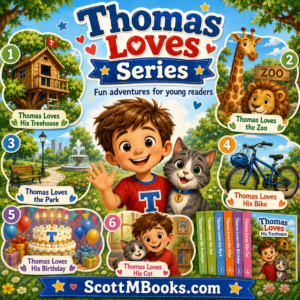
Thomas learned to keep trying. What is something you are learning right now?
Lily showed kindness by helping. How could we show kindness today?
Ben cared about doing the right thing. What is one good choice we can make this week?
These conversations make reading personal and practical.
Books Help Children Reflect Before Reacting
Children are still learning how to pause, think, and make wise choices. Stories can help them practice this skill. When parents stop during a story and ask what a character should do next, children learn to think before reacting.
This builds problem-solving skills. Children learn that there is often more than one way to respond to a situation. They begin to ask themselves:
Should the character ask for help?
Should the character tell the truth?
Should the character try again?
Should the character calm down first?
Over time, these story-based discussions can help children apply the same thinking to their own lives.
Books Strengthen Parent-Child Conversations
Social-emotional learning does not always need a formal lesson. Sometimes the best lessons happen through simple conversations after a story. Reading together gives parents and children a shared experience. Instead of lecturing, parents can guide children with questions, examples, and gentle discussion.
A short read-aloud time can lead to meaningful conversations about feelings, choices, mistakes, courage, kindness, and responsibility. These conversations help children feel heard and understood. They also help parents learn more about how their children think and feel.
For homeschool families, books can become part of both academic and character education. A single story can support reading comprehension, vocabulary, writing, emotional growth, and family connection.
Simple Activities to Use After Reading
Parents can extend the lesson with easy activities such as:
Feelings Chart: Ask your child to choose a feeling word for the main character.
Choice Map: Write the character’s choice and what happened afterward.
Draw the Scene: Have your child draw a moment when the character had a strong feeling.
What Would You Do?: Ask your child how they would respond in the same situation.
Kindness Challenge: Choose one kind action inspired by the story and practice it that day.
Character Reflection: Have your child write or draw what the character learned.
These activities help children remember the story and connect the lesson to real life.
Final Thought
Books help children understand feelings and choices because stories make emotions visible. Through characters, children see what it looks like to feel nervous, brave, disappointed, hopeful, sorry, proud, or kind. They also see that choices have meaning and that people can learn, grow, and try again.
For homeschool families, reading is not only about building academic skills. It is also a way to shape the heart. When children read stories about kindness, courage, responsibility, friendship, and compassion, they begin to understand how those lessons apply to their own lives.
A good book can help a child say, “I have felt that way too.”
A good story can help a child ask, “What should I do?”
And a meaningful character can help a child believe, “I can make a good choice.”
That is the power of using books to teach feelings and choices.