Reading a story with a child is more than finishing the last page. It is an opportunity to talk, listen, imagine, and help children understand what they have read. A good story can open the door to conversations about kindness, choices, feelings, courage, friendship, responsibility, and problem-solving.
Parents do not need complicated lesson plans to make story time meaningful. A few simple questions after reading can help children think more deeply, remember important details, and connect the story to their own lives.
Why Questions Matter After Reading
When parents ask questions after a story, children learn to slow down and reflect. Instead of simply hearing the words, they begin to think about the characters, the setting, the problem, and the lesson. This helps build reading comprehension, vocabulary, emotional understanding, and confidence.
Questions also show children that their thoughts matter. There does not always have to be one perfect answer. Sometimes the best conversations happen when a child says, “I think…” or “I would have done something different.”
Start with Simple Story Questions
After reading, begin with basic questions that help your child remember the story.
Here are a few examples:
Who was the main character?
Where did the story take place?
What happened at the beginning of the story?
What problem did the character face?
How did the story end?
These questions help children organize the story in their minds. They also make it easier for younger readers to retell what happened in their own words.
Ask About Feelings
Stories are a wonderful way to help children understand emotions. Characters often feel nervous, happy, sad, brave, excited, lonely, or proud. Talking about those feelings helps children recognize emotions in themselves and others.
Parents can ask:
How do you think the character felt?
What made the character feel that way?
Have you ever felt like that before?
What could someone do to help a person who feels that way?
These questions are especially helpful when reading stories about friendship, school, family, pets, or new experiences. Children begin to see that feelings are normal and that choices can affect how others feel.
Talk About Choices
Many stories include moments where a character must make a decision. This gives parents a natural way to talk about good choices, mistakes, and learning.
Try asking:
What choice did the character make?
Was it a kind choice, a brave choice, or a responsible choice?
What else could the character have done?
What would you have done in that situation?
These questions encourage children to think beyond the story. They help children practice decision-making in a safe and thoughtful way.
Connect the Story to Real Life
One of the best parts of reading is helping children see how stories connect to everyday life. A story about kindness can lead to a conversation about helping a classmate. A story about courage can lead to a conversation about trying something new. A story about responsibility can lead to a conversation about caring for a pet, helping at home, or keeping a promise.
Parents can ask:
Does this story remind you of anything in your life?
Have you ever helped someone like the character did?
What lesson can we learn from this story?
How could we use this lesson at home, at school, or with friends?
These questions help children understand that books are not just for entertainment. They can also teach values and life lessons.
Encourage Imagination
Not every question has to be serious. Stories should also be fun. Creative questions help children use their imagination and enjoy the reading experience.
Ask questions like:
What do you think happened after the story ended?
If you could add a new character, who would it be?
What would you change about the story?
If you were in the story, what would you do?
What should the next book be about?
These questions can lead to drawing, writing, pretend play, or even creating a new story together.
Ask About Favorite Parts
Children love sharing opinions. Asking about favorite parts helps them speak with confidence and explain their thinking.
Parents can ask:
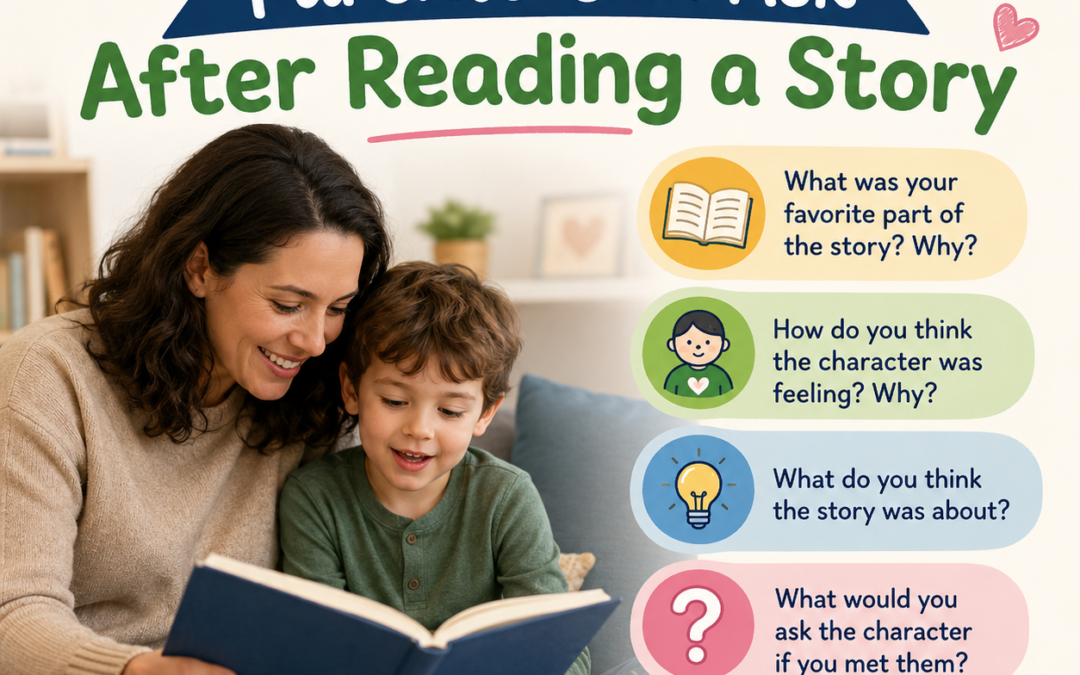
What was your favorite part of the story?
Which character did you like best? Why?
Was there a part that surprised you?
Was there a part that made you laugh, feel sad, or feel excited?
These questions help children learn how to express preferences and support their answers with details from the story.
Keep It Short and Natural
Parents do not need to ask every question after every book. In fact, asking too many questions can make reading feel like a test. Choose two or three questions and let the conversation happen naturally.
A simple routine might look like this:
Read the story together.
Ask one question about what happened.
Ask one question about how the character felt.
Ask one question about what the child learned.
That is enough to turn a simple story into a meaningful learning moment.
A Helpful Reading Habit for Families
The best reading conversations happen when children feel comfortable sharing their thoughts. Some answers may be short. Some may be silly. Some may lead to deeper conversations. All of these responses are part of learning.
When parents ask thoughtful questions, children begin to understand stories more clearly. They also learn about kindness, courage, responsibility, friendship, and making good choices.
The next time you finish a story, pause before putting the book away. Ask one simple question and listen carefully to the answer. That small moment can help a child grow as a reader, a thinker, and a person.
Sample Questions to Keep Nearby
Here are a few easy questions parents can use after almost any story:
What was the story mostly about?
Who was your favorite character?
What problem happened in the story?
How did the character solve the problem?
How did the character feel?
What lesson did the story teach?
What would you have done differently?
How can we use this lesson in real life?
What was your favorite part?
Would you recommend this story to someone else? Why?
Reading does not end when the story ends. With the right questions, the story can continue in a child’s thoughts, conversations, choices, and imagina