Free ebooks can be a wonderful part of a homeschool routine. They are easy to access, flexible to use, and helpful for building reading, writing, discussion, and character lessons into the day. Whether you are teaching one child or several children at different grade levels, ebooks can help create meaningful learning moments without requiring much extra planning.
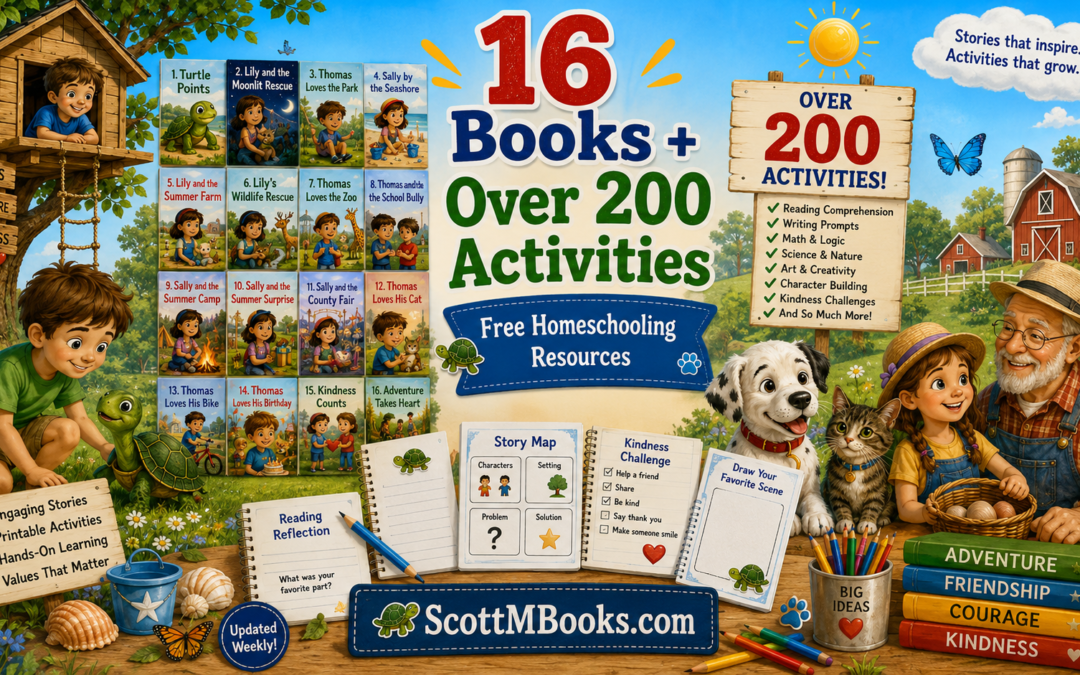
At ScottMBooks.com, free ebooks are designed to support families, homeschool parents, teachers, and young readers. The stories are simple enough to enjoy together, but meaningful enough to open conversations about kindness, courage, responsibility, friendship, and making good choices.
Start with a Simple Reading Time
One of the easiest ways to use free ebooks is to build them into your daily reading time. This does not have to be complicated. Set aside 15 to 30 minutes each day for reading. You can read aloud to younger children, have older children read independently, or take turns reading pages together.
A simple reading routine might look like this:
Read one chapter or short story section.
Talk about what happened.
Ask one or two discussion questions.
Let your child draw, write, or tell you their favorite part.
This short routine can help children improve comprehension, listening skills, vocabulary, and confidence.
Use One Ebook with Multiple Ages
Free ebooks work well for homeschool families with children at different learning levels. Everyone can listen to the same story, but each child can respond differently.
Younger children can:
Draw a picture of a favorite scene.
Name the main character.
Tell what happened first, next, and last.
Talk about how the character felt.
Older children can:
Write a short summary.
Describe the lesson of the story.
Compare two characters.
Write about what they would have done differently.
Create a new ending or next chapter.
This allows the whole family to share one story while still giving each child age-appropriate work.
Turn a Story into a Mini Lesson
A free ebook can become more than reading practice. It can become a complete homeschool lesson. Many children’s stories naturally include important themes such as kindness, courage, honesty, patience, responsibility, and friendship.
After reading, choose one main lesson from the story. For example, if a character helps someone, talk about kindness. If a character tries something new, talk about courage. If a character cares for a pet or completes a chore, talk about responsibility.
You can ask questions such as:
What problem did the character face?
How did the character solve the problem?
Was the character kind, brave, or responsible?
What can we learn from this story?
How can we use this lesson in our own home?
These questions help children connect reading to real life.
Add Writing Activities
Free ebooks can also support writing practice. After reading a story, children can respond in writing. Keep the activity simple and match it to your child’s age and ability.
Younger children might complete a sentence such as:
My favorite part was __________.
The character felt __________.
I can be kind by __________.
Older children can write a paragraph about the story. They might explain the main lesson, describe the problem and solution, or write a book review.
Writing after reading helps children organize their thoughts, remember details, and practice expressing ideas clearly.
Include Drawing and Creative Projects
Children often remember stories better when they can respond creatively. After reading a free ebook, invite your child to draw a picture, make a poster, design a new book cover, or create a character card.
Creative activities can include:
Draw your favorite scene.
Make a kindness poster based on the story.
Create a new character for the book.
Design a bookmark with the story’s lesson.
Act out a scene with siblings.
Build a simple craft related to the setting.
These activities make reading more hands-on and enjoyable, especially for younger learners.
Use Ebooks for Character Lessons
One of the best ways to use stories in homeschooling is to teach character. Children often understand values more clearly when they see them in action through a character.
A story about helping others can lead to a kindness challenge. A story about trying something new can lead to a conversation about courage. A story about caring for an animal can lead to a lesson in responsibility.
After reading, ask your child to choose one small action they can do that connects to the story. For example:
Help a sibling.
Thank someone.
Clean up without being asked.
Invite someone to play.
Care for a pet.
Share a kind word.
This turns the story into a real-life learning opportunity.
Create a Weekly Homeschool Plan
A free ebook can also become the center of a simple weeklong homeschool unit. You do not need a complicated curriculum plan. One story can provide reading, writing, art, discussion, and life lessons.
Here is a simple five-day plan:
Day 1: Read
Read the ebook or the first part of the story. Talk about the characters and setting.
Day 2: Discuss
Ask questions about the problem, feelings, and choices in the story.
Day 3: Write
Have your child write a sentence, paragraph, summary, or book review.
Day 4: Create
Draw a scene, make a poster, design a cover, or act out part of the story.
Day 5: Reflect
Talk about the lesson of the story and how your child can use it in real life.
This structure gives homeschool families a simple way to stretch one ebook into several meaningful activities.
Build Independent Reading Habits
Free ebooks are also helpful for independent reading. Older children can read quietly while a parent works with a younger child. Afterward, they can complete a short response activity.
You might ask them to write:
Three things that happened in the story.
One question they still have.
Their favorite character and why.
The lesson they learned.
Whether they would recommend the book.
This helps children become more independent while still giving parents a way to check understanding.
Keep a Reading Log
A reading log is a simple way to track progress. Children can write the title of each ebook they read, the date they finished it, and one sentence about the story.
A reading log can include:
Book title
Date read
Favorite character
Favorite part
Lesson learned
Star rating
Over time, children can see how many books they have completed. This builds pride and encourages consistent reading.
Make Reading Part of Family Life
Free ebooks are not only useful during formal homeschool time. They can also become part of bedtime reading, quiet time, travel days, rainy afternoons, or family read-aloud time.
Because ebooks are easy to access, families can use them whenever they need a simple learning activity. A story can fill a short break in the day while still supporting reading growth and character development.
Final Thoughts
Free ebooks can be a powerful tool in your homeschool day. They help children practice reading, build comprehension, develop writing skills, and talk about important life lessons. Best of all, they make learning simple and accessible for families.
You do not need a long lesson plan to make reading meaningful. Choose a story, read it together, ask a few thoughtful questions, and invite your child to respond through writing, drawing, or conversation.
A free ebook can become more than a story. It can become a lesson in kindness, courage, responsibility, friendship, and growing as a reader.
At ScottMBooks.com, families can find free ebooks and reading resources designed to support homeschool learning, classroom reading, and character-building conversations. These stories can help children enjoy reading while learning lessons they can carry into everyday life.