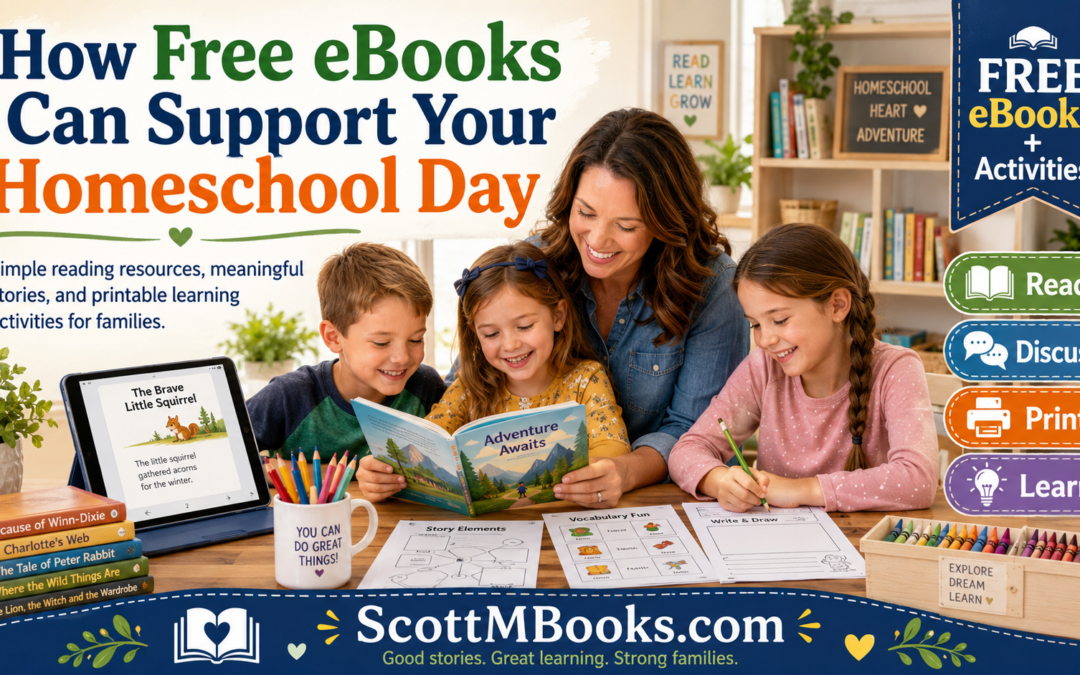
How Free eBooks Can Support Your Homeschool Day
Homeschooling does not have to be complicated or expensive to be meaningful. Sometimes, one good story can become the beginning of an entire day of learning. Free eBooks are a simple and helpful way for homeschool families to bring reading, discussion, writing, creativity, and character lessons into their daily routine.
Whether you are teaching one child or several, free eBooks can give your homeschool day structure without adding extra cost. They can be used for read-aloud time, independent reading, writing activities, vocabulary practice, book reviews, and important conversations about kindness, courage, responsibility, friendship, and making good choices.
Why Free eBooks Are Helpful for Homeschool Families
Free eBooks make reading more accessible. Families can download stories instantly and use them on a computer, tablet, or printed page. This gives parents a flexible way to add quality reading time to the homeschool day without needing to buy a new book every week.
For families working with a budget, free eBooks can be a valuable resource. They allow children to enjoy new stories while parents save money for other homeschool needs such as supplies, field trips, curriculum, or activities.
Free eBooks are also easy to fit into different schedules. A family can read one chapter in the morning, discuss the story after lunch, and complete a short activity in the afternoon. The same book can support several learning goals throughout the week.
Start the Day with Read-Aloud Time
One of the easiest ways to use free eBooks is during read-aloud time. Reading aloud helps children hear fluent reading, learn new words, and enjoy stories together as a family.
A read-aloud session does not need to be long. Even 15 to 20 minutes can make a difference. Parents can pause during the story and ask simple questions:
What do you think will happen next?
How do you think the character feels?
Was that a good choice?
What would you have done?
What lesson can we learn from this story?
These questions help children become active listeners and thoughtful readers.
Use eBooks for Independent Reading
Free eBooks can also support independent reading. Children can read quietly on their own, then talk or write about what they read. This helps build confidence and responsibility.
For younger readers, parents may choose shorter stories or read together. Older children can read independently and complete a response page afterward.
Independent reading teaches children to focus, follow a story, and think about meaning. It also gives parents a simple way to build daily reading habits at home.
Turn One Story into Several Lessons
A good eBook can become more than reading practice. It can become a full homeschool lesson.
After reading, children can complete activities such as:
Story maps
Vocabulary pages
Favorite scene drawings
Book reviews
Character reflection pages
Main idea and lesson pages
Writing prompts
Kindness challenges
Responsibility charts
Discussion questions
These activities help children understand the story more deeply. They also connect reading to writing, art, critical thinking, and real-life character development.
Build Vocabulary Through Stories
Stories naturally introduce children to new words. Instead of using random vocabulary lists, parents can choose words directly from the eBook.
A simple vocabulary activity might ask students to write the word, guess the meaning, look at how it was used in the story, and write their own sentence.
This helps children understand words in context. It also makes vocabulary practice feel connected to something they have already read and enjoyed.
Encourage Writing After Reading
Free eBooks can inspire many types of writing. After reading a story, children can write about their favorite part, describe a character, create a new ending, or write a letter to someone in the book.
Writing after reading helps children organize their thoughts. It also strengthens comprehension because students must think about what happened and explain it in their own words.
A simple prompt might be:
My favorite part of the story was ________ because ________.
Older students can write longer responses, such as:
The character changed during the story because ________.
This makes writing practice more meaningful and less intimidating.
Teach Character Through Stories
Many children’s stories teach lessons about kindness, courage, patience, responsibility, friendship, and helping others. These themes are especially useful in a homeschool setting because they connect academic learning with personal growth.
After reading, parents can ask:
How did the character show kindness?
What responsibility did the character have?
When did the character need courage?
What mistake did the character make?
What lesson did the character learn?
These conversations help children think beyond the plot. They begin to understand how stories can teach real-life values.
Add Creative Activities
Children often remember stories better when they respond creatively. After reading a free eBook, students can draw a favorite scene, design a new book cover, act out part of the story, or create a bookmark based on the lesson.
Creative activities are especially helpful for visual and hands-on learners. They also make reading feel enjoyable instead of just another assignment.
A favorite scene drawing, for example, encourages children to remember the setting, characters, and important details from the story.
Use Free eBooks with Multiple Ages
Free eBooks can work well for families teaching more than one child. Everyone can listen to the same story, but each child can complete an activity at their own level.
A younger child might draw a picture and write one sentence. An older child might write a paragraph, analyze a character, or explain the lesson of the story.
This approach saves time and helps families learn together while still meeting different learning needs.
Create a Simple Weekly Plan
Free eBooks can easily fit into a weekly homeschool routine. Here is one simple plan:
Monday: Read the story or first chapter
Tuesday: Discuss the characters and setting
Wednesday: Complete a vocabulary page
Thursday: Draw a favorite scene or write a response
Friday: Complete a book review or lesson reflection
This routine keeps reading simple, organized, and purposeful. It also gives children repeated opportunities to think about the story in different ways.
Free Resources Can Reduce Homeschool Costs
Homeschool expenses can add up quickly. Books, curriculum, subscriptions, and supplies can become costly. Free eBooks and printable activity pages can help families stretch their resources.
Instead of buying a separate workbook for every reading skill, parents can use one free story with several printable pages. This supports reading comprehension, writing, vocabulary, creativity, and discussion without adding extra cost.
Free resources can be especially helpful for families who want meaningful learning without a large budget.
Final Thoughts
Free eBooks can be a powerful part of the homeschool day. They give families affordable access to stories, reading practice, discussion topics, writing ideas, and character-building lessons.
A simple story can become a full learning experience when children read, talk, write, draw, reflect, and connect the lesson to real life.
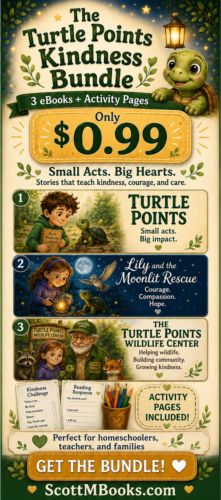
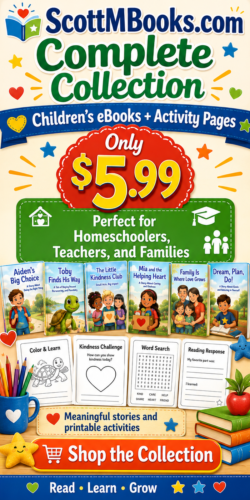
At ScottMBooks.com, families, homeschool parents, and teachers can find free children’s eBooks and printable activities designed to support young readers. These resources are created to make reading meaningful, encourage good choices, and help children grow in both learning and character.
Free stories. Helpful activities. Simple resources for a stronger homeschool day.