How the Sally Series Teaches Responsibility and Friendship
Children’s books can do more than entertain. A good story can help young readers understand important life lessons in a gentle, memorable way. Through characters, choices, challenges, and everyday moments, children begin to see what kindness, responsibility, friendship, patience, and courage can look like in real life.
The Sally series is a wonderful example of how simple children’s stories can teach meaningful values. Sally’s adventures often center around family, friends, pets, school, summer activities, and new experiences. These are familiar situations for children, which makes the lessons easier to understand and apply.
Through Sally’s choices and relationships, young readers can learn that responsibility and friendship are not just ideas. They are actions we practice every day.
Sally Learns Responsibility Through Everyday Choices
Responsibility is one of the most important lessons children can learn. It teaches them to follow through, care for others, make good choices, and understand that their actions matter.
In the Sally stories, responsibility often appears in simple, age-appropriate ways. Sally may need to take care of a pet, help her family, listen to adults, follow rules, or try her best even when something feels difficult.
These moments help children see that responsibility does not always mean doing something big. Sometimes responsibility looks like feeding a pet, cleaning up after yourself, being prepared for the day, helping a friend, or making a thoughtful choice when no one is watching.
Children can relate to Sally because her responsibilities feel realistic. She is learning, growing, and sometimes figuring things out as she goes. That makes her a helpful character for young readers who are learning responsibility in their own lives.
Caring for Pets Teaches Patience and Commitment
One of the strongest ways children learn responsibility is through caring for pets. Stories involving pets can help young readers understand that animals depend on people for food, safety, attention, exercise, and kindness.
When Sally cares for a pet, readers can see that love is more than excitement. Love also means commitment. A pet may be cute and fun, but caring for a pet also requires patience, routine, and gentle attention.
This gives parents and teachers a natural way to ask questions such as:
What did Sally do to care for her pet?
Why was that responsibility important?
What happens when we forget our responsibilities?
How can we show kindness to animals?
These conversations help children connect the story to real-life responsibility.
Friendship Begins with Kindness
Friendship is another important theme in the Sally series. Sally’s stories often show how friendship can begin with a kind invitation, a shared experience, or a thoughtful choice.
Children sometimes need help understanding how to make friends and be a good friend. Stories give them examples they can remember. When Sally includes someone, encourages a friend, listens, shares, or helps, young readers see friendship in action.
Friendship is not only about having fun together. It is also about caring, noticing, forgiving, and making others feel welcome.
The Sally series helps children understand that small acts of kindness can strengthen friendships.
Sally Shows Courage in New Situations
Friendship and responsibility often require courage. A child may need courage to talk to someone new, try a new activity, apologize, tell the truth, or help someone who feels nervous.
Sally’s adventures give children a chance to see courage in everyday situations. She may feel unsure at first, but she learns to take small steps forward. This is important for young readers because courage can feel less overwhelming when they see a character practice it slowly.
Children learn that bravery does not mean never feeling nervous. Bravery means trying, helping, and choosing what is right even when something feels new or difficult.
Family Support Helps Sally Grow
The Sally stories also show the importance of family support. Parents, step-parents, grandparents, and caring adults can help children feel safe as they learn responsibility and friendship.
When Sally receives encouragement from her family, readers see that children do not have to grow alone. Adults can guide them, remind them, teach them, and celebrate their progress.
This is especially helpful for homeschool families and classrooms because it shows that learning character is part of everyday life. Children learn from stories, but they also learn from the adults who help them think about those stories.
Sally’s Friendships Teach Empathy
Empathy means understanding or caring about how someone else feels. This is an important part of friendship.
In the Sally series, readers can consider how the characters feel in different situations. A friend may feel nervous, left out, excited, disappointed, or proud. Sally’s response can help children understand how their own words and actions affect others.
Teachers and parents can ask:
How did Sally’s friend feel?
How did Sally help?
What could Sally say to be kind?
Have you ever felt the same way?
What would you do if a friend needed help?
These questions help children build emotional understanding and stronger friendship skills.
Responsibility Means Learning From Mistakes
Children need to know that responsibility does not mean being perfect. Everyone makes mistakes. What matters is learning from them and trying again.
Sally’s stories can help children see that mistakes are part of growing. A character might forget something, feel nervous, make a choice that does not work out, or need help from an adult. These moments are valuable because they show children how to respond with honesty, effort, and courage.
When children see a character learn from a mistake, they may feel more confident doing the same in their own lives.
Friendship Means Including Others
One of the most meaningful lessons children can learn is how to include others. A simple invitation can make a big difference to a child who feels lonely, nervous, or new.
Sally’s stories can help readers understand that friendship often begins when someone decides to reach out. Including others at school, at camp, at the beach, at the fair, or during playtime can teach children compassion and awareness.
This is a powerful message for classrooms and homeschool groups. Children learn that being a good friend means looking around and noticing who might need a kind word or a place to belong.
Using the Sally Series in Homeschool Lessons
Homeschool parents can use the Sally series to support reading, writing, and character education. After reading a chapter or story, children can complete simple activities that connect to responsibility and friendship.
Helpful activities include:
A character reflection page
A responsibility chart
A friendship response page
A favorite scene drawing
A book review
A kindness challenge
A writing prompt about helping a friend
A discussion about choices and consequences
These activities help turn reading into a full learning experience. Children do not just read what happened. They think about why it mattered.
Using the Sally Series in the Classroom
Teachers can also use Sally stories for read-aloud time, small-group reading, writing centers, social-emotional learning, and character education.
The stories can support classroom discussions about:
Being a good friend
Taking responsibility
Helping others
Caring for animals
Trying new things
Listening to adults
Including classmates
Learning from mistakes
Because Sally’s experiences are relatable, students can easily connect them to their own lives.
Discussion Questions for Students
After reading a Sally story, parents and teachers can ask:
What responsibility did Sally have in the story?
How did Sally show friendship?
What choice did Sally make?
Was it a good choice? Why?
How did Sally help someone else?
What did Sally learn?
What can we learn from Sally’s example?
How can you show responsibility today?
How can you be a good friend this week?
These questions help children think deeply while keeping the conversation simple and age-appropriate.
Final Thoughts
The Sally series teaches responsibility and friendship through warm, relatable stories children can understand. Sally’s adventures show that growing up means learning how to care for others, make thoughtful choices, help friends, listen to adults, and keep trying.
These are lessons children can carry into their homes, classrooms, friendships, and daily routines.
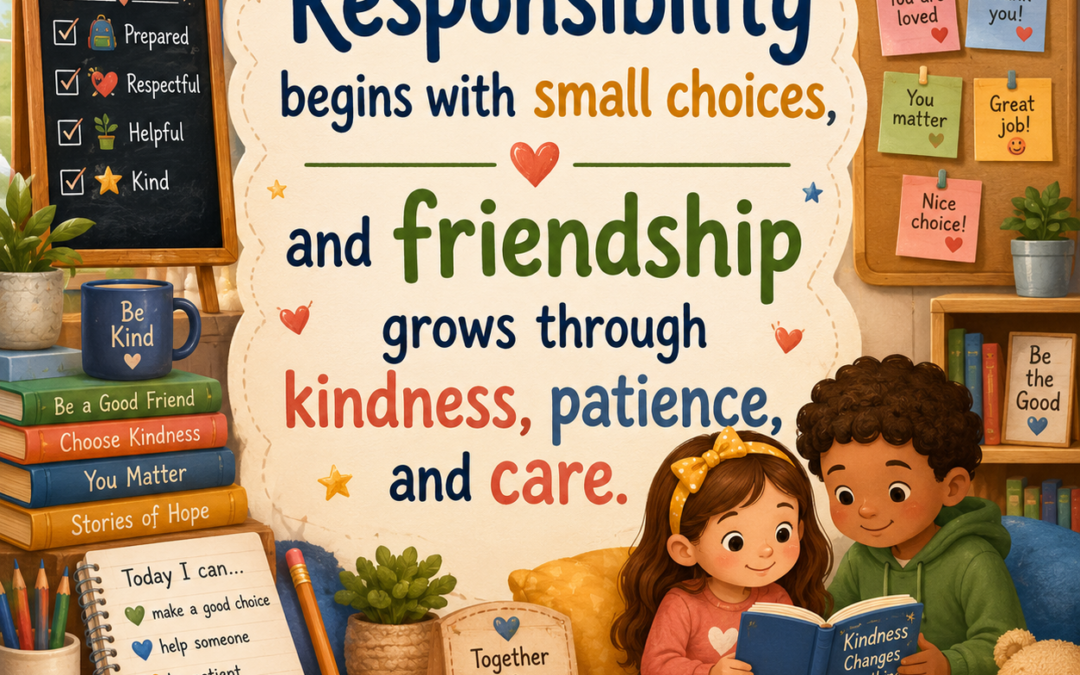
For parents, teachers, and homeschool families, the Sally series offers more than enjoyable reading. It gives children examples of character in action. Through Sally’s stories, young readers can learn that responsibility begins with small choices, and friendship grows through kindness, patience, and care.