Homeschooling gives parents a special opportunity to teach more than reading, writing, and math. It also gives families the chance to shape a child’s heart, habits, and character through everyday lessons. One of the most effective ways to do that is through character-building books. Stories help children see kindness, courage, patience, responsibility, and friendship in action. Instead of simply telling a child what good character means, a story allows them to experience it through the choices, struggles, and growth of a character they can understand.
Children often learn best when lessons feel personal and relatable. A book can take an ordinary situation—helping an animal, welcoming a new friend, trying something new, caring for a pet, or being brave during a difficult moment—and turn it into a meaningful teaching opportunity. In a homeschool setting, these moments can easily become discussion questions, writing prompts, art activities, kindness challenges, and family conversations. This makes reading both educational and character-forming.
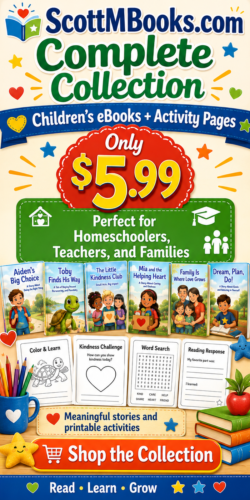
The books at ScottMBooks.com were created with that purpose in mind. Each series gives children gentle, age-appropriate stories that encourage positive values while keeping reading enjoyable and engaging. Whether families are reading aloud together, using books as part of a homeschool unit, or adding printable activities to a weekly lesson plan, character-building stories can help children grow as readers and as people.
Teaching Kindness Through Turtle Points
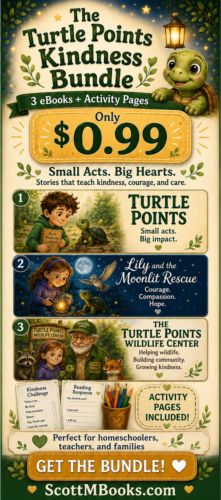
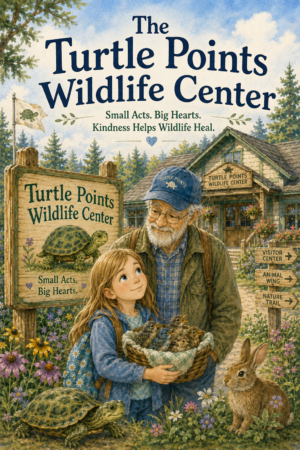
Turtle Points is built around the idea that small acts of kindness matter. Through Ben’s love for turtles and his desire to help, young readers learn that kindness does not have to be loud, dramatic, or complicated. Sometimes kindness looks like noticing a need, helping safely, caring for a living creature, or doing something thoughtful without expecting a reward.
For homeschool families, Turtle Points can become more than a story. It can inspire a family kindness challenge, a reading log, a service project, or a simple daily reflection. Children can ask themselves, “What kind thing did I do today?” or “Who needed help, and how did I respond?” These questions help children connect reading to real life. They begin to understand that kindness is not just something characters do in books—it is something they can practice at home, in the neighborhood, and in the community.
Responsibility and Care in the Thomas Loves Series
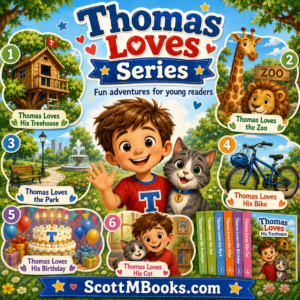
The Thomas Loves Series introduces children to simple, familiar adventures that are easy for young readers to understand. Thomas’s stories include experiences with pets, birthdays, parks, bikes, the zoo, and treehouses. These settings feel close to a child’s everyday world, which makes the lessons natural and relatable.
In books such as Thomas Loves His Cat, children see how caring for a pet teaches patience, gentleness, and responsibility. Thomas learns that love often shows up in small actions: feeding, comforting, playing, listening, and being present. These are powerful lessons for young children because they show that responsibility is not only about chores or rules. It is about caring for someone or something with consistency and kindness.
In a homeschool lesson, parents can use the Thomas Loves Series to talk about questions such as: How do we care for animals? What does it mean to be patient? How do we show love through our actions? These discussions help children build empathy while also strengthening reading comprehension and emotional understanding.
Courage, Compassion, and Growth in the Lily Series
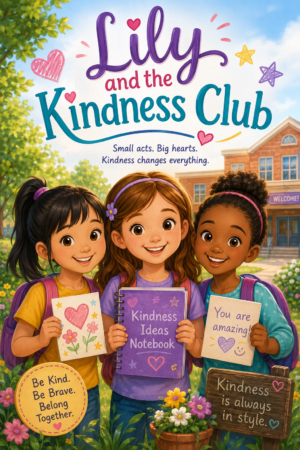
The Lily Series is especially strong for teaching children about courage, compassion, nature, and helping others safely. Lily’s adventures often involve animals, farm life, wildlife rescue, and meaningful lessons from Grandpa Jim. Her stories show that courage does not always mean being fearless. Sometimes courage means trying something new, staying calm, helping someone who is scared, or taking one careful step forward.
In Lily and the Summer Farm, Lily learns responsibility through chores, patience through gardening, compassion through caring for animals, and courage through new experiences. In Lily and the Wildlife Rescue, children learn that helping animals requires gentleness, safety, respect, and guidance from trusted adults. These are valuable lessons for homeschool families because they connect character education with nature, science, responsibility, and emotional growth.
Lily’s stories also teach children to notice the world around them. She pays attention to animals, people, memories, and small needs. That kind of awareness is an important part of character development. A child who learns to notice is more likely to care. A child who learns to care is more likely to act with kindness.
Friendship and Confidence in the Sally Series
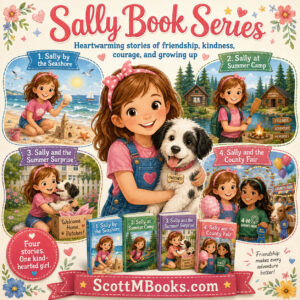
The Sally Series helps children understand friendship, confidence, inclusion, and growing up. Sally’s adventures take her to the seashore, summer camp, home with her puppy Patches, and the county fair. Each setting gives her a chance to learn something about herself and others.
Sally’s stories are helpful for homeschool families because they deal with situations many children recognize: meeting new people, trying new activities, caring for a pet, sharing joy, and including others. In Sally and the County Fair, for example, Sally learns about friendship, courage, kindness, and compassion as she shares the fair experience with Maria. Children see that friendship grows when we welcome others, listen, encourage, and make room for someone new.
The Sally Series also gives parents a natural way to talk about emotions and choices. How did Sally feel? What choice did she make? How did her kindness affect someone else? What would you do in the same situation? These simple questions help children practice empathy and decision-making while engaging with the story.
Why These Lessons Matter in Homeschooling
Character-building books matter because they give children examples they can remember. A lecture about kindness may be quickly forgotten, but a story about a child helping an animal, comforting a friend, or bravely trying something new can stay with a young reader. Stories give values a face, a setting, and a feeling.
In homeschooling, these books can support several important goals at once. They help build reading skills, vocabulary, comprehension, writing, creativity, and discussion. At the same time, they support social-emotional learning and character development. A single chapter can lead to a conversation about responsibility. A picture can inspire a writing prompt. A character’s choice can become a family lesson.
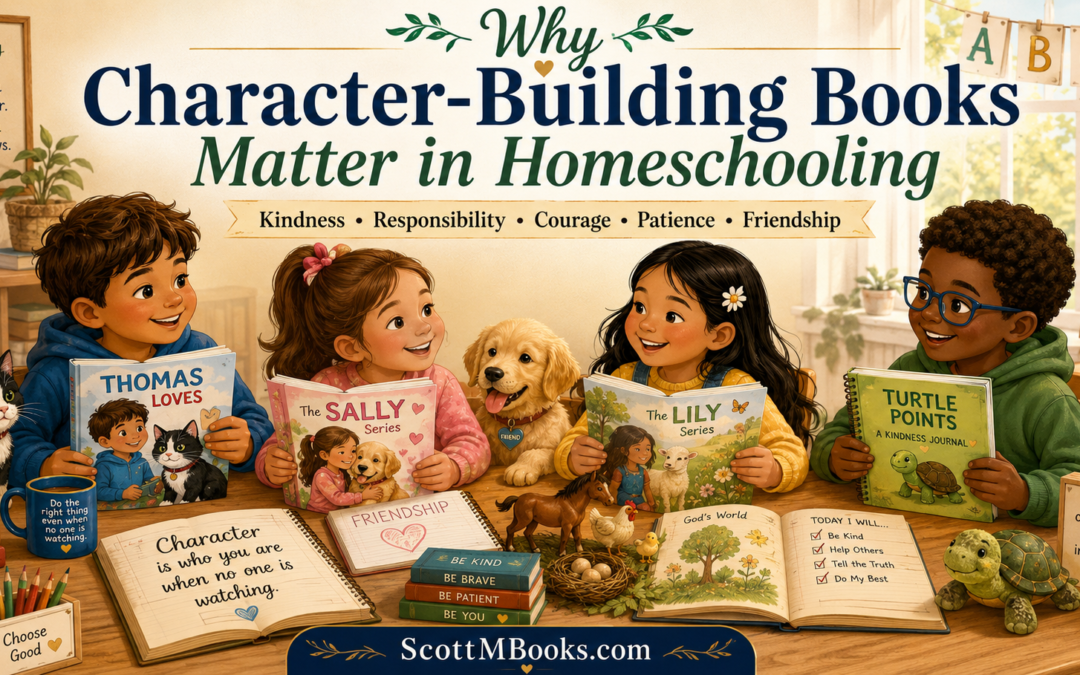
This is what makes books such as Turtle Points, the Thomas Loves Series, the Lily Series, and the Sally Series useful for homeschool families. They are not only stories to read. They are tools for teaching children how to think, care, reflect, and grow.
Simple Ways Homeschool Parents Can Use Character-Building Books
Parents can make character lessons part of reading time in simple ways. After reading a chapter, ask your child what lesson the character learned. Invite them to draw their favorite scene and explain why it mattered. Have them write about a time they showed kindness, courage, patience, or responsibility. Create a family kindness chart or a reading journal where children can record what each story taught them.
These activities do not need to be complicated. The goal is to help children connect the story to their own lives. When children begin to see themselves in the lessons, reading becomes more powerful. It becomes a way to build both the mind and the heart.
Final Thoughts
Character-building books have an important place in homeschooling because they help children grow from the inside out. They teach that kindness can be practiced, responsibility can be learned, courage can be quiet, patience takes time, and friendship is built through thoughtful choices. Through stories like Turtle Points, the Thomas Loves Series, the Lily Series, and the Sally Series, children are reminded that small actions matter and that every day offers a chance to become more caring, brave, and kind.
At ScottMBooks.com, the goal is to provide families, teachers, and homeschool parents with books and activities that make reading meaningful. These stories are designed to entertain children while helping them develop the character lessons they can carry into their homes, classrooms, friendships, and communities.
Visit ScottMBooks.com to explore children’s books, free reading resources, and character-building activities for homeschool families.