10 Easy Reading Activities for Homeschool Families
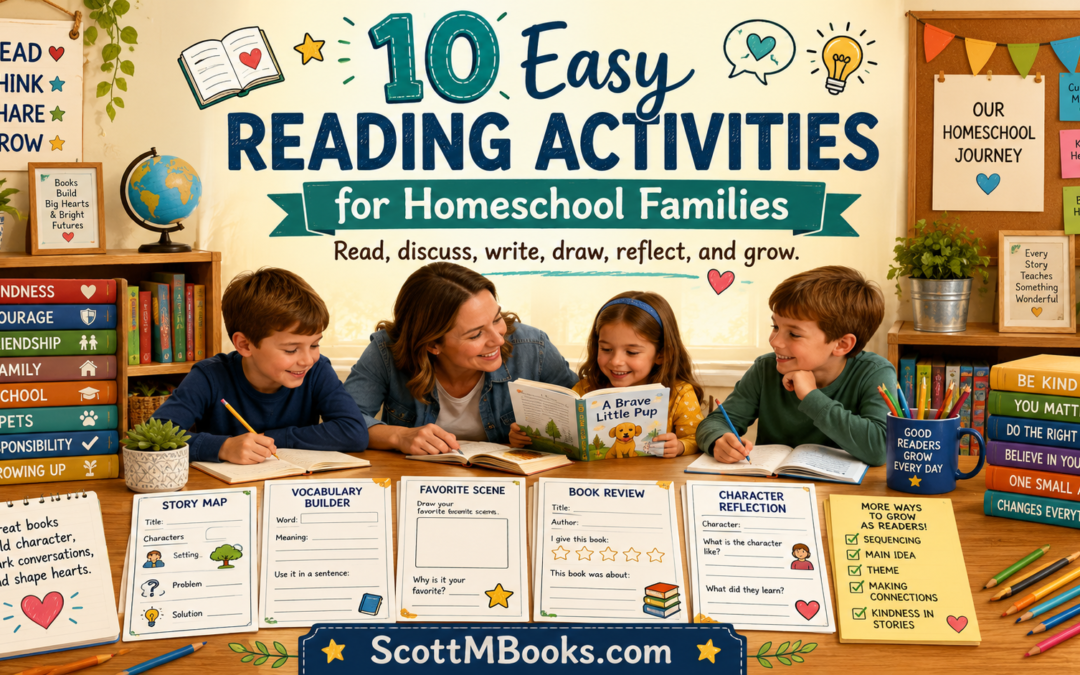
Reading is one of the most important parts of a homeschool day, but the learning does not have to stop when the book is finished. With a few simple activities, homeschool parents can help children understand stories more deeply, build vocabulary, practice writing, and connect important lessons to real life.
The best reading activities do not need to be complicated. A good children’s book can become a full learning experience through discussion, drawing, writing, reflection, and creative thinking. These activities work well with many types of stories, including books about kindness, courage, responsibility, friendship, pets, school, family, and growing up.
Here are 10 easy reading activities homeschool families can use today.
1. Story Map
A story map helps children organize the main parts of a book. After reading, students can identify the title, main character, setting, problem, and solution.
This activity helps children answer important questions:
Who was the story about?
Where did the story happen?
What problem did the character face?
How was the problem solved?
Story maps are especially helpful for younger readers because they make the structure of a story easier to see. Older students can add more detail by describing the conflict, character motivation, and lesson of the story.
2. Beginning, Middle, and End
Sequencing is an important reading skill. Children need to understand the order of events so they can retell a story clearly.
After reading, ask your child to divide the story into three parts:
Beginning: What happened first?
Middle: What important problem or event happened?
End: How did the story finish?
Younger children can draw each part. Older children can write a few sentences for each section. This activity builds comprehension, memory, and storytelling skills.
3. Vocabulary Builder Page
Every story gives children a chance to learn new words. Choose three to five words from the book and help your child think about what each word means.
A simple vocabulary page can include:
The word
The meaning
A sentence using the word
A drawing or example
For older students, you can also ask them to find the sentence where the word appears in the book. This helps them use context clues and understand how words work inside a story.
4. Favorite Scene Drawing
Drawing a favorite scene is a fun way for children to respond creatively to a book. It also helps them remember important details.
Ask your child to choose one scene from the story and draw it. Encourage them to include characters, setting, objects, and details from the book.
After drawing, have them write a short caption or answer:
Why did you choose this scene?
What happened in this part of the story?
Why was this scene important?
This activity works well for visual learners and makes reading feel more personal and enjoyable.
5. Character Reflection Page
Characters help children understand feelings, choices, and personal growth. After reading, ask your child to think about one main character.
They can answer questions such as:
How did the character feel at the beginning of the story?
How did the character feel at the end?
What changed?
What choice did the character make?
What did the character learn?
This activity helps children develop empathy and emotional understanding. It also connects reading to real-life situations.
6. Book Review Page
A book review helps children share their opinion about a story. It also teaches them how to explain their thinking.
A simple book review can include:
Book title
Author
Favorite character
Favorite part
Star rating
What the book was about
Whether they would recommend it
This activity is great for homeschool reading journals. Over time, children can look back and see all the books they have read.
7. Main Idea and Lesson Page
Many children’s books teach a lesson. The lesson might be about kindness, courage, patience, responsibility, friendship, or making good choices.
After reading, ask:
What was the story mostly about?
What lesson did the character learn?
How can we use this lesson in real life?
This activity helps children move beyond remembering events. It encourages them to think about meaning, values, and how stories can guide everyday choices.
8. Kindness in the Story
Many stories include moments where a character helps, encourages, shares, forgives, or includes someone else. Ask your child to find one act of kindness in the story.
They can answer:
Who showed kindness?
What did they do?
How did it help someone?
What kind thing can I do today?
This turns reading into character-building. It helps children see that stories are not just for entertainment—they can inspire positive actions.
9. Write a Letter to a Character
Writing a letter to a character is a simple and creative way to practice writing. Children can choose a character from the story and write a short letter.
They might write:
Dear ________,
I liked when you ________.
I think you were ________.
One question I have for you is ________.
Your friend, ________
Older students can write longer letters with advice, encouragement, or questions about the character’s choices. This activity builds writing fluency and deeper story connection.
10. Create a New Ending
Children love imagining what could happen next. After reading, ask your child to create a different ending for the story.
They can write or draw:
What would happen differently?
What would the character do?
How would the problem be solved?
What lesson would the new ending teach?
This activity builds imagination, creative writing, and critical thinking. It also helps children understand that stories are built from choices, problems, and solutions.
How to Use These Activities in Your Homeschool Day
You do not need to use all 10 activities at once. Choose one or two activities after each book or chapter. For example, one day you might complete a story map, and another day you might draw a favorite scene or write a book review.
A simple weekly plan could look like this:
Monday: Read and discuss the story
Tuesday: Complete a story map
Wednesday: Practice vocabulary words
Thursday: Draw a favorite scene
Friday: Write a book review or character reflection
This keeps reading time simple, organized, and meaningful.
Final Thoughts
Reading activities help homeschool families turn books into complete learning experiences. With story maps, vocabulary pages, favorite scene drawings, book reviews, and character reflection pages, children can practice comprehension, writing, creativity, and thoughtful discussion.
Most importantly, these activities help children connect with stories. They begin to see books as more than words on a page. Stories become places to think, feel, imagine, and grow.
Whether you are teaching one child or several, simple reading activities can make your homeschool day richer, calmer, and more enjoyable.