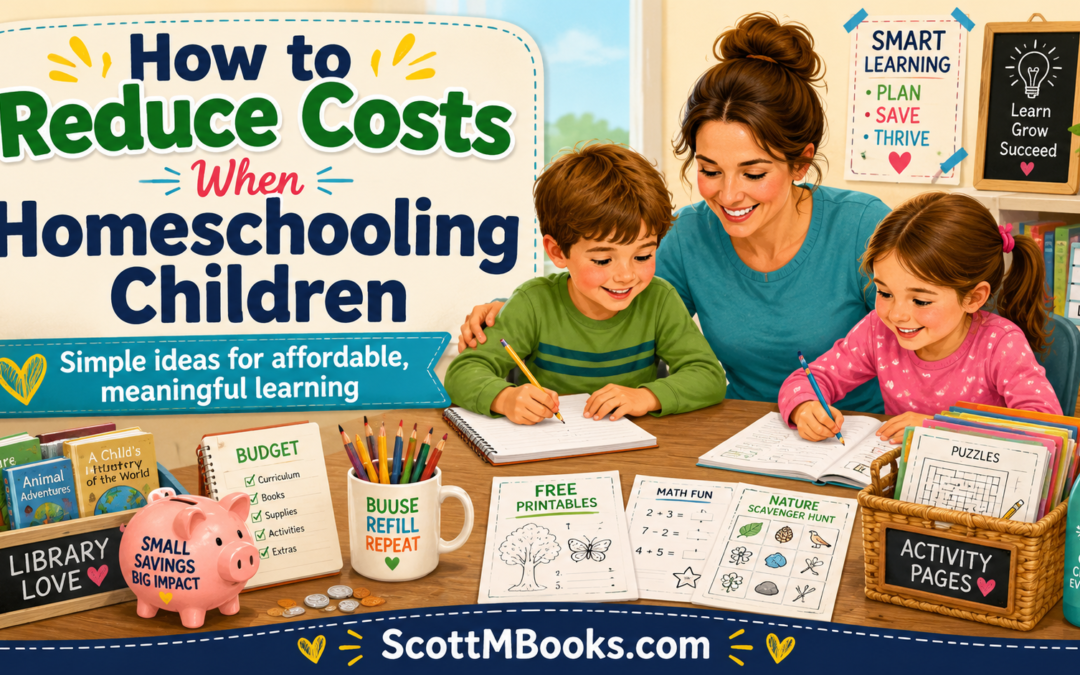
How to Reduce Costs When Homeschooling Children
Homeschooling can be one of the most meaningful ways to educate children, but many families worry about the cost. Curriculum, books, supplies, online programs, printing, field trips, and activities can add up quickly. For families teaching more than one child, the expense can feel even greater.
The good news is that homeschooling does not have to be expensive to be successful. A strong homeschool day is not built on buying the most materials. It is built on consistency, creativity, good books, thoughtful conversations, and learning experiences that help children grow.
With planning and the right resources, families can reduce costs while still giving children a rich, engaging, and meaningful education.
Start with a Simple Homeschool Plan
One of the easiest ways to overspend is to buy too many resources before knowing what you truly need. It is common for new homeschool parents to feel pressure to purchase complete curriculum sets, several workbooks, and multiple online programs right away.
Before buying anything, write down your basic homeschool goals. Think about the main subjects you want to cover, such as reading, writing, math, science, history, art, character development, and physical activity.
A simple plan helps you focus on what matters most. When you know your goals, it becomes easier to choose resources that support your child’s learning instead of spending money on materials that may sit unused.
Use Free eBooks for Reading Lessons
Free eBooks are one of the easiest ways to lower homeschool costs. A good children’s book can support reading comprehension, vocabulary, writing, discussion, creativity, and character lessons.
Instead of buying a new book for every lesson, families can use free eBooks and add simple activities after reading. One story can become several lessons when children complete a story map, vocabulary page, favorite scene drawing, character reflection, book review, or writing prompt.
Free eBooks are especially helpful for families who want to build a regular reading routine without adding extra cost. They can be read aloud, used for independent reading, or included in a weekly homeschool unit.
Visit the Library Regularly
The local library is one of the most valuable homeschool resources available. Libraries offer books, audiobooks, research materials, children’s programs, reading challenges, and sometimes free access to digital learning tools.
A weekly library visit can become part of your homeschool routine. Children can choose books that interest them, while parents can select books that match current lessons.
Libraries can support many subjects. Animal books can help with science. Biographies can support history. Poetry books can help with language arts. Craft books can inspire art projects. Picture books and chapter books can support character lessons and family read-aloud time.
The more you use your library, the less you need to spend on books.
Choose Resources That Can Be Used Again and Again
Some homeschool materials are worth more because they can be reused across many lessons, books, and grade levels. These resources often save money over time.
Reusable materials may include blank notebooks, writing journals, dry-erase boards, story maps, vocabulary templates, reading response pages, math manipulatives, art supplies, and printable activity pages.
Generic activity pages are especially useful because they can work with almost any book. Instead of buying a separate workbook for every story, homeschool parents can use flexible worksheets that support comprehension, writing, drawing, vocabulary, and reflection.
Teach Multiple Ages Together When Possible
Families with more than one child can save both time and money by teaching certain subjects together. Not every subject has to be completely separate for each child.
Read-aloud time, science experiments, history stories, art projects, nature study, music, field trips, and character lessons can often be shared by children of different ages.
After the shared lesson, each child can complete an activity at their own level. A younger child might draw a picture and write one sentence. An older child might write a paragraph, answer deeper questions, or explain the lesson in more detail.
This approach helps families stretch resources while also creating meaningful learning time together.
Buy Used Curriculum and Books
Used homeschool materials can be a smart way to reduce costs. Many families sell curriculum, textbooks, and reading books after they are finished using them.
Look for used materials through homeschool groups, local book sales, online resale communities, used bookstores, library sales, curriculum swaps, or other homeschool families.
Before buying used curriculum, make sure it is complete and still fits your child’s learning level. Used books are often a great choice for read-alouds, literature, history stories, and enrichment activities.
Limit Paid Subscriptions
Online learning programs can be helpful, but subscriptions can become expensive if you have too many. Families may sign up for several programs and only use one or two consistently.
Review your subscriptions regularly. Ask yourself whether the program is being used often, whether it supports your homeschool goals, and whether a free or lower-cost resource could do the same job.
It is usually better to have a few useful tools than several unused subscriptions.
Print Only What You Need
Printing can become a hidden expense in homeschooling. Paper, ink, folders, and binders can add up quickly.
To save money, print only the pages you need for the week. Use black and white when color is not necessary. Use draft mode for practice pages. Place worksheets in plastic sleeves and use dry-erase markers when possible. Have children answer some questions in a notebook instead of printing every page.
A simple weekly print plan can help reduce waste and keep costs under control.
Turn Everyday Life into Learning
Some of the best homeschool lessons are free because they come from everyday life. Children can learn important academic and life skills through ordinary routines.
Cooking can teach measuring, fractions, reading directions, and responsibility. Grocery shopping can teach budgeting and comparison. Gardening can teach science, patience, and observation. Writing thank-you notes can teach handwriting, grammar, and kindness. Taking care of pets can teach responsibility and routine.
Homeschooling gives families the chance to see learning everywhere, not just in textbooks and worksheets.
Share Resources with Other Families
Homeschooling can become more affordable when families work together. Parents can share books, games, science materials, art supplies, teaching ideas, and field trip opportunities.
Homeschool groups and co-ops can also help reduce costs by allowing families to trade materials, organize group lessons, or split activity expenses.
Sharing resources also gives children opportunities to learn with others, build friendships, and experience group activities.
Use Free Printable Activity Pages
Printable activity pages can help families get more learning out of each book. A single story can support several skills when paired with the right activities.
Helpful printable pages include story comprehension, sequence the story, character feelings, main idea and lesson, vocabulary builder, book review, draw the scene, kindness challenge, responsibility chart, and creative writing prompts.
These pages help children read more carefully, write more clearly, and think more deeply about stories. They also make it easier for parents to create structured lessons without buying expensive workbooks.
Focus on Meaningful Learning, Not Expensive Materials
A strong homeschool day does not require shelves full of costly resources. Children need steady routines, good books, thoughtful questions, hands-on activities, encouragement, and time to practice.
A meaningful lesson can begin with a simple story, a notebook, a pencil, a conversation, and a creative response. The goal is not to own the most materials. The goal is to help children read, think, write, create, solve problems, and grow in confidence.
Final Thoughts
Homeschooling does not have to be expensive to be effective. Families can reduce costs by using free eBooks, visiting the library, buying used materials, sharing resources, printing wisely, and turning everyday life into learning.
The best homeschool experiences are often simple. A good book, a thoughtful conversation, a creative activity, and a little encouragement can go a long way.
When families focus on what truly supports learning, they can give children a rich education without unnecessary expense. Homeschooling can be affordable, meaningful, and full of opportunities for children to grow.