Lily and the Moonlit Rescue: A Gentle Story of Kindness, Courage, and Healing
Some children’s books are written to entertain. Others are written to comfort, guide, and open the door to meaningful conversations. Lily and the Moonlit Rescue is one of those stories.
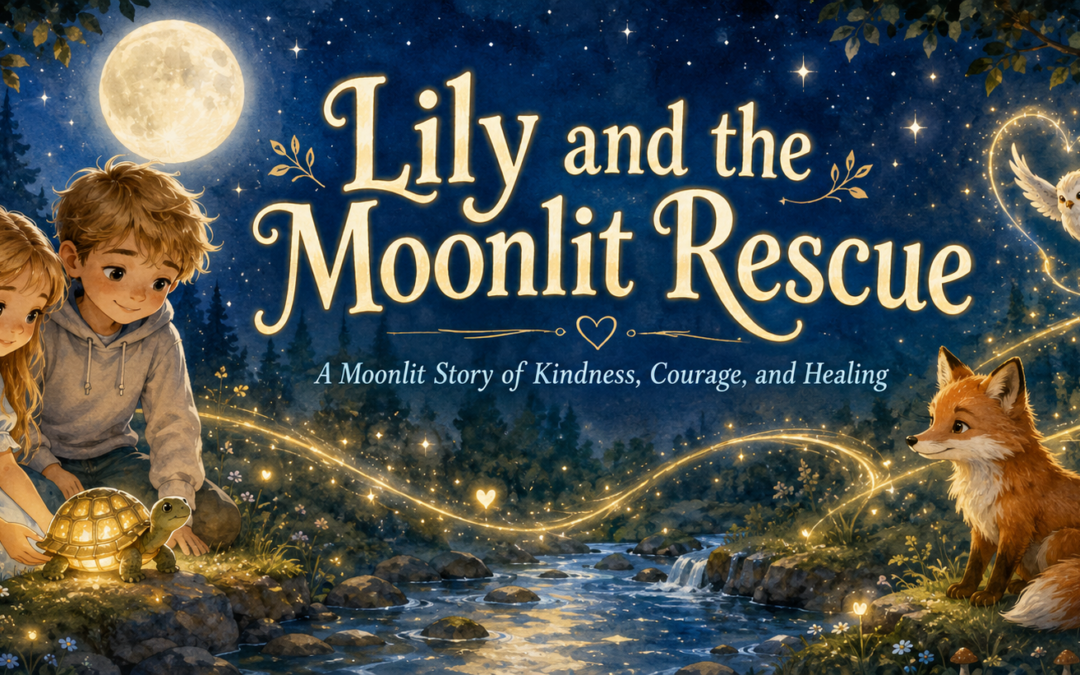
This book follows Lily, a young girl learning to carry sadness, hope, and love after losing someone important to her. Through a dreamlike moonlit journey with Ben, Lily discovers that kindness can become a light in dark places. As she helps wounded animals and faces uncertain moments, she begins to understand that healing does not mean forgetting. Healing means carrying love forward.
For families, homeschool parents, teachers, and caregivers, Lily and the Moonlit Rescue offers a gentle way to talk with children about grief, courage, compassion, and the small acts of kindness that help us keep going.
A Story That Begins with a Quiet Ache
The story begins with Lily lying awake at night, missing Ben. The moonlight shining through her window becomes more than just light in her room. It becomes a doorway into a meaningful journey.
Children often feel big emotions but may not always have the words to explain them. Lily’s sadness is written in a gentle, age-appropriate way that helps young readers understand that missing someone is natural. The story does not rush Lily through her grief. Instead, it allows her to feel, remember, wonder, and slowly begin to heal.
This makes the book especially helpful for parents and educators who want a story that treats children’s emotions with care.
Kindness as a Path Forward
Throughout the book, Lily encounters animals that need help. A fox is caught in brambles. A bird has a bent wing. A fawn is trapped near a stream. A turtle needs patience and care. Each rescue teaches Lily something important.
The lesson is not simply that Lily should help others. The deeper message is that kindness gives love somewhere to go.
That is a powerful idea for children. When they feel sad, worried, lonely, or unsure, they can still make a difference. They can speak gently. They can help carefully. They can notice someone who is struggling. They can choose compassion.
In Lily and the Moonlit Rescue, kindness becomes more than a good deed. It becomes a way to heal.
Courage Does Not Mean Never Being Afraid
One of the strongest themes in the story is courage. Lily is often unsure. She is afraid of getting hurt, afraid of crossing difficult places, and afraid of what her sadness means. But each time, she takes one small step forward.
This is an important lesson for children: courage does not mean we never feel scared. Courage means we choose to do what is kind, helpful, and right even when we feel afraid.
For homeschool families and classroom teachers, this theme can lead to valuable discussion questions:
What made Lily feel afraid?
How did she show courage anyway?
Have you ever had to do something brave?
How can kindness help us feel stronger?
These questions help children connect the story to their own lives.
A Gentle Way to Talk About Grief
Grief can be difficult to discuss with children. Adults may worry about saying the wrong thing or making children feel more upset. A story like Lily and the Moonlit Rescue can help create a softer starting point.
Instead of explaining grief directly, the book uses symbols children can understand: moonlight, animals, a path, a stream, a turtle’s glow, and morning light. These images help children think about sadness and hope in a safe and comforting way.
The story reminds readers that love does not disappear when someone is gone. Love can continue through memory, kindness, courage, and the way we care for others.
That message can be deeply comforting for children who are missing someone, but it can also help all children develop empathy for others who may be hurting.
Why This Book Works Well for Homeschooling
Lily and the Moonlit Rescue can easily become more than a read-aloud story. It can become a complete homeschool lesson or weekly reading unit.
Parents can use the book to teach:
Reading comprehension
Character feelings
Story sequencing
Main idea and theme
Vocabulary
Creative writing
Drawing and reflection
Kindness and responsibility
Social-emotional learning
After reading a chapter, students can complete a story map, draw a favorite scene, write about Lily’s feelings, or explain what lesson the chapter teaches. Older students can discuss symbolism, such as the moonlight, the wounded animals, the lantern turtle, and the idea of carrying love forward.
Because the book includes meaningful themes, it can support both academic learning and character development.
Classroom and Teacher Uses
Teachers can also use Lily and the Moonlit Rescue as a read-aloud, small-group reading selection, or character education resource. The story offers natural opportunities to discuss empathy, kindness, patience, and helping others safely.
A teacher might read one chapter at a time and follow with a short reflection question:
What did Lily learn in this chapter?
How did Ben help Lily understand her feelings?
What kind act happened in the story?
What does this chapter teach about courage?
How can we show kindness in our classroom?
The book can also pair well with writing prompts, kindness challenges, discussion circles, or art projects.
The Moonlit Rescue List
One of the most meaningful parts of the book is the idea of a “Moonlit Rescue List.” This gives children a way to reflect on small acts of kindness they can do in real life.
A rescue does not have to be dramatic or large. It can be simple:
Helping a classmate
Comforting a friend
Being patient with a sibling
Taking care of a pet
Including someone who feels left out
Saying something kind
Helping at home without being asked
This activity helps children understand that kindness is practical. It is something they can do today, right where they are.
Discussion Questions for Families
After reading Lily and the Moonlit Rescue, families can use simple questions to continue the conversation:
What was Lily feeling at the beginning of the story?
Why do you think the moonlight was important?
Which animal rescue stood out to you the most?
What did Lily learn from helping others?
How did Ben help Lily understand her sadness?
What does it mean to carry love forward?
What is one kind thing you can do this week?
These questions can help children process the story while also thinking about their own feelings and choices.
Final Thoughts
Lily and the Moonlit Rescue is a gentle, heartfelt story about grief, kindness, courage, and healing. It reminds young readers that sadness and hope can live in the same heart. It also teaches that even small acts of kindness can become lights in someone else’s darkness.
For homeschool parents, teachers, and families, this book offers more than a story. It offers a meaningful reading experience that can lead to discussion, reflection, writing, drawing, and real-life kindness.
Most of all, Lily and the Moonlit Rescue reminds children that love does not have to end. It can be carried forward—one gentle act, one brave step, and one small kindness at a time.