
Pros and Cons of Homeschooling Your Child
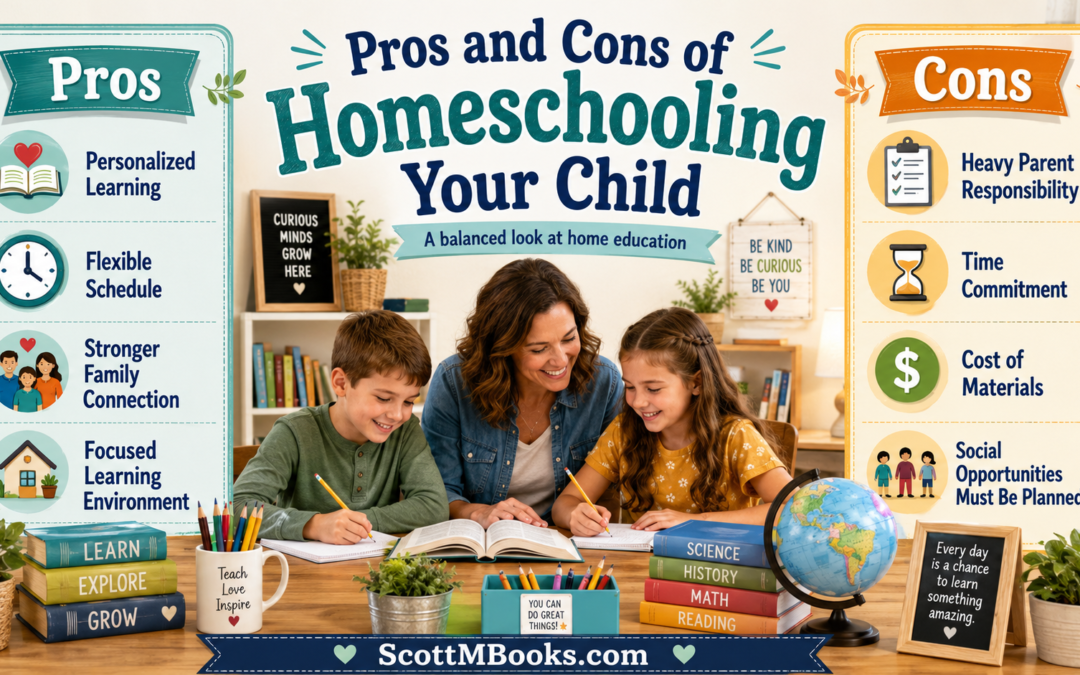
Homeschooling can be a wonderful choice for many families, but it also comes with real responsibilities. The best decision depends on the child’s needs, the parent’s time, the family’s lifestyle, and the kind of learning environment that works best.
Pros of Homeschooling
1. Personalized Learning
One of the biggest benefits of homeschooling is that lessons can be adjusted to fit the child. If a child needs more time with math, the parent can slow down. If the child loves reading or science, the family can go deeper into those subjects. Homeschooling allows children to learn at a pace that suits them rather than always following a classroom schedule.
2. Flexible Schedule
Homeschool families can create a schedule that works for them. Some children learn better in the morning, while others focus better later in the day. Families can also plan field trips, reading time, outdoor learning, and hands-on activities without being limited by a traditional school day.
3. Stronger Family Connection
Homeschooling often gives parents and children more time together. Reading, projects, discussions, and daily routines can create meaningful family moments. Parents also have more opportunities to teach values such as kindness, responsibility, patience, courage, and good decision-making.
4. Safer or More Comfortable Learning Environment
Some children feel less anxious at home than in a large classroom. Homeschooling can help children who struggle with bullying, social pressure, overstimulation, or certain learning challenges. A calm home environment may help some students focus better and feel more confident.
5. More Time for Interests and Talents
Homeschooling can leave room for music, art, sports, nature study, writing, coding, animals, reading, or other interests. Children can spend more time developing their strengths instead of rushing from one subject to another.
6. Hands-On and Real-Life Learning
Homeschooling can make learning practical. Cooking can teach fractions. Grocery shopping can teach budgeting. Gardening can teach science. Family read-alouds can teach comprehension and character. Every day life becomes part of education.
7. Less Wasted Time
A homeschool day can often be shorter and more focused than a traditional school day. Without classroom transitions, long lines, or repeated instructions for a large group, students may complete academic work more efficiently.
Cons of Homeschooling
1. Heavy Parent Responsibility
Homeschooling takes planning, patience, and consistency. Parents must choose or create lessons, track progress, teach subjects, provide structure, and make sure their child is learning. This can feel overwhelming, especially for parents who are new to homeschooling.
2. Time Commitment
Homeschooling requires time every day. Even if lessons are short, parents still need to prepare, teach, answer questions, supervise work, and organize activities. This can be difficult for working parents or families with several children.
3. Cost of Materials
Homeschooling can be affordable, but costs can add up. Curriculum, books, printing, online programs, supplies, co-op fees, field trips, and testing materials may become expensive if families are not careful. Free resources, libraries, and printable materials can help reduce costs.
4. Social Opportunities Must Be Planned
Homeschooled children can have strong social lives, but socialization usually has to be more intentional. Parents may need to arrange homeschool groups, sports, clubs, church activities, library programs, co-ops, or playdates so children can build friendships and learn teamwork.
5. Parent Burnout
Teaching, parenting, managing the home, and sometimes working can become exhausting. Without breaks or support, homeschool parents may feel tired or discouraged. A realistic schedule and outside support are important.
6. Possible Gaps in Learning
If parents do not plan carefully, students may miss certain skills or subjects. This is especially true as children get older and subjects become more advanced. Parents may need outside classes, tutors, online courses, or co-ops for subjects they are less comfortable teaching.
7. Less Access to School Services
Traditional schools may offer services such as special education support, counseling, speech therapy, advanced classes, sports teams, music programs, science labs, and clubs. Homeschool families may need to find these resources elsewhere.
8. Less Separation Between Home and School
Because learning happens at home, some families struggle to separate school time from family time. Children may resist lessons because the home also feels like a place to relax. A simple routine and designated learning area can help.
Final Thought
Homeschooling can be a strong option when a family is prepared, organized, and committed. It offers flexibility, personal attention, and meaningful family learning. However, it also requires time, planning, patience, and support.
For many families, the key is balance. Homeschooling does not have to be perfect. A good homeschool environment provides children with structure, encouragement, high-quality resources, real-world learning, and opportunities to grow academically, socially, and emotionally.