5 Simple Ways to Improve Reading Comprehension at Home
Reading comprehension is more than recognizing words on a page. It is the ability to understand what a story means, remember important details, recognize how characters feel, and connect the lesson to real life. Parents and homeschool families can strengthen these skills through simple conversations and activities that fit naturally into everyday reading time.
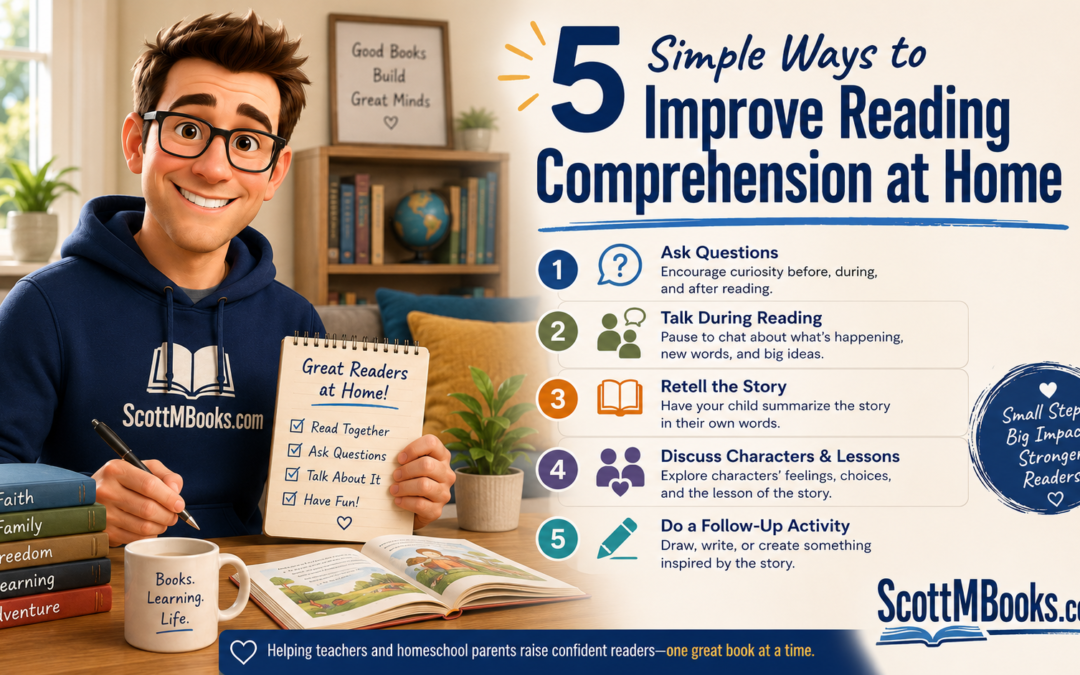
1. Ask Questions Before Reading
Before opening the book, look at the cover, title, and illustrations together. Ask your child what they think the story may be about and what they expect to happen.
You might ask:
- What do you notice on the cover?
- Who do you think the main character will be?
- Where might the story take place?
- What problem could happen?
Making predictions encourages children to think actively and prepares them to look for important information as they read.
2. Pause and Talk During the Story
You do not have to wait until the final page to discuss the book. Pause occasionally to check understanding and invite your child to think about what is happening.
Ask questions such as:
- Why do you think the character did that?
- How is the character feeling?
- What do you think will happen next?
- What would you do in this situation?
Keep the conversation relaxed. The goal is not to turn reading into a test, but to help your child become an involved and thoughtful reader.
3. Retell the Story in Order
After reading, ask your child to explain what happened at the beginning, middle, and end. Retelling helps children organize information, remember major events, and recognize how one part of the story leads to another.
Younger children can draw three pictures showing the main events. Older children can write a short summary or use transition words such as:
First, next, then, and finally.
Encourage your child to focus on the most important events rather than every small detail.
4. Discuss the Characters and the Story’s Lesson
Characters give children a helpful way to explore feelings, choices, and consequences. Talk about what the characters wanted, the problems they faced, and how their actions affected others.
Questions might include:
- What kind of person was the main character?
- Did the character make a good choice?
- How did the character change?
- What lesson did the story teach?
- How does this lesson connect to everyday life?
Stories about kindness, courage, friendship, patience, and responsibility can lead to meaningful family conversations while also improving comprehension.
5. Use a Short Follow-Up Activity
A simple activity can help children remember and understand a book more deeply. The activity does not need to be long or complicated.
Children might:
- Draw their favorite scene
- Write about their favorite character
- Complete a story map
- Put story events in order
- Define new vocabulary words
- Write a different ending
- Create a book review
- Practice one positive action inspired by the story
Choose activities that match your child’s age, interests, and reading ability. Even ten minutes of follow-up work can reinforce important reading skills.
Make Reading Comprehension Part of Your Routine
Improving comprehension does not require expensive materials or lengthy lessons. A few thoughtful questions, a short retelling, and one creative activity can turn ordinary reading time into a valuable learning experience.
Most importantly, keep reading enjoyable. When children feel comfortable sharing their ideas, asking questions, and making personal connections, they become more confident and capable readers.
At ScottMBooks.com, teachers, homeschool parents, and families can explore children’s eBooks and printable activities designed to support comprehension, vocabulary, writing, creativity, and character development.