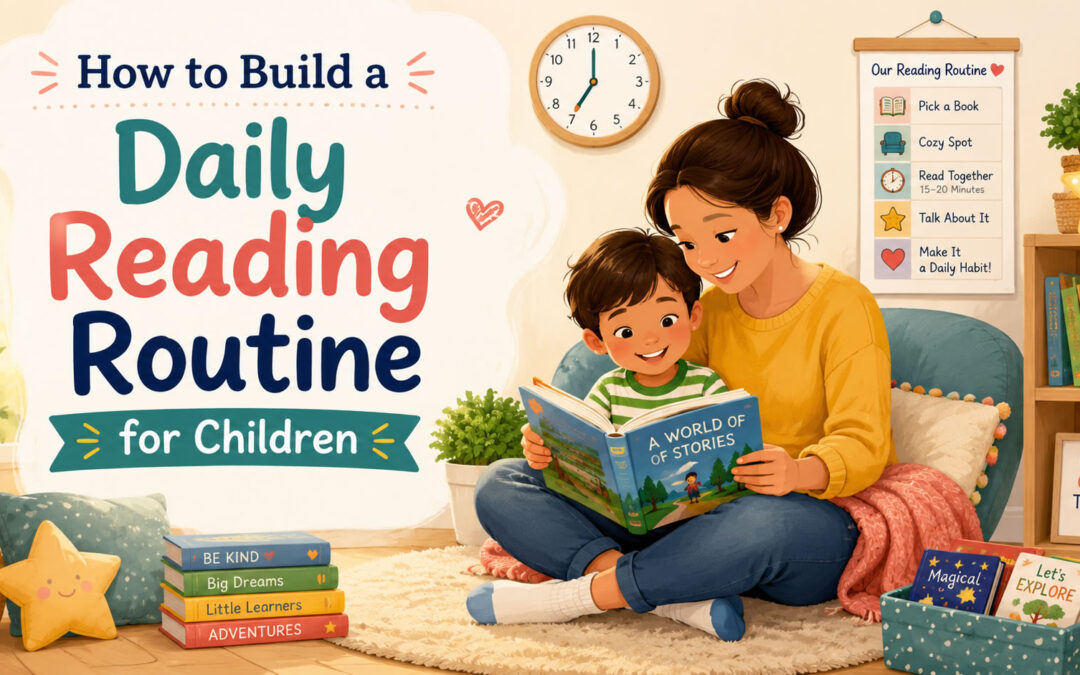
How to Build a Daily Reading Routine for Children
A daily reading routine is one of the simplest and most effective ways to help children become stronger, more confident readers. Regular reading supports vocabulary, comprehension, imagination, attention, and communication skills. It can also create a calm and meaningful part of the day for families, homeschool parents, and classroom teachers.
The good news is that a reading routine does not need to be long or complicated. Even 15 to 30 minutes of focused reading each day can make a difference. The key is to make reading consistent, enjoyable, and appropriate for the child’s age and ability.
Choose a Consistent Time
Children are more likely to develop a habit when reading happens at approximately the same time each day. Choose a time that works naturally within your family, homeschool, or classroom schedule.
Possible reading times include:
- After breakfast
- At the beginning of the school day
- After lunch
- During a quiet afternoon period
- Before bedtime
- After completing daily schoolwork
The best time is not necessarily the same for every child. Some children concentrate better in the morning, while others enjoy reading as a relaxing evening activity. Try different times until you discover when the child is most comfortable and attentive.
Start with a Realistic Amount of Time
A successful routine should feel manageable. Beginning with a long reading session may make reading feel like a chore, especially for younger or reluctant readers.
Consider starting with:
- 10 to 15 minutes for preschool and kindergarten children
- 15 to 20 minutes for early elementary students
- 20 to 30 minutes for older elementary students
The amount of time can gradually increase as the child’s attention span and reading confidence grow. It is better to have a positive 15-minute reading experience every day than an hour-long session that causes frustration.
Create a Comfortable Reading Space
A special reading area can make daily reading feel inviting. It does not need to be elaborate. A quiet corner with comfortable seating, good lighting, and a small collection of books can become an enjoyable reading space.
A reading area might include:
- A comfortable chair, cushion, or blanket
- A basket or shelf of age-appropriate books
- A reading lamp
- Bookmarks
- Pencils and paper for drawing or writing
- A reading log or activity sheet
Keep distractions such as television, loud music, and unnecessary electronic devices away from the reading area whenever possible.
Offer Children a Choice of Books
Children are often more interested in reading when they are allowed to choose their own books. Provide several appropriate options and let the child select the story that interests them.
Children may enjoy books about:
- Animals
- Friendship
- Adventure
- Family life
- Kindness
- Sports
- Nature
- Humor
- School experiences
- Real-life challenges
It is also helpful to include different types of reading materials, such as picture books, short chapter books, poetry, nonfiction, magazines, and eBooks. A child’s reading choices may change frequently, and that is perfectly normal.
Include Read-Aloud Time
Children benefit from hearing adults read, even after they begin reading independently. Reading aloud introduces children to new vocabulary, sentence patterns, ideas, and stories that may be above their current reading level.
During read-aloud time, adults can model:
- Expression
- Fluency
- Proper pacing
- How punctuation affects meaning
- How to make predictions
- How to think about a character’s choices
Teachers and homeschool parents can pause occasionally to ask a question, but they should avoid interrupting the story too often. The main purpose is to help children enjoy and understand the reading experience.
Add Independent Reading
Independent reading allows children to practice their growing skills. Give children time to read quietly on their own, even if they are looking at pictures, rereading a familiar story, or reading only a few pages.
For beginning readers, independent reading may include:
- Looking through a picture book
- Retelling a familiar story
- Reading simple sentences
- Practicing sight words
- Reading aloud to a parent, teacher, sibling, or stuffed animal
Children should be given books that are challenging enough to support growth but not so difficult that every sentence becomes frustrating.
Talk About the Story
A short conversation after reading can improve comprehension and help children connect the story to their own experiences.
Ask open-ended questions such as:
- What was your favorite part?
- Which character did you like best?
- What problem happened in the story?
- How did the character solve the problem?
- How do you think the character felt?
- What would you have done?
- What lesson did the story teach?
- Did this story remind you of something in your life?
The discussion does not need to feel like a test. Keep it relaxed and allow children to share their ideas freely. There may be more than one reasonable answer.
Include a Simple Follow-Up Activity
Reading activities can help children remember and apply what they learned. Activities should be short, enjoyable, and connected to the story.
Children might:
- Draw their favorite scene
- Write a sentence about the main character
- Put story events in order
- Act out part of the story
- Create a new ending
- Write a book review
- Make a list of new vocabulary words
- Complete a character-feelings page
- Describe the story’s main lesson
- Perform a small act of kindness inspired by the book
Not every reading session needs a written activity. Some days, reading and conversation are enough.
Use a Simple Daily Reading Plan
A daily routine can combine several reading activities without becoming overwhelming.
Sample 20-Minute Reading Routine
Five minutes: Review the book cover, title, pictures, or previous chapter.
Ten minutes: Read aloud, read together, or allow the child to read independently.
Five minutes: Discuss the story or complete a quick drawing or written response.
Sample 30-Minute Reading Routine
Ten minutes: Adult read-aloud time.
Ten minutes: Independent reading.
Five minutes: Story discussion.
Five minutes: Vocabulary, drawing, journaling, or another short activity.
This routine can be adjusted according to the child’s age, reading level, and daily schedule.
Track Progress Without Creating Pressure
A reading log can help children see how much they have accomplished. However, tracking should encourage children rather than make reading feel like a competition.
A simple reading log might include:
- Date
- Book title
- Number of pages or minutes read
- Favorite character
- Favorite part
- A star or check mark for completing the reading session
Celebrate consistency, effort, curiosity, and improvement. Avoid comparing one child’s reading speed or book count with another child’s progress.
Be Flexible on Busy Days
Daily routines are valuable, but families and classrooms also have unpredictable days. When time is limited, shorten the reading session instead of skipping it completely.
On a busy day, children might:
- Read one short story
- Listen to one chapter
- Review a familiar book
- Read for five or ten minutes
- Discuss a favorite character
- Listen to an audiobook while traveling
Maintaining the habit is often more important than completing a perfect lesson.
Help Reluctant Readers Find Success
Some children avoid reading because they believe it is too difficult or because they have not yet discovered books that interest them.
To encourage a reluctant reader:
- Offer shorter books
- Let the child choose the topic
- Read the first page or chapter aloud
- Take turns reading paragraphs
- Use books with strong illustrations
- Allow rereading of favorite books
- Praise effort rather than speed
- Avoid correcting every small mistake
- Stop before the child becomes overly frustrated
Children are more likely to continue reading when they experience success and enjoyment.
Let Children See Adults Reading
Children learn from what adults do. When parents and teachers read books, newspapers, magazines, or other materials, they show children that reading has value beyond school assignments.
Adults can talk briefly about their own reading by saying:
- “I learned something interesting today.”
- “This part of my book made me think.”
- “I am looking forward to reading the next chapter.”
- “I use reading to learn how to do new things.”
This helps children understand that reading is a lifelong habit.
Keep the Routine Positive
A daily reading routine should not be used as punishment or presented as something children must complete before they are allowed to have fun. Reading should be associated with comfort, discovery, imagination, and connection.
There will be days when children are tired, distracted, or uninterested. Stay patient. Continue offering books, stories, encouragement, and opportunities to read together.
Final Thoughts
Building a daily reading routine does not require expensive materials or a complicated curriculum. It begins with a consistent time, an inviting space, appropriate books, and a few minutes of focused attention.
By combining read-aloud time, independent reading, conversation, and occasional activities, teachers and homeschool parents can help children strengthen their literacy skills while developing a genuine love of books.
The most important goal is not to finish the greatest number of books. It is to help children see reading as an enjoyable, meaningful, and valuable part of everyday life.