How Story Characters Help Children Make Better Choices
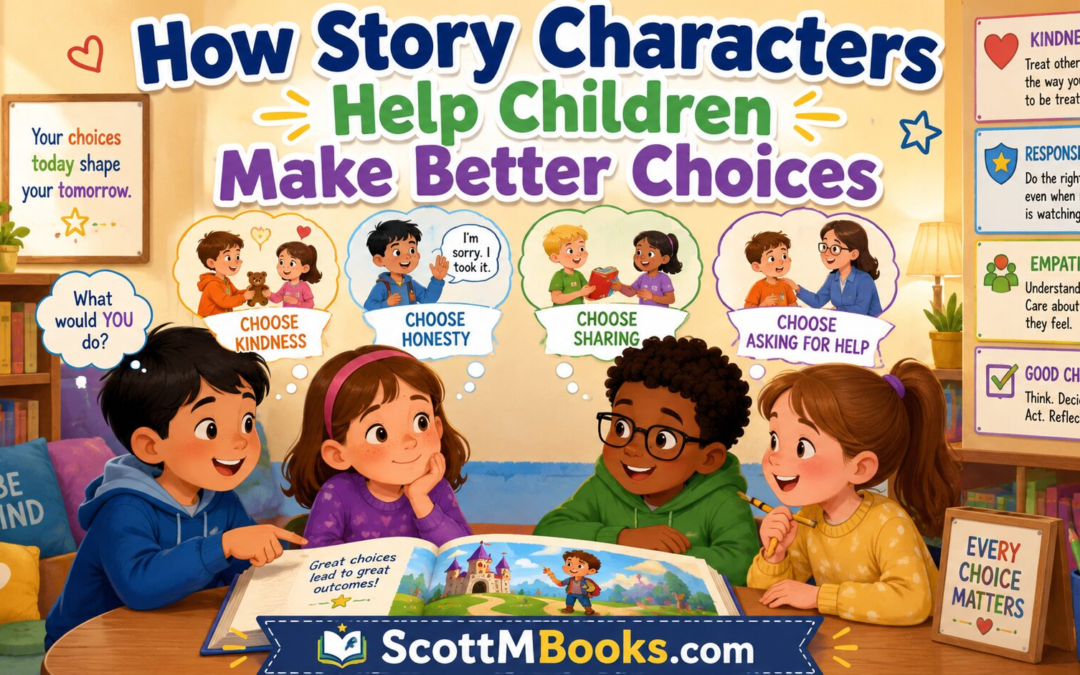
Children often learn best when they can see an idea demonstrated through a story. Telling a child to be kind, responsible, patient, or honest is important, but a story character can show what those qualities look like in everyday situations. Through books, children watch characters face problems, consider different choices, make mistakes, experience consequences, and discover better ways to respond.
Story characters give young readers a safe opportunity to think about decisions before they face similar situations themselves. By discussing what a character did, why the character acted that way, and what could have been done differently, parents, teachers, and homeschool families can help children develop stronger judgment, empathy, and problem-solving skills.
Children Learn by Watching Characters Make Decisions
Every story contains choices. A character may decide whether to tell the truth, help someone, ask an adult for assistance, include a classmate, apologize for a mistake, or keep trying when something feels difficult.
As children follow the story, they begin to understand that choices affect what happens next. A thoughtful decision may help solve a problem, strengthen a friendship, or keep someone safe. An unkind or careless decision may create conflict, hurt another person’s feelings, or make a situation more difficult.
This connection between decisions and consequences is an important part of learning responsibility.
After reading, adults can ask:
- What choice did the character make?
- Why do you think the character made that choice?
- What happened because of the decision?
- Was it a safe and helpful choice?
- What could the character have done differently?
- What would you do in the same situation?
These questions help children move beyond simply remembering the story. They encourage children to think carefully about behavior, motives, and consequences.
Characters Make Important Lessons Easier to Understand
Ideas such as courage, empathy, fairness, and responsibility can feel abstract to young children. Stories make those ideas more concrete.
A child can see courage when a character tries something new despite feeling nervous. Responsibility becomes easier to understand when a character takes care of a pet, completes a job, or admits to making a mistake. Empathy becomes visible when someone notices another person’s feelings and offers help.
Instead of receiving only a rule, children see the rule in action.
For example:
- A character invites someone who is alone to join a game.
- A child asks an adult for help instead of handling a dangerous situation alone.
- A friend listens before becoming angry.
- A student apologizes after saying something hurtful.
- A child keeps practicing rather than giving up.
- A character tells the truth even when it feels uncomfortable.
These examples give children a picture of what better choices can look like in real life.
Stories Allow Children to Learn from Mistakes
Characters do not always make the right decision the first time. In fact, mistakes often make stories more meaningful.
When a character makes a poor choice, children can examine the situation without feeling personally criticized. They can discuss what went wrong and consider how the character might repair the problem.
This helps children understand that making a mistake does not mean they are a bad person. What matters is whether they recognize the mistake, take responsibility, and try to make a better choice next time.
A useful discussion might include questions such as:
- What mistake did the character make?
- Who was affected by the choice?
- How did the other characters feel?
- Did the character take responsibility?
- Was an apology needed?
- How could the character make things right?
These conversations teach accountability while also encouraging patience and growth.
Characters Help Children Understand Consequences
Young children may focus mostly on what they want in the moment. Stories help them look ahead and consider what might happen after a decision.
A character who refuses to share may miss out on playing with others. A character who ignores a rule may create an unsafe situation. A character who speaks kindly may help someone feel accepted. A character who keeps a promise may earn another person’s trust.
When children see these results unfold in a story, they begin to understand that consequences are connected to choices.
Adults can help children recognize this connection by asking:
- What happened first?
- What choice caused the next event?
- How did the decision affect the ending?
- Would the story have changed if the character had made another choice?
This also strengthens reading comprehension by helping children identify cause-and-effect relationships within the plot.
Books Build Empathy and Emotional Awareness
Better choices often begin with understanding how another person feels. Stories allow children to experience situations from different points of view.
A character may feel lonely, embarrassed, worried, jealous, frustrated, or left out. As children learn why the character feels that way, they become better able to recognize similar emotions in themselves and others.
This emotional understanding can influence behavior. A child who recognizes that someone feels excluded may be more likely to invite that person to join. A child who understands that angry words can hurt may pause before speaking. A child who notices fear or uncertainty may offer reassurance instead of laughing.
Questions that support empathy include:
- How was the character feeling?
- What made the character feel that way?
- Did anyone notice the character’s feelings?
- What could another person say or do to help?
- How might you feel in that situation?
These discussions help children practice compassion and thoughtful decision-making.
Story Characters Model Safe Problem-Solving
Children need to understand that making a good choice does not always mean solving a problem alone. Sometimes the safest and most responsible decision is to ask a trusted adult for help.
Stories can model situations in which children should seek assistance, such as:
- Bullying or repeated unkind behavior
- An injured or wild animal
- A dangerous location
- A serious disagreement
- A lost child
- An emergency
- A situation that makes the child feel afraid or uncomfortable
When characters ask for help, children learn that doing so is a sign of good judgment rather than weakness.
Adults can reinforce this lesson by asking, “Was this a problem the character could solve alone, or did the character need an adult?”
Characters Encourage Children to Consider More Than One Choice
A valuable reading discussion does not always need one perfect answer. Children can be encouraged to think of several possible responses and compare them.
Suppose a character sees a classmate sitting alone. The character might:
- Invite the classmate to play
- Sit beside the classmate and begin a conversation
- Ask whether the classmate needs help
- Invite another friend to join them
- Tell a teacher if the classmate seems upset
Thinking through several options develops flexible problem-solving. Children learn that there may be more than one kind, safe, and reasonable way to respond.
This is especially useful for older elementary students who are beginning to face more complicated friendship and classroom situations.
Relatable Characters Make Lessons Memorable
Children are more likely to remember a lesson when they care about the character experiencing it. A relatable character may share similar worries, interests, mistakes, or challenges.
Children may recognize themselves in a character who is nervous about making friends, afraid to try something new, frustrated by a difficult task, or unsure how to respond to an unfair situation.
Because the lesson is connected to a person and a story, it becomes more memorable than a simple instruction.
A child may later think, “What did Sally do when someone felt left out?” or “How did Lily ask for help?” The character becomes a useful reminder when the child faces a similar decision.
Using ScottMBooks Characters to Discuss Choices
The characters in books from ScottMBooks.com can help children explore many everyday decisions.
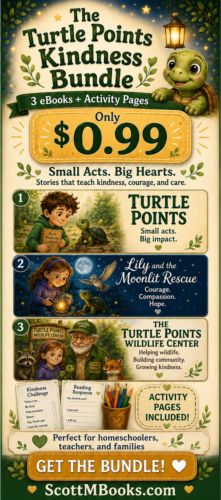
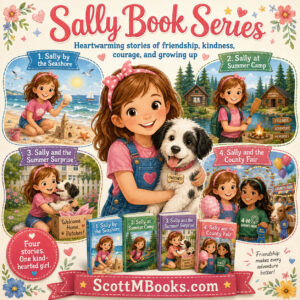
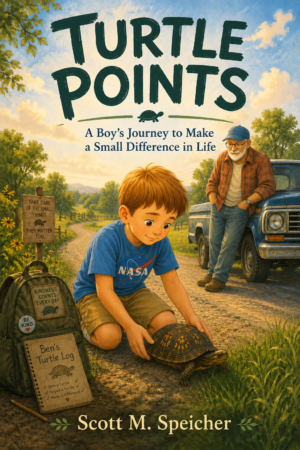
Sally’s stories can encourage conversations about friendship, inclusion, responsibility, and noticing when someone needs support. Lily’s adventures can help children think about kindness, courage, safe helping, and caring for animals and the community. Thomas’s stories can show the importance of perseverance, honesty, responsibility, and learning from mistakes. Ben and the Turtle Points stories can inspire children to recognize small acts of kindness and understand that thoughtful choices can make a meaningful difference.
These characters do not simply tell children what to do. Their experiences invite readers to think, discuss, reflect, and decide what they might do in similar circumstances.
Questions to Ask After Reading
A few thoughtful questions can turn an enjoyable story into a meaningful lesson about choices.
Ask your child or students:
- What was the most important choice in the story?
- Was the character’s decision kind, safe, and responsible?
- Did the character think before acting?
- How did the choice affect other people?
- What did the character learn?
- Would you have made the same decision?
- What other choice could the character have made?
- How could you use this lesson in your own life?
Children should be allowed to explain their answers. The goal is not only to hear the “correct” response, but to help them practice reasoning and expressing their ideas.
Extending the Lesson with Activity Pages
Printable Activity Pages can help children examine character choices more deeply. Instead of ending the lesson when the book closes, children can continue learning through discussion, writing, drawing, and reflection.
Helpful activities include:
- Character feelings pages
- Feelings-and-choices worksheets
- Cause-and-effect exercises
- Story sequencing pages
- Main idea and lesson activities
- Compare-and-contrast pages
- Writing prompts
- Kindness challenges
- Responsibility charts
- Book review pages
A child might write about a choice the character made, explain whether it was helpful, and describe what they would do differently. Another activity might ask the child to draw two possible endings based on two different decisions.
These exercises strengthen comprehension while also encouraging emotional growth and better decision-making.
Connecting Story Choices to Everyday Life
The most valuable discussions help children connect the story to their own experiences.
After reading, adults might ask:
- Have you ever faced a similar situation?
- What choice did you make?
- How did your decision affect someone else?
- Is there something you would do differently now?
- What lesson from the story could help you this week?
Children might choose one practical goal, such as including someone new, taking responsibility for a task, using kinder words, asking for help, or thinking before acting.
This turns the story’s lesson into an action the child can practice.
Helping Children Become Thoughtful Decision-Makers
Stories give children a safe place to explore difficult situations, consider different choices, and learn from both positive examples and mistakes. Through story characters, children can see that their actions matter and that better decisions often require empathy, courage, patience, honesty, and responsibility.
At ScottMBooks.com, engaging stories and printable Activity Pages help children strengthen reading skills while exploring the choices characters make. By reading, discussing, writing, and reflecting, young readers can learn to pause, consider consequences, understand other people’s feelings, and make choices that are safe, kind, and responsible.