Choosing Age-Appropriate Books for Young Readers
Choosing the right book for a child can make the difference between a frustrating reading experience and the beginning of a lifelong love of stories. Parents, teachers, and homeschool families often look at a child’s age or grade level first, but age is only one part of the decision. A suitable book should also match the child’s reading ability, interests, emotional maturity, attention span, and background knowledge.
The goal is not simply to choose the most advanced book a child can manage. The best choice is a book that offers enough challenge to support growth while remaining enjoyable, understandable, and encouraging.
Age Level and Reading Level Are Not Always the Same
Two children of the same age may have very different reading needs. One second-grader may comfortably read short chapter books, while another may still benefit from picture books with simple sentences and repeated words. Both children can be making appropriate progress.
A child’s age can help identify suitable themes and situations, but the reading level determines how independently the child can understand the words and sentences.
When choosing a book, consider:
- Can the child read most of the words without becoming frustrated?
- Can the child explain what is happening?
- Is the sentence structure manageable?
- Does the story hold the child’s attention?
- Is the subject emotionally appropriate?
- Does the child need adult support to understand the story?
A book can be appropriate for a child even when it is meant to be read aloud rather than independently.
Look at the Child, Not Only the Label
Publishers and booksellers often provide suggested age ranges, grade levels, or reading levels. These labels can be useful starting points, but they should not be treated as strict rules.
A book marked for ages six through eight may be perfect for one child and too difficult or too simple for another. Consider the individual reader’s experience, confidence, and interests.
Some children enjoy longer stories but need help reading them. Others can read advanced words but may not yet understand the book’s emotional themes. A strong reader is not automatically ready for every subject written at a higher level.
The best book is one that fits the whole child—not just a number printed on the cover.
Consider the Purpose of the Book
Before selecting a title, decide how the book will be used.
Independent Reading
For independent reading, children need books they can read with reasonable comfort. They should be able to recognize most of the words, follow the story, and remain engaged without constant adult assistance.
A few challenging words are helpful. Too many difficult words can interrupt comprehension and make reading feel like work.
Read-Aloud Time
Read-aloud books can be more advanced than a child’s independent reading level. Listening allows children to enjoy richer vocabulary, longer plots, and more complex ideas without having to decode every word themselves.
Adults can pause to explain unfamiliar words, discuss character feelings, and clarify confusing events.
Classroom or Homeschool Lessons
Books used for instruction may include specific themes, vocabulary, or comprehension skills. A teacher or parent might select a story to introduce sequencing, cause and effect, character traits, friendship, responsibility, or kindness.
The book should support the lesson without overwhelming the child with too many new concepts at once.
Check the Length and Structure
Young readers often benefit from books with clear organization and manageable sections.
For beginning readers, look for:
- Short sentences
- Familiar words
- Repeated phrases
- Predictable story patterns
- Large, readable print
- Illustrations that support the meaning
- Short chapters or sections
As children gain confidence, they may be ready for longer chapters, more characters, and stories that continue over several reading sessions.
A child who feels intimidated by a thick book may respond well to a title with short chapters and plenty of illustrations. The same amount of text can feel much more approachable when it is divided into smaller sections.
Use Illustrations as Reading Support
Illustrations are not only decorative. They help children understand characters, settings, actions, and emotions.
For early readers, pictures can:
- Provide clues about unfamiliar words
- Help children predict what will happen
- Support story recall
- Explain facial expressions and feelings
- Make longer pages feel less intimidating
- Encourage conversation and observation
Picture books can remain valuable even after a child begins reading chapter books. Rich illustrations can support comprehension, inspire creative thinking, and help children explore ideas that may be difficult to express in words.
Children should not be rushed away from illustrated books simply because they have reached a certain grade.
Match the Book to the Child’s Interests
A child is more likely to keep reading when the subject feels personally meaningful.
Young readers may be interested in:
- Animals and pets
- Friendship
- Sports
- Dinosaurs
- Space
- Vehicles
- Nature
- School experiences
- Family adventures
- Mysteries
- Humor
- Fantasy
- Crafts and building
- Community helpers
- Real-life challenges
Offer several suitable choices instead of selecting every book for the child. A simple question such as, “Would you rather read about a puppy, a trip to the zoo, or a summer adventure?” gives the child a sense of ownership.
Reading preferences may also change. A child who loves animal stories today may become interested in science, mysteries, or biographies next month. Continue offering variety.
Consider Emotional Maturity
A child may be able to read the words in a book without being emotionally ready for the subject.
Stories may include themes such as:
- Bullying
- Family separation
- Illness
- Grief
- Fear
- Conflict
- Animal injury
- Moving to a new home
- Feeling left out
- Major life changes
These topics can be valuable when presented gently and discussed with a caring adult. However, the book should not create unnecessary fear or confusion.
Before sharing a story with sensitive content, review it yourself when possible. Consider how directly the topic is presented, whether the story offers reassurance or hope, and whether the child will have an opportunity to ask questions.
Children respond differently to difficult themes. A story that comforts one reader may upset another. Adults who know the child are in the best position to decide whether a book is suitable.
Look for Relatable Characters and Situations
Young readers often connect strongly with characters who face familiar experiences.
A child may recognize themselves in a character who:
- Feels nervous on the first day of school
- Learns how to care for a pet
- Makes a new friend
- Struggles with patience
- Makes a mistake
- Tries a new activity
- Feels left out
- Learns to share
- Asks an adult for help
- Works through a disagreement
Relatable characters help children understand that their feelings are normal. They also provide a safe way to discuss choices and consequences.
Ask questions such as:
- “Have you ever felt like this character?”
- “What helped the character?”
- “What would you do in this situation?”
- “Did the character make a good choice?”
- “What did the character learn?”
These conversations strengthen comprehension and emotional understanding at the same time.
Choose Books With Clear, Meaningful Lessons
Children’s books can introduce important values without sounding like lectures. The strongest stories allow the lesson to grow naturally from the character’s actions and experiences.
Age-appropriate books may explore:
Kindness, courage, honesty, responsibility, friendship, patience, teamwork, empathy, confidence, inclusion, and safe helping.
A story about responsibility might show a child caring for a pet even when the work becomes inconvenient. A story about courage might show a character taking one careful step despite feeling nervous. A story about kindness might demonstrate the power of inviting someone to play.
Children understand lessons more deeply when they see them in action.
Test the Book Together
One of the easiest ways to determine whether a book is a good fit is to read a few pages together.
Notice whether the child:
- Understands what is happening
- Can read most of the words
- Appears interested
- Asks relevant questions
- Makes predictions
- Remembers important details
- Becomes frustrated or tired
- Wants to continue
A child does not have to understand every word. Some challenge supports learning. However, the overall meaning should remain clear.
When a book is too difficult, the child may guess repeatedly, lose track of the story, or focus so much on sounding out words that comprehension disappears. When a book is too easy, the child may become bored, although familiar and easier books can still be useful for fluency and confidence.
Use the Five-Finger Check
A simple informal method can help determine whether a book is suitable for independent reading.
Ask the child to read one full page and hold up one finger for each unfamiliar word.
- Zero or one difficult word: The book may be comfortable or easy.
- Two or three difficult words: The book may offer an appropriate challenge.
- Four difficult words: The child may need adult support.
- Five or more difficult words: The book may be better as a read-aloud or saved for later.
This is only a guide. Page length, word difficulty, illustrations, and the child’s understanding should also be considered.
A child who encounters five unfamiliar animal names in an informational book may still understand the subject. Another child may recognize every word but not understand the plot. Comprehension matters more than the finger count alone.
Do Not Confuse Difficulty With Quality
An advanced book is not automatically better than a simple book.
Short, clear stories can teach important lessons, introduce rich conversations, and help children build confidence. A well-written picture book may contain more emotional depth than a longer chapter book.
Children need successful reading experiences. A book that can be read, understood, discussed, and enjoyed has real educational value.
Repeated reading is also valuable. Children often return to favorite books because familiarity feels comforting. Each reading may help them notice new details, strengthen fluency, and understand the story more deeply.
Provide Both Challenge and Comfort
A balanced reading library should include different levels of difficulty.
Children benefit from:
- Easy books they can read confidently
- On-level books that provide steady practice
- Slightly challenging books that introduce new skills
- Advanced books that adults read aloud
- Favorite books they enjoy revisiting
- Informational books connected to their interests
Not every reading experience needs to be challenging. Comfortable books help build speed, expression, independence, and confidence.
A child who struggles through difficult material every day may begin to associate reading with failure. A child who receives a healthy mixture of support, success, and challenge is more likely to remain motivated.
Allow Children to Stop Reading a Book
Adults do not finish every book they begin, and children should not always be required to do so either.
A child may lose interest because:
- The story moves too slowly
- The topic is not appealing
- The reading level is too difficult
- The characters are confusing
- The book is emotionally uncomfortable
- The child’s interests have changed
Encourage the child to explain why the book is not working. This conversation helps develop reading preferences and critical thinking.
There are times when completing an assigned book is part of a lesson. However, during personal reading time, allowing a child to select another book can protect enthusiasm and encourage independent decision-making.
Build a Varied Home or Classroom Library
Children need access to many kinds of books before they can discover what they enjoy.
A varied collection might include:
- Fiction and nonfiction
- Picture books
- Early readers
- Short chapter books
- Poetry
- Graphic novels
- Biographies
- Folk tales
- Animal stories
- Humor
- Adventure
- Books about feelings and choices
- Stories from different families and cultures
Libraries, digital collections, classroom book exchanges, and free eBooks can help families provide variety without purchasing every title.
Rotate available books occasionally. A book that was ignored several months ago may suddenly become interesting as a child’s skills and interests develop.
Ask Questions Without Turning Reading Into a Test
After reading, use a few relaxed questions to check comprehension and encourage discussion.
Try asking:
- “What was your favorite part?”
- “Who was the main character?”
- “What problem happened?”
- “How was the problem solved?”
- “How did the character feel?”
- “What did the story teach?”
- “Would you recommend this book?”
- “What would you change about the ending?”
The conversation should feel supportive rather than evaluative. Children are more likely to share thoughtful ideas when they are not worried about giving the one correct answer.
Add a Simple Follow-Up Activity
An age-appropriate activity can extend the story and help children remember what they read.
Possible activities include:
- Drawing a favorite scene
- Sequencing three important events
- Writing about a character
- Completing a story map
- Identifying new vocabulary
- Creating a different ending
- Rating the book
- Comparing two characters
- Acting out a scene
- Completing a kindness or responsibility challenge
The activity should match the child’s age and ability. A young child may draw and dictate an answer, while an older child may write several sentences.
Avoid requiring a long worksheet after every book. Sometimes a conversation or drawing is enough.
Signs That a Book Is a Good Match
An age-appropriate book usually allows a child to:
- Follow the main events
- Understand most of the vocabulary
- Connect with the characters or topic
- Read or listen without excessive frustration
- Remember important details
- Ask meaningful questions
- Discuss the story afterward
- Feel interested in continuing
Most importantly, the child should finish the reading experience feeling capable and curious.
The Right Book Can Open the Door
Choosing age-appropriate books is not about finding one perfect formula. It is about paying attention to the child in front of you.
Consider the child’s reading level, interests, emotional readiness, attention span, and purpose for reading. Offer choices, provide support, and remember that children can enjoy books in different ways. Some books will be read independently. Others will be shared aloud. Some will teach new skills, while others will simply bring comfort and joy.
The right book meets a child where they are and gently invites them forward.
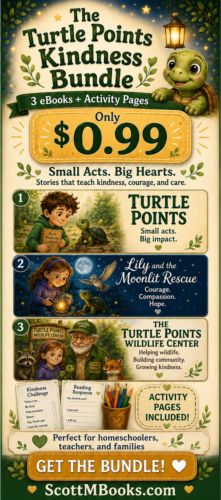
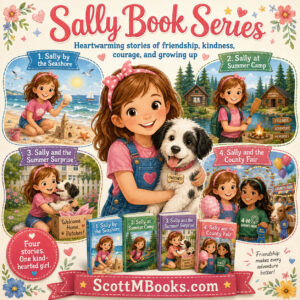
At ScottMBooks.com, teachers, homeschool parents, and families can explore children’s eBooks and printable activities designed to support reading comprehension, vocabulary, creativity, positive choices, and character development. By choosing stories that are understandable, meaningful, and enjoyable, adults can help young readers build both skill and confidence—one book at a time.