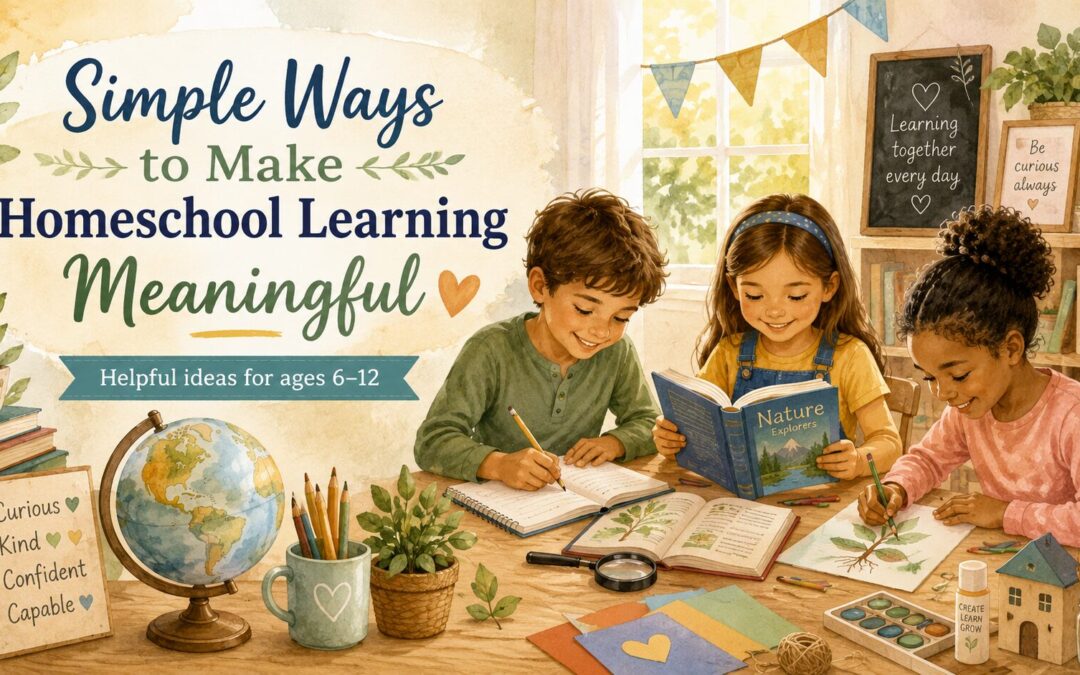
Homeschooling children between the ages of 6 and 12 is a wonderful opportunity to help them grow not only as readers and learners, but also as kind, responsible, and confident young people. At this age, children are curious, energetic, and beginning to understand how their choices affect the world around them.
One helpful way to make learning meaningful is to connect lessons to real life. A story about a child caring for a pet can become a lesson about responsibility. A book about friendship can lead to a conversation about kindness. A nature walk can turn into science, writing, art, and observation all in one simple activity.
Reading is one of the best tools for homeschool families because it can open the door to many subjects. After reading a story, children can answer questions, write a short response, draw their favorite scene, act out part of the story, or talk about what the character learned. These activities help build reading comprehension while also encouraging creativity and critical thinking.
For younger children, ages 6–8, keep lessons short, hands-on, and encouraging. They often learn best through drawing, movement, read-aloud time, and simple discussion. For older children, ages 9–12, add more reflection. Ask them why a character made a choice, what lesson the story teaches, or how they might apply that lesson in their own life.
Homeschooling does not have to be complicated to be effective. A good book, a thoughtful question, and a simple activity can create a powerful learning moment. When children connect reading with kindness, responsibility, courage, and creativity, they begin to see that learning is not just about completing assignments — it is about becoming thoughtful, capable, and caring people.