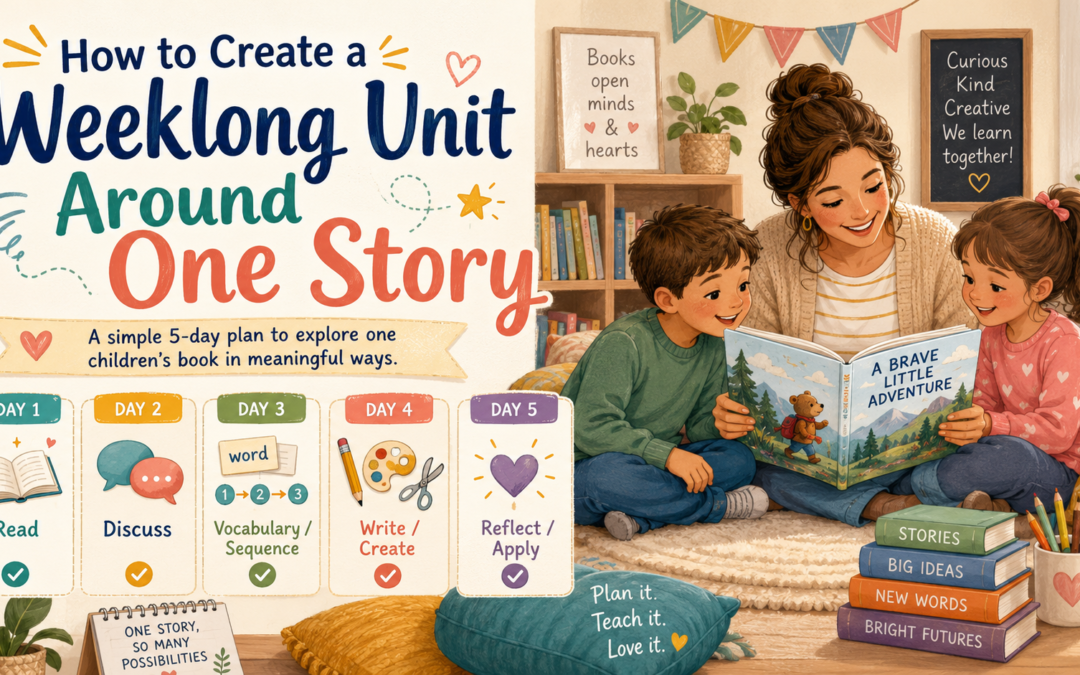
How to Create a Weeklong Unit Around One Story
A single children’s story can become the foundation for an entire week of meaningful learning. With thoughtful planning, parents, teachers, and homeschool educators can use one book to support reading comprehension, vocabulary, writing, art, discussion, character education, and creative thinking.
A weeklong story unit does not need to feel repetitive. The same book can be approached in a different way each day, giving children multiple opportunities to understand the characters, events, message, and new vocabulary.
This approach works especially well for picture books, short chapter books, and stories with clear characters, problems, choices, and lessons.
Why Use One Story for an Entire Week?
Reading a story more than once helps children notice details they may have missed during the first reading. It also gives them more time to think about the characters, understand difficult words, and connect the story’s lesson to their own lives.
A weeklong unit can help children:
- Strengthen reading comprehension
- Develop vocabulary
- Practice sequencing
- Improve writing skills
- Understand characters and emotions
- Identify the main idea or lesson
- Build confidence through repeated reading
- Make connections across different subjects
- Express ideas through art and discussion
Using one story for several days can also simplify lesson planning. Instead of finding a completely new reading selection every day, educators can build several activities around one familiar book.
Choose the Right Story
The first step is choosing a story that offers enough material for several days of learning.
Look for a book with:
- Memorable characters
- A clear beginning, middle, and end
- An interesting problem or goal
- Meaningful choices
- Age-appropriate vocabulary
- Opportunities for discussion
- A lesson or theme
- Strong illustrations
- Connections to real life
Stories about friendship, kindness, courage, responsibility, animals, family, school, or community often work especially well.
The book should be understandable but still provide something for children to think about. A story that is too simple may not offer enough material, while one that is too difficult may create frustration.
Decide on the Week’s Main Learning Goals
Before planning the daily activities, identify what you want children to learn from the unit.
Possible goals include:
- Retelling the story in order
- Identifying the main character
- Understanding the problem and solution
- Learning new vocabulary
- Describing character feelings
- Recognizing cause and effect
- Identifying the story’s lesson
- Writing a personal response
- Practicing kindness or responsibility
- Creating an art project connected to the book
Choose a few goals rather than trying to teach everything at once.
For younger children, the unit may focus on comprehension, vocabulary, feelings, and drawing. Older children may also analyze character development, write longer responses, compare viewpoints, or research topics connected to the story.
Day One: Read and Explore
The first day should introduce the story and encourage curiosity.
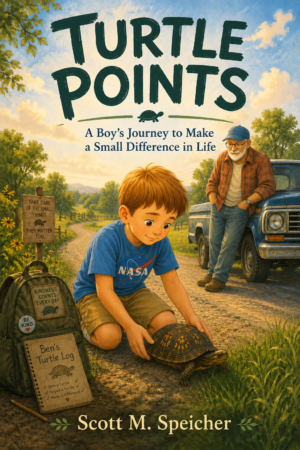
Begin by studying the cover.
Ask:
- What do you notice?
- Who might the main character be?
- Where do you think the story takes place?
- What do you think might happen?
- What clues helped you make that prediction?
Read the story aloud without stopping too often. Pause only when a short question or explanation will help children understand an important event or unfamiliar word.
After reading, discuss initial reactions.
Ask:
- What was your favorite part?
- Who were the main characters?
- What happened in the story?
- Was anything surprising?
- What would you like to know more about?
Day One Activities
Children might:
- Draw their favorite scene
- Complete a prediction page
- Identify the main characters
- Draw the setting
- Share one question about the story
- Write one sentence about their favorite part
The first day should focus on enjoyment and general understanding rather than detailed analysis.
Day Two: Study Characters and Feelings
On the second day, return to the story and focus on the characters.
Reread important sections or review the story through the illustrations. Ask children to think about what each character wanted, how the character felt, and what choices the character made.
Questions might include:
- How would you describe the main character?
- What did the character want?
- What problem did the character face?
- How did the character feel at the beginning?
- Did those feelings change?
- What choice did the character make?
- Was it a helpful choice?
- What did the character learn?
Encourage children to use details from the story when explaining their answers.
Day Two Activities
Children might:
- Complete a character-traits chart
- Draw a character’s feelings
- Write a sentence from the character’s point of view
- Compare two characters
- Create a character profile
- Act out a scene
- Identify a kind, brave, or responsible choice
This day is a good opportunity to connect reading with social-emotional learning.
Day Three: Sequence Events and Build Vocabulary
The third day can focus on story order and new words.
Ask children to retell the story using the beginning, middle, and end. For longer stories, identify four to six important events.
Discuss why the order matters. Explain that one event often causes another event to happen.
Questions might include:
- What happened first?
- What happened next?
- Which event was most important?
- What caused the problem?
- What helped solve the problem?
- What would happen if one event were removed?
Choose three to five vocabulary words from the story. Select words that are useful, interesting, and understandable within the context.
For each word:
- Read the sentence from the story.
- Ask what children think the word means.
- Explain the meaning.
- Use the word in a new sentence.
- Invite children to use or illustrate the word.
Day Three Activities
Children might:
- Put story-event cards in order
- Complete a beginning-middle-end page
- Create a story map
- Match vocabulary words with definitions
- Draw pictures showing vocabulary words
- Write new sentences using the words
- Create a simple cause-and-effect chart
Sequencing activities help children understand how the parts of a story fit together.
Day Four: Write and Create
The fourth day gives children an opportunity to respond creatively to the story.
Writing activities can be adjusted for different ages and abilities.
Younger children might:
- Draw and label a scene
- Complete a sentence starter
- Write one or two sentences
- Dictate a response to an adult
Older children might:
- Write a paragraph
- Create a new ending
- Write a letter to a character
- Retell the story from another point of view
- Explain the story’s lesson
- Write about a similar personal experience
Useful writing prompts include:
- My favorite part was…
- The main character was…
- I think the character made a good choice because…
- If I were in the story, I would…
- The story teaches…
- A different ending could be…
- I would ask the main character…
Creative Activities
Children might also:
- Design a new book cover
- Create a puppet of a character
- Build the setting with craft materials
- Make a story poster
- Act out an important scene
- Create a comic strip
- Draw what might happen next
- Make a bookmark inspired by the story
Creative responses help children show understanding in ways that go beyond worksheets.
Day Five: Reflect and Apply the Lesson
The final day should help children think about the story’s larger meaning.
Review the major events, character choices, and lessons.
Ask:
- What did the main character learn?
- What was the story mostly about?
- What lesson did the story teach?
- How did the character change?
- What would you have done differently?
- How can we use this lesson in real life?
- Would you recommend this story? Why?
If the story involves kindness, responsibility, courage, friendship, or another important value, create a simple real-life challenge.
For example:
- Perform one act of kindness
- Help without being asked
- Invite someone to join an activity
- Practice taking responsibility for a task
- Try something new
- Encourage a friend
- Care for a shared space
- Write a thank-you note
Day Five Activities
Children might:
- Complete a book review
- Write about the story’s lesson
- Make a kindness or responsibility plan
- Create a poster about the main theme
- Discuss how the story connects to real life
- Give the book a rating
- Share a favorite project from the week
- Present what they learned
The final day can also include a small celebration, such as displaying artwork, sharing written responses, or rereading a favorite scene.
Sample Five-Day Unit Plan
Monday: Read and Predict
- Examine the cover
- Make predictions
- Read the story aloud
- Discuss favorite parts
- Draw a favorite scene
Tuesday: Characters and Feelings
- Review the story
- Identify character traits
- Discuss feelings and choices
- Complete a character-response page
- Act out a short scene
Wednesday: Sequence and Vocabulary
- Retell the story
- Put events in order
- Learn three to five new words
- Complete a story map
- Practice using vocabulary
Thursday: Writing and Creativity
- Respond to a writing prompt
- Create a new ending or character letter
- Design artwork, a comic, or a new cover
- Share creative responses
Friday: Lesson and Reflection
- Identify the story’s message
- Connect the lesson to real life
- Complete a book review
- Take part in a kindness or responsibility challenge
- Share what was learned
Connect the Story to Other Subjects
One story can also support learning beyond reading and writing.
Art
Children can draw characters, create a setting, make puppets, or design a new cover.
Science
A story about animals, weather, plants, space, or nature can lead to a simple science lesson.
Social Studies
Stories about communities, families, traditions, or different places can introduce social studies topics.
Math
Children can count objects from the story, create a simple graph, compare sizes, measure items, or solve story-based word problems.
Music
Children can create a song, rhythm, or sound effects for part of the story.
Physical Activity
Children can act out events, create movement activities, or play a game inspired by the book.
These connections should feel natural. It is not necessary to force every subject into every story.
Adapt the Unit for Different Ages
The same story can often be used with children at different grade levels.
Preschool and Kindergarten
Focus on:
- Listening
- Identifying characters
- Naming feelings
- Retelling with pictures
- Drawing
- Acting out scenes
- Learning simple vocabulary
Grades One Through Three
Focus on:
- Beginning, middle, and end
- Character traits
- Problem and solution
- Vocabulary
- Main idea
- Short written responses
- Story lessons
Grades Four and Above
Focus on:
- Character motivation
- Cause and effect
- Theme
- Point of view
- Evidence from the text
- Longer writing assignments
- Comparing characters or stories
- Research connected to the topic
Adjusting the activity is often more important than changing the book.
Use Repeated Reading Without Losing Interest
Some adults worry that children will become bored if the same story is used for several days. The key is to give each reading a new purpose.
On the first day, read for enjoyment.
On the second day, listen for character feelings.
On the third day, look for important events and vocabulary.
On the fourth day, gather ideas for writing.
On the fifth day, focus on the story’s lesson.
Children often enjoy familiar stories because they know what to expect and can participate more confidently.
Keep Activities Manageable
A weeklong unit should not require hours of preparation or a large amount of written work.
Choose one main activity each day. Additional activities can be optional.
A simple daily lesson might include:
- Ten to fifteen minutes of reading
- Ten minutes of discussion
- Fifteen to twenty minutes of activity work
The length can be adjusted according to the child’s age, attention span, and schedule.
The goal is deeper understanding, not completing the greatest number of worksheets.
Create a Simple Unit Folder
A folder can help keep all of the week’s work together.
The folder might include:
- Prediction page
- Character chart
- Story-sequencing activity
- Vocabulary page
- Writing response
- Creative artwork
- Book review
- Final reflection
At the end of the week, children can look through the folder and see how much they learned from one story.
This can be especially helpful for homeschool records, student portfolios, or classroom displays.
Allow for Choice
Children are often more engaged when they can choose how to respond.
Offer two or three activity options, such as:
- Write a paragraph
- Draw a detailed picture
- Create a comic
- Act out a scene
- Record an oral retelling
- Design a poster
All children do not need to complete the same activity to demonstrate understanding.
Choice can be particularly helpful for reluctant writers, younger children, and students with different learning needs.
Final Thoughts
Creating a weeklong unit around one story is an effective way to help children read more deeply and make meaningful connections.
By revisiting the story with a different focus each day, educators can strengthen comprehension, vocabulary, writing, creativity, emotional awareness, and critical thinking.
The unit does not need to be complicated. A good book, a clear five-day plan, thoughtful questions, and a few engaging activities are enough.
When children spend time exploring a story from several angles, they begin to understand that books offer more than entertainment. Stories can help them learn new words, understand people, solve problems, express ideas, and apply important lessons to everyday life.