How to Teach Multiple Ages During Reading Time
Teaching children of different ages during the same reading lesson can feel challenging. One child may be learning letter sounds, another may be reading short chapter books, and an older student may be ready to analyze characters, themes, and important lessons. Trying to prepare a completely separate lesson for every child can quickly become exhausting.
Fortunately, children do not always need different stories to receive age-appropriate instruction. A shared book can bring the family or class together while each child participates at an appropriate level. By adjusting the questions, activities, and expectations, parents and teachers can use one story to support several ages at the same time.
Begin With One Shared Story
A read-aloud is one of the easiest ways to teach multiple ages together. Choose a story with engaging characters, a clear plot, and a meaningful lesson that can be understood on several levels.
Younger children may enjoy the illustrations, repeated phrases, humor, and action. Middle elementary students can follow the sequence of events and discuss the characters’ feelings. Older children can examine motivations, consequences, themes, and the author’s message.
A story about friendship, for example, can support several levels of learning:
- A younger child can identify the characters and describe what happened.
- A developing reader can sequence the main events and explain the problem.
- An older student can discuss why the conflict occurred and evaluate the characters’ choices.
Everyone reads the same story, but each child works at an appropriate level.
Set Different Expectations for Different Ages
Teaching multiple ages does not mean expecting every child to produce the same type of work. The lesson can have one central topic with different learning goals.
After reading a story, a younger child might draw a favorite scene. A middle-grade student might answer comprehension questions. An older student might write a paragraph explaining the lesson or comparing two characters.
The purpose is not to make one child’s assignment easier and another child’s assignment harder. It is to match the activity to each child’s reading, writing, and developmental abilities.
A useful structure is:
Younger Learners
Ask them to listen, observe, draw, point, match, identify, or retell simple events.
Developing Readers
Ask them to sequence, describe, summarize, define vocabulary, or answer questions in complete sentences.
Older or More Advanced Readers
Ask them to analyze, compare, explain, support an opinion, rewrite a scene, or connect the story to real life.
Use Layered Discussion Questions
One conversation can include questions for several age levels. Begin with simple recall questions and gradually move toward deeper thinking.
Start with questions such as:
- Who are the main characters?
- Where does the story take place?
- What happened first?
- What problem did the character face?
Then continue with questions that require explanation:
- Why did the character make that choice?
- How did the character’s actions affect someone else?
- What could the character have done differently?
- What lesson can readers learn from the story?
Younger children can answer the first questions, while older children can respond to the more complex ones. Everyone remains part of the same conversation.
It is also helpful to invite children to build on one another’s answers. An older child might explain an idea in more detail, while a younger child may notice an illustration or simple detail that others overlooked.
Give Younger Children Something to Do While Listening
Young children may have difficulty sitting still during a longer read-aloud. Quiet, story-related activities can help them remain engaged without disrupting the lesson.
They might:
- Color a picture of a character
- Hold a small toy connected to the story
- Draw something mentioned in the book
- Point to items in the illustrations
- Act out simple actions
- Listen for a repeated word
- Place picture cards in order
These activities allow younger children to participate even when the story is above their independent reading level.
Avoid turning every moment into a test. Listening to language, hearing expressive reading, and enjoying a story are valuable learning experiences by themselves.
Let Older Children Help Without Becoming the Teacher
Older children can contribute to shared reading time by reading a page aloud, explaining a vocabulary word, helping organize sequencing cards, or listening to a younger sibling retell the story.
This can strengthen confidence, fluency, patience, and leadership. However, older children should not be expected to manage the entire lesson or constantly teach younger children.
Give them a defined role, such as:
- Read one section aloud.
- Help a younger child find a character in the illustration.
- Ask one discussion question.
- Check whether the event cards are in the correct order.
- Listen to a short retelling and offer encouragement.
The adult remains responsible for instruction, while the older child gains a meaningful opportunity to contribute.
Use One Theme Across Different Reading Levels
Children do not necessarily need to read the exact same book to study the same theme. A family or classroom can explore one topic through books at different levels.
Possible shared themes include:
- Kindness
- Courage
- Friendship
- Responsibility
- Honesty
- Patience
- Inclusion
- Caring for animals
- Helping the community
- Making good choices
A younger child might read a picture book about sharing, while an older child reads a chapter book about resolving a friendship conflict. During the discussion, both children can explain what their characters learned.
This approach creates a shared learning experience while still allowing each child to read material suited to their ability.
Adjust the Reading Format
A long reading lesson is not always better. Children of different ages may have different attention spans, energy levels, and reading abilities.
Consider dividing reading time into three parts:
Shared Reading
Read one story or chapter together for 15 to 20 minutes.
Individual or Partner Work
Give each child an age-appropriate activity for 10 to 20 minutes.
Family Discussion
Come together for a brief conversation in which everyone shares something they noticed or learned.
Younger children may finish earlier and move to a quiet coloring or book-browsing activity. Older students may continue writing or reading independently.
A predictable routine helps children understand what is expected and reduces interruptions.
Provide Different Activity Pages
Activity Pages make it easier to use one book with several ages. Instead of creating separate lessons from the beginning, choose activities that reflect each child’s level.
For Younger Children
Use picture sequencing, coloring pages, simple matching, character identification, and drawing prompts.
For Early Elementary Students
Use story questions, beginning-middle-end pages, vocabulary practice, feelings activities, and sentence starters.
For Older Elementary Students
Use written summaries, character comparisons, cause-and-effect exercises, theme analysis, book reviews, and extended writing prompts.
Children can complete different pages and then share their work with the group. A younger child might show a drawing, while an older child reads a written reflection.
Allow Different Types of Responses
Not every child needs to demonstrate understanding through writing. Some children express ideas more clearly through speaking, drawing, movement, or building.
After reading, children might:
- Retell the story aloud
- Draw a scene
- Create a comic strip
- Act out an important event
- Build the setting with blocks
- Write a character letter
- Complete a story map
- Record a short audio summary
- Make a poster about the story’s lesson
Offering different response options can be especially helpful when children have different writing abilities.
Focus on Progress, Not Comparison
When children of different ages learn together, comparisons can happen easily. A younger child may notice that an older sibling writes longer answers. An older child may feel that a younger child receives easier work.
Remind children that everyone is working on different skills. One child may be practicing letter formation, another may be learning to write complete sentences, and another may be developing analytical writing.
Celebrate individual progress:
- “You remembered all three main events.”
- “You used a new vocabulary word correctly.”
- “You explained why the character felt left out.”
- “You supported your opinion with an example from the story.”
- “You listened carefully while your sibling was speaking.”
The goal is growth, not identical performance.
Choose Books With Meaningful Discussion Opportunities
The best shared-reading books offer more than an entertaining plot. They give children something to think about and discuss.
Look for stories containing:
- Relatable characters
- A clear problem and solution
- Emotional experiences children understand
- Choices with visible consequences
- Opportunities for kindness or responsibility
- A meaningful but age-appropriate lesson
- Illustrations that support understanding
Books featuring everyday situations are especially useful because children can connect the characters’ experiences to their own lives.
Use ScottMBooks Stories With Multiple Ages
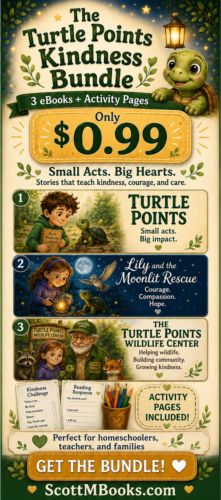
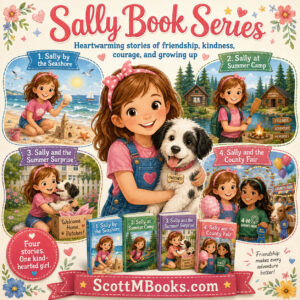
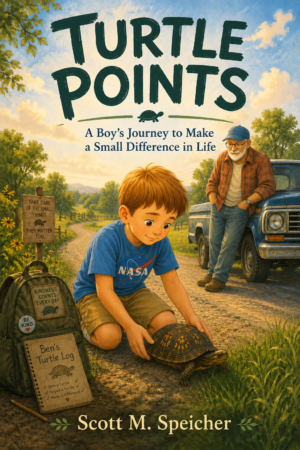
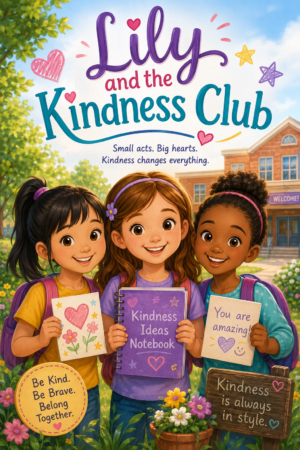
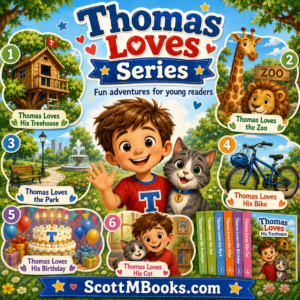
The stories available through ScottMBooks.com can support shared reading with children at different stages. Characters such as Lily, Sally, Thomas, and Ben experience situations involving kindness, courage, friendship, responsibility, inclusion, perseverance, and making good choices.
Younger children can identify characters, describe illustrations, and discuss basic feelings. Developing readers can sequence events, answer comprehension questions, and practice vocabulary. Older children can examine character decisions, compare viewpoints, discuss consequences, and write about the story’s lesson.
The accompanying Activity Pages allow parents, teachers, and homeschool families to extend each book at several learning levels. Children can work with the same story while completing different activities based on their age and abilities.
A Simple Multi-Age Reading Lesson
Here is an easy structure that can be used with almost any children’s story.
Before Reading
Show the cover and ask everyone to make a prediction. Younger children can describe what they see. Older children can explain what they think the story may be about and why.
During Reading
Pause occasionally to discuss important events, unfamiliar words, or character feelings. Ask younger children simple identification questions and invite older children to explain motivations or predict consequences.
After Reading
Ask everyone to name one important event and one lesson from the story.
Then provide differentiated activities:
- Younger child: Draw the beginning, middle, or ending.
- Developing reader: Sequence four events and answer comprehension questions.
- Older student: Write a summary or explain whether the character made a good choice.
End by allowing each child to share part of the completed work.
Keep the Routine Manageable
Teaching multiple ages becomes more difficult when every lesson requires numerous materials, lengthy preparation, and completely separate plans.
Keep the routine simple:
- Choose one story or theme.
- Read together.
- Ask questions at several levels.
- Assign one suitable activity to each child.
- End with a short discussion or sharing time.
A lesson does not need to be complicated to be effective. Consistent shared reading, thoughtful conversation, and age-appropriate follow-up activities can produce meaningful learning.
Learning Together Through Books
Teaching multiple ages during reading time can become one of the most enjoyable parts of the day. Shared stories create connection, encourage conversation, and allow children to learn from one another. Younger children benefit from hearing richer language and observing older readers, while older children strengthen their understanding by explaining ideas and modeling positive reading habits.
By using one story with layered questions, flexible activities, and different expectations, parents and teachers can meet a range of needs without preparing an entirely separate lesson for every child. The result is a reading routine that supports comprehension, vocabulary, communication, character development, and a shared love of books.