How Story Characters Help Children Make Better Choices
Children often understand life lessons more easily when they see those lessons demonstrated through a story. A parent or teacher can explain the importance of kindness, honesty, courage, responsibility, or patience, but a memorable character can show children what those qualities look like in everyday situations.
As young readers follow a character through a problem, they watch that character make decisions, experience consequences, learn from mistakes, and grow. These experiences give children a safe way to think about their own choices before they face similar situations in real life.
Characters Make Important Lessons Easier to Understand
Ideas such as empathy, responsibility, fairness, and perseverance can feel abstract to young children. Stories make these concepts more concrete.
A character may:
- Invite a lonely classmate to join a game
- Admit to making a mistake
- Ask an adult for help
- Continue practicing after becoming frustrated
- Care for an animal responsibly
- Apologize after hurting someone’s feelings
Instead of only being told what a good choice looks like, children see it happen within a meaningful situation. This helps them understand both the decision and the reason it matters.
Stories Show That Choices Have Consequences
Every important decision in a story changes what happens next. A thoughtful choice may solve a problem, strengthen a friendship, or help someone feel included. A careless or unkind choice may create conflict, hurt feelings, or make the situation more difficult.
These cause-and-effect relationships help children understand that their actions matter.
After reading, adults can ask:
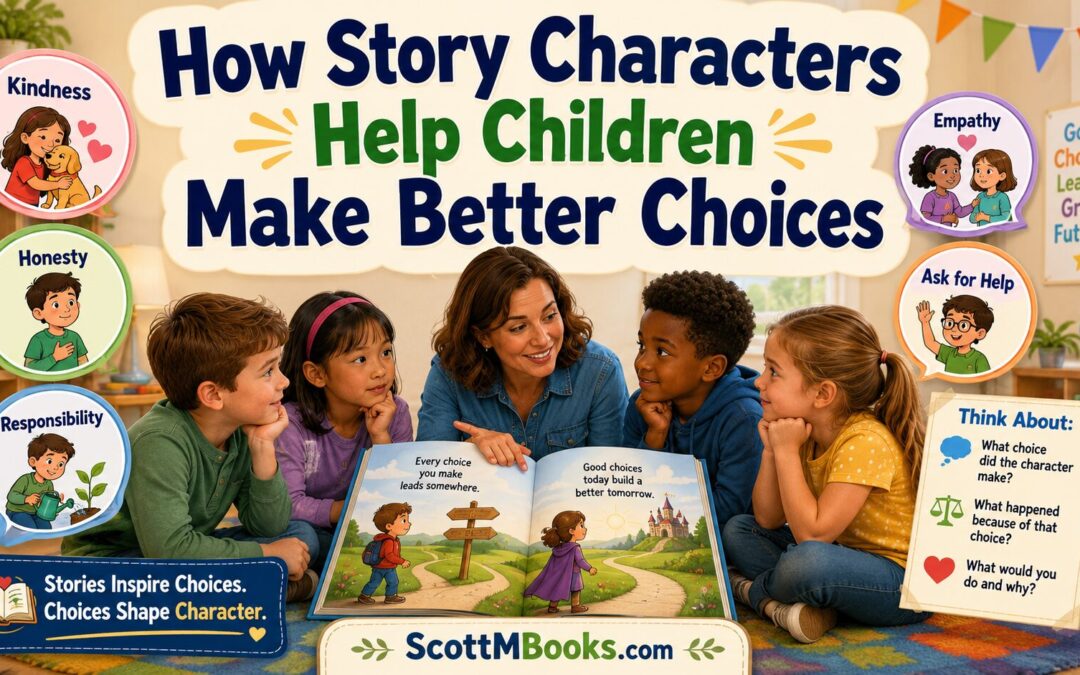
- What choice did the character make?
- Why did the character make that decision?
- What happened because of the choice?
- Who was affected?
- Could the character have made a different decision?
These questions encourage children to move beyond simply recalling events. They begin thinking about motivation, responsibility, and consequences.
Children Can Learn From a Character’s Mistakes
The most helpful story characters are not always perfect. They may become impatient, misunderstand a friend, avoid responsibility, or make a rushed decision. These mistakes create valuable learning opportunities.
Children can examine a poor choice without feeling personally criticized. They can discuss what went wrong, how the choice affected others, and what the character could do to repair the situation.
This also teaches children an important lesson: making a mistake does not make someone a bad person. People can accept responsibility, apologize, make amends, and choose differently next time.
Useful questions include:
- What mistake did the character make?
- How did the other characters feel?
- Did the character take responsibility?
- Was an apology needed?
- How could the character make things right?
Characters Help Build Empathy
Better choices often begin with understanding another person’s feelings. Stories allow children to experience situations from a viewpoint different from their own.
A character may feel nervous about starting school, embarrassed after making a mistake, lonely at recess, frustrated by a difficult task, or worried about being accepted. As children learn why the character feels that way, they become more prepared to recognize similar emotions in others.
Ask children:
- How was the character feeling?
- What caused that feeling?
- Did anyone notice?
- What could another character say or do to help?
- How would you feel in the same situation?
These conversations help children develop compassion and emotional awareness.
Story Characters Model Problem-Solving
Children need practice thinking through problems rather than reacting immediately. A story gives them time to examine different possibilities.
For example, a character who sees someone sitting alone might:
- Invite the person to join a game
- Sit beside the person and start a conversation
- Ask whether the person needs help
- Introduce the person to another friend
- Tell a trusted adult if something seems wrong
Discussing several possible choices teaches children that problems may have more than one safe and thoughtful solution.
It also encourages them to pause, think, and consider the likely result before acting.
Stories Teach When to Ask an Adult for Help
Children sometimes believe that being brave means handling every problem alone. Books can show them that asking for help is often the safest and most responsible decision.
Characters may need adult assistance when facing:
- Bullying
- A dangerous location
- An injured or wild animal
- A serious disagreement
- A lost child
- An emergency
- A situation that feels unsafe or uncomfortable
When children see a character seek help, they learn that good judgment includes knowing when a problem is too serious to manage alone.
Relatable Characters Make Lessons Memorable
Children are more likely to remember a lesson when they care about the character learning it. A relatable character may experience the same worries, mistakes, or challenges that a young reader faces.
A child may identify with someone who is:
- Nervous about making friends
- Afraid to try something new
- Frustrated by a difficult skill
- Unsure whether to tell the truth
- Learning to care for a pet
- Trying to include someone who feels left out
Later, when the child encounters a similar situation, the story may provide a helpful reminder. The child might remember how a favorite character responded and use that example when deciding what to do.
Characters Can Demonstrate Positive Traits
Story characters help children recognize important personal qualities through actions rather than definitions.
A character can demonstrate:
Kindness by noticing another person’s needs.
Courage by doing the right thing despite feeling nervous.
Responsibility by completing a task or admitting a mistake.
Honesty by telling the truth even when it is difficult.
Patience by waiting, listening, or continuing to practice.
Empathy by considering another person’s feelings.
Perseverance by continuing after a setback.
Adults can ask children to identify the trait and then provide evidence from the story.
A helpful sentence frame is:
“The character showed __________ when __________.”
For example:
“Sally showed kindness when she invited the new student to play.”
This activity strengthens comprehension while teaching children to support an idea with evidence.
Characters Also Show How People Grow
Many stories begin with a character who is uncertain, impatient, careless, afraid, or unwilling to listen. Through experience, the character begins to change.
Ask children to compare the character at the beginning and end of the story:
- What was the character like at first?
- What problem did the character face?
- What did the character learn?
- How did the character behave differently at the end?
- What caused the change?
Recognizing character growth helps children understand that positive qualities can be developed. A person can become more patient, responsible, confident, or thoughtful through practice and experience.
Using ScottMBooks Characters to Discuss Choices
The characters featured in books from ScottMBooks.com provide many opportunities for meaningful conversations about decision-making.
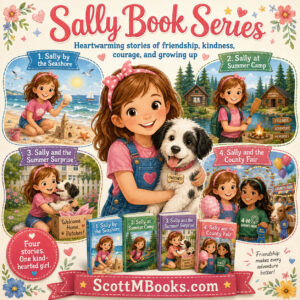
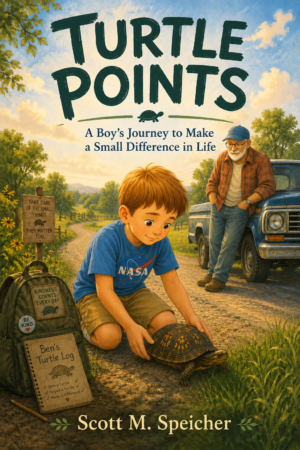
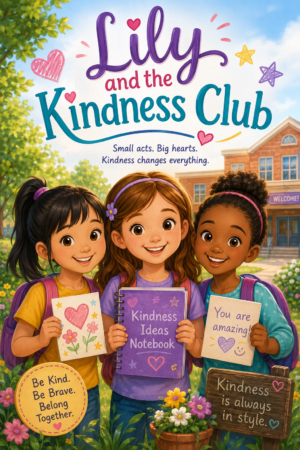
Sally’s stories can help children explore friendship, inclusion, responsibility, and noticing when someone needs support. Lily’s adventures encourage discussions about kindness, courage, safe helping, community, and caring for animals. Thomas’s experiences can demonstrate perseverance, honesty, patience, and learning from mistakes. Ben and the Turtle Points stories show how small acts of kindness and responsible choices can make a meaningful difference.
These characters do more than tell children what is right. Their experiences invite young readers to think about what happened, why it happened, and what they might do in a similar situation.
Questions to Ask After Reading
A few thoughtful questions can turn story time into a valuable lesson:
- What was the most important choice in the story?
- Was the choice kind, safe, and responsible?
- Did the character think before acting?
- How did the decision affect other people?
- What did the character learn?
- Would you have made the same choice?
- What other choice could the character have made?
- How can you use this lesson in your own life?
Allow children time to explain their answers. The goal is not simply to produce one correct response. The goal is to help them practice reasoning, empathy, and thoughtful communication.
Extend the Lesson With Activity Pages
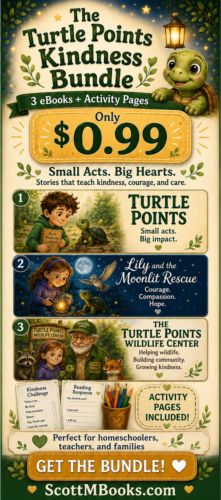
Printable Activity Pages can help children think more deeply about the choices characters make.
Useful activities include:
- Character feelings pages
- Feelings-and-choices worksheets
- Cause-and-effect exercises
- Story sequencing
- Main idea and lesson pages
- Character trait charts
- Writing prompts
- Kindness challenges
- Responsibility charts
- Book review pages
A child might identify a character’s decision, explain the consequence, and describe what they would do differently. Another activity could ask the child to draw two possible endings based on two different choices.
These activities reinforce comprehension while connecting the story to real-life behavior.
Connect the Story to Everyday Life
The most meaningful reading conversations help children apply the lesson beyond the book.
After reading, ask:
- Have you ever experienced something similar?
- What choice did you make?
- How did your decision affect someone else?
- Is there anything you would do differently now?
- What lesson from the story could help you this week?
A child might choose a simple personal goal, such as inviting someone to play, completing a responsibility without being reminded, using kinder words, telling the truth, or asking an adult for help.
This turns the story’s message into an action the child can practice.
Helping Children Become Thoughtful Decision-Makers
Story characters give children a safe place to explore problems, examine consequences, and learn from both wise decisions and mistakes. Through reading and discussion, children begin to understand that good choices often require kindness, courage, honesty, patience, empathy, and responsibility.
At ScottMBooks.com, engaging stories and printable Activity Pages help children strengthen reading skills while exploring meaningful decisions. As young readers discuss character choices, reflect on consequences, and connect lessons to their own lives, they become better prepared to make choices that are thoughtful, safe, and kind.