Creating a Take-Home Reading Challenge
A take-home reading challenge is a simple way to encourage children to read more consistently while helping families become part of the learning process. Instead of treating reading as something that only happens during school or formal lesson time, a reading challenge invites children to enjoy books at home, talk about what they read, and celebrate steady progress.
For teachers, homeschool parents, tutors, librarians, and family-learning programs, a take-home reading challenge can be easy to organize and flexible enough for different ages and reading levels. It can also be combined with discussion questions, Activity Pages, reading logs, kindness challenges, and certificates to make regular reading a positive, motivating experience.
Why Create a Take-Home Reading Challenge?
Children usually become stronger readers through regular practice. A take-home challenge encourages that practice in a way that feels more like a goal than an assignment.
A well-designed challenge can help children:
- Build a daily reading habit
- Increase reading stamina
- Strengthen comprehension
- Discover new books and topics
- Practice vocabulary
- Improve confidence
- Talk about books with adults
- Develop greater independence
- Connect reading with enjoyable family time
The challenge does not need to focus on speed or the number of books completed. For many children, consistent participation is more important than competition.
A child who reads for ten minutes every evening and talks about the story may gain more from the experience than a child who races through several books simply to reach a prize.
Begin With a Simple Goal
The easiest reading challenges have clear expectations that children and families can understand.
A challenge might ask children to:
- Read for 15 minutes a day
- Read five days each week
- Complete five books during the month
- Read ten different stories
- Complete a certain number of reading sessions
- Earn points for reading and related activities
Choose a goal that feels achievable.
For younger children, counting reading sessions may work better than counting books. One picture book may take only a few minutes, while another child may spend several days reading one chapter book.
A time-based challenge often creates a fairer system.
For example:
Read or listen to a book for at least 15 minutes on 20 days this month.
This allows children at different reading levels to work toward the same goal.
Decide How Long the Challenge Will Last
A take-home reading challenge can last:
- One week
- Two weeks
- One month
- An entire summer
- One school quarter
For a first challenge, two to four weeks is usually manageable.
A short challenge provides a clear finish line and gives children a chance to experience success quickly.
You can always begin another challenge afterward.
Include Read-Aloud Time
Children should not necessarily have to read every book independently.
Read-alouds are valuable, especially for younger readers and children who are still developing decoding skills. Listening to an adult read exposes children to richer vocabulary, longer stories, expressive reading, and ideas that may be above their independent reading level.
A reading challenge can count:
- Independent reading
- Parent-child reading
- Sibling reading
- Audiobooks
- Teacher read-alouds
- Grandparent reading
- Family story time
The emphasis should remain on meaningful engagement with books.
A simple rule might be:
If you are reading, listening, discussing, or sharing a book together, it counts as reading time.
Create a Reading Log
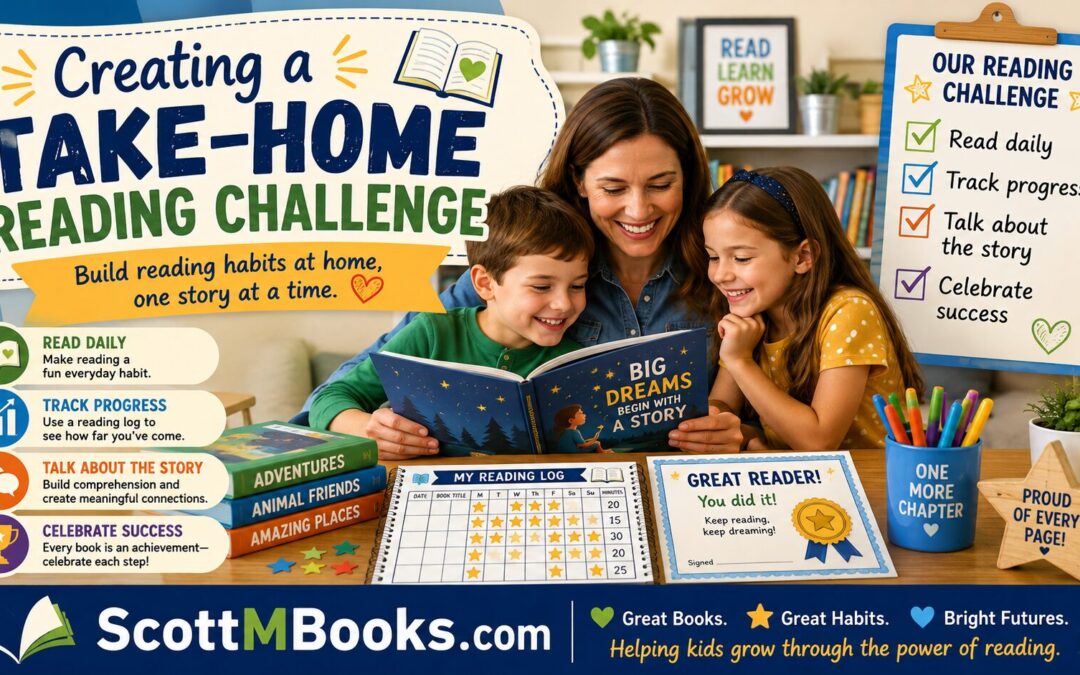
A reading log gives children a visible record of their progress.
Keep it simple.
Possible columns include:
| Date | Book Title | Minutes Read | My Rating |
|---|---|---|---|
| Monday | __________ | _____ | ☆☆☆☆☆ |
| Tuesday | __________ | _____ | ☆☆☆☆☆ |
| Wednesday | __________ | _____ | ☆☆☆☆☆ |
You can also include a space for a parent or caregiver’s initials, although this should remain easy for families to manage.
Younger children might use stickers instead of writing.
For example:
One sticker = one completed reading session.
Watching the chart fill up can be motivating.
Add Reading Milestones
A long challenge becomes more exciting when children can celebrate smaller accomplishments along the way.
Possible milestones include:
- 5 reading sessions
- 10 reading sessions
- 15 reading sessions
- 20 reading sessions
- Challenge completed
Milestones can be recognized with:
- Stickers
- Bookmarks
- Certificates
- Printable badges
- Special classroom recognition
- Choosing the next read-aloud
- Extra library time
The reward should support enthusiasm for reading rather than becoming the only reason to participate.
Add Simple Comprehension Activities
A reading challenge should encourage understanding, not simply page turning.
After selected reading sessions, children can complete one short response.
Ask questions such as:
- Who was the main character?
- What was your favorite part?
- What problem happened?
- How was the problem solved?
- What did the character learn?
- What new word did you discover?
- Would you recommend this book?
- What happened first, next, and last?
- What would you have done differently?
Children do not need to answer questions after every reading session.
One or two thoughtful activities each week may be enough.
Let Children Choose Their Books
Choice is one of the easiest ways to increase motivation.
Instead of assigning every title, allow children to select books that interest them.
They might choose:
- Animal stories
- Friendship stories
- Adventure books
- Humor
- Sports books
- Nature books
- Mysteries
- Graphic novels
- Nonfiction
- Biographies
- Books about school or family life
Adults can still guide children toward appropriate reading levels, but offering several choices gives children ownership of the experience.
A simple approach is:
“Choose any book from these five.”
This provides freedom without becoming overwhelming.
Create a Reading Bingo Board
A bingo-style challenge can add variety.
Each square could contain a different reading activity.
Examples:
- Read outside.
- Read with an adult.
- Read about an animal.
- Read a funny book.
- Read before bedtime.
- Read to a sibling.
- Read for 20 minutes.
- Read a book you have never read before.
- Read a story about friendship.
- Read somewhere unusual.
- Read a book with a blue cover.
- Read a story and draw your favorite scene.
Children can complete a row, several rows, or the entire board.
This makes the challenge feel more like a game.
Include Family Discussion Questions
A take-home reading challenge provides a natural way to involve parents and caregivers.
Send home a short list of questions adults can use with almost any book.
For example:
After Reading, Ask:
- What happened in the story?
- Who was your favorite character?
- What choice did the character make?
- Was it a good choice?
- What would you have done?
- What lesson did the story teach?
- What part would you like to read again?
These conversations can take only a few minutes but help children practice comprehension, speaking, and reflection.
Parents do not need to conduct a formal lesson. A short conversation can be enough.
Add Character-Building Challenges
Reading can also become a starting point for real-world learning.
If a story focuses on kindness, responsibility, courage, or friendship, invite children to practice that value.
A child might complete a:
Kindness Challenge
Do one helpful thing without being asked.
Friendship Challenge
Invite someone to join an activity.
Responsibility Challenge
Complete a household responsibility independently.
Courage Challenge
Try something new.
Gratitude Challenge
Thank someone who helped you.
Afterward, children can write or draw what happened.
This connects story lessons with everyday choices.
Use Activity Pages to Extend the Reading
Printable Activity Pages can add structure without making the challenge feel like additional homework.
Useful pages include:
- Reading logs
- Story sequencing
- Character traits
- Vocabulary
- Main idea and lesson
- Character feelings
- Writing prompts
- Draw-the-scene pages
- Book reviews
- Kindness challenges
- Responsibility charts
Allow children to complete only selected activities.
A challenge might require:
Complete five reading sessions and choose one Activity Page each week.
This keeps the workload manageable.
Create Different Levels for Different Ages
If several children participate, avoid requiring everyone to complete identical work.
Younger Readers
They might:
- Listen to a story
- Draw a favorite scene
- Identify the main character
- Arrange three story pictures
- Give the book a smiley-face rating
Early Elementary Readers
They might:
- Read independently or with an adult
- Answer two comprehension questions
- Sequence four events
- Identify a character trait
- Write one or two sentences
Older Elementary Readers
They might:
- Read longer books or chapters
- Write short summaries
- Identify themes
- Compare characters
- Explain character decisions
- Complete book reviews
The challenge remains shared while expectations match each child’s ability.
Avoid Making It Too Competitive
Competition motivates some children but discourages others.
A challenge based entirely on who reads the most books can disadvantage slower readers, children with reading disabilities, and children who select longer books.
Instead of:
“Who can read the most books?”
Try:
“Can everyone reach their personal reading goal?”
You can still celebrate achievement without ranking children.
Recognize:
- Consistency
- Improvement
- Effort
- Thoughtful responses
- Trying new books
- Completing the challenge
The goal is to build readers, not simply produce a winner.
Celebrate Completion
Children should feel that reaching their goal matters.
At the end of the challenge, consider providing:
- A certificate
- A printable badge
- A bookmark
- A reading celebration
- A class read-aloud
- A special library visit
- A “Reading Champion” wall
- A family reading night
- Recognition in a newsletter
Keep the celebration positive and inclusive.
Children who do not finish every requirement can still be recognized for their participation and progress.
Create a Take-Home Reading Challenge With ScottMBooks.com
Books and Activity Pages from ScottMBooks.com can be used to create a ready-made reading challenge for classrooms, homeschool families, tutoring programs, libraries, and community groups.
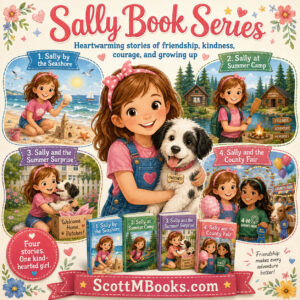
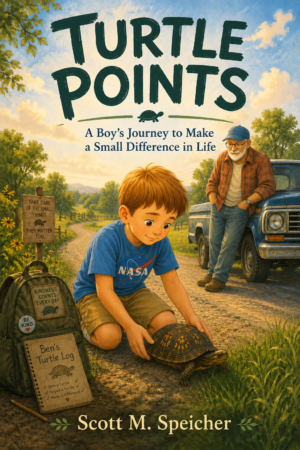
ScottMBooks stories introduce children to characters such as Lily, Sally, Thomas, and Ben while exploring lessons about:
- Kindness
- Friendship
- Courage
- Responsibility
- Empathy
- Inclusion
- Perseverance
- Making good choices
Children can read a story and then complete a related activity.
For example:
Read: Sally and the Friendship Bench
Discuss: How can we help someone feel included?
Activity: Character Feelings Page
Challenge: Invite someone to join you this week.
Or:
Read: A Lily story
Discuss: How did Lily make a safe and responsible choice?
Activity: Feelings and Choices Page
Challenge: Complete one responsible task without being reminded.
This creates a connection between reading comprehension and real-life character development.
A Simple ScottMBooks 30-Day Reading Challenge
Here is one format you could use:
Goal
Complete 20 reading sessions in 30 days.
Each session should include at least:
- 15 minutes of reading or listening
- One short conversation about the story
Bonus Activities
Children can earn bonus recognition by completing:
- 1 Story Sequencing Page
- 1 Vocabulary Activity
- 1 Character Feelings Page
- 1 Kindness Challenge
- 1 Book Review
Final Challenge
Choose your favorite book and explain:
- Who your favorite character was
- What happened in the story
- What lesson you learned
- Whether you would recommend the book
Completion
Children receive a:
ScottMBooks Reading Champion Certificate
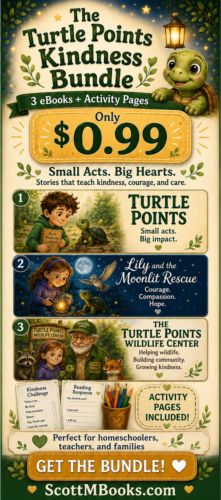
You could also connect this structure with the Turtle Points concept and award points for reading and kindness activities.
Example Turtle Points Take-Home Challenge
A point-based version could look like this:
| Activity | Points |
|---|---|
| Complete a book | 10 |
| Read for 20 minutes | 5 |
| Share something you learned | 5 |
| Complete an Activity Page | 5 |
| Perform a safe act of kindness | 5 |
| Write a book review | 10 |
Goal: Earn 100 Turtle Points.
This adds an element of fun while connecting reading, reflection, and character-building activities.
Send Clear Instructions to Families
Keep the parent instructions short.
You might send:
Welcome to our Take-Home Reading Challenge!
Help your child develop a stronger reading habit by reading together for 15 minutes on at least five days each week. Children may read independently, read with an adult, or listen to a family read-aloud. Record each session on the Reading Log and choose one simple Activity Page each week. Most importantly, enjoy the stories and conversations together!
Clear instructions increase participation.
Make the Challenge Easy to Maintain
The best challenge is one families can actually complete.
Avoid requiring:
- Multiple worksheets every day
- Long written summaries
- Complicated parent signatures
- Expensive materials
- Very specific books that families may not own
- Excessive reading times
A successful challenge should feel achievable.
Reading for fifteen minutes, having one conversation, and recording the session is enough to build a meaningful routine.
Turn Reading Into a Family Habit
A take-home reading challenge can do more than increase the number of books children complete. It can help families create a routine in which stories become part of everyday life.
Children begin to associate reading with:
- Time together
- Interesting conversations
- New ideas
- Favorite characters
- Personal accomplishments
- Imagination
- Discovery
The most successful challenge is not necessarily the one with the largest prize or the longest reading log. It is the one that helps a child finish the month wanting to keep reading.
At ScottMBooks.com, engaging stories and printable Activity Pages can help parents, teachers, and homeschool families create reading challenges that combine literacy skills with kindness, courage, responsibility, friendship, and meaningful learning.
A few minutes of reading each day can grow into something much bigger: stronger skills, greater confidence, deeper family conversations, and a lasting love of books.