How to Create a Weeklong Unit Around One Story
A single children’s book can become the foundation for an entire week of learning.
Instead of reading a story once and moving on, teachers and homeschool parents can use the same book across several days to strengthen reading comprehension, vocabulary, writing, critical thinking, creativity, and character development.
This approach is especially useful because it reduces preparation. You do not need five separate lessons or five different books. One well-chosen story can support a complete mini-unit when each day focuses on a different skill.
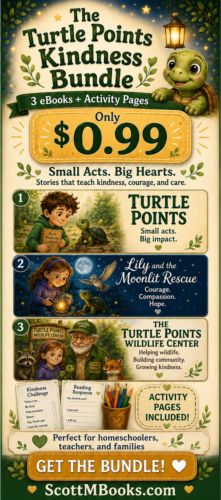
Resources from ScottMBooks.com can make this even easier by pairing children’s stories with reading activities, discussion questions, writing prompts, story maps, character activities, and other printable learning pages.
Why Use One Story for an Entire Week?
Children often understand a story more deeply when they have time to return to it.
During the first reading, students may focus mainly on what happens.
When they revisit the story, they can begin thinking about why events happen, how characters feel, what choices were made, and what lesson the story teaches.
Using one story for several days also gives students repeated exposure to important vocabulary, characters, and story events.
That repetition can be especially helpful for developing readers.
A weeklong story unit can support skills such as:
- Reading comprehension
- Story sequencing
- Vocabulary
- Main idea
- Character traits
- Feelings and choices
- Problem and solution
- Cause and effect
- Writing
- Creative expression
- Character education
The key is to give each day a different purpose.
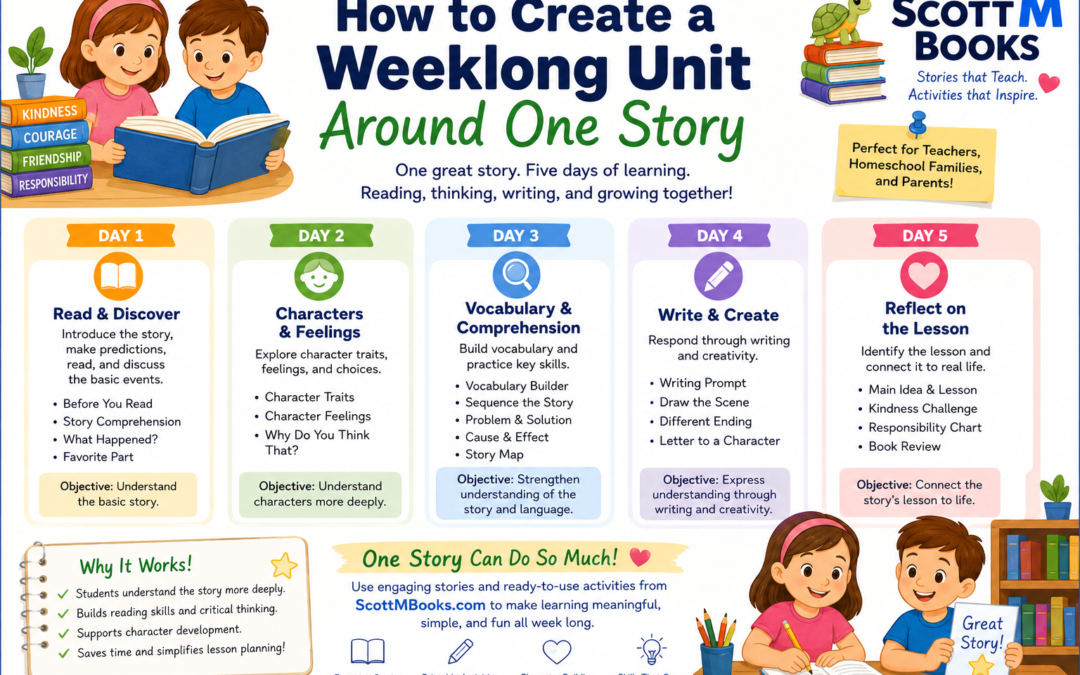
Day 1: Read and Discover the Story
Begin the week by introducing the book.
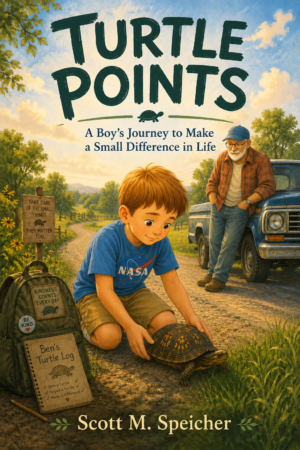
Before reading, look at the title and cover together.
Ask students:
What do you think this story will be about?
Who do you think the main character is?
What problem might happen?
Where do you think the story takes place?
Encourage students to make predictions.
Then read the story aloud, read it together, or allow students to read independently depending on their age and ability.
During the first reading, avoid stopping too often. Let students enjoy the story and become familiar with the characters and events.
Afterward, have a short discussion.
Ask:
What happened in the story?
Who were the main characters?
What was the biggest problem?
What was your favorite part?
A simple Before You Read or Story Comprehension activity can work well on the first day.
Day 1 Goal
Help students understand the basic story.
They should begin recognizing the:
Characters • Setting • Problem • Important Events • Solution
Day 2: Explore Characters and Feelings
On the second day, return to the story and focus on the characters.
Choose the main character and ask:
What kind of person is this character?
Students might describe the character as:
Kind
Brave
Patient
Responsible
Helpful
Curious
Determined
Then ask:
What happened in the story that makes you think that?
This encourages students to support their answers with evidence.
You can also explore character feelings.
Ask students how the character felt at different points in the story.
For example:
How did the character feel when the problem first happened?
How did the character feel while trying to solve it?
How did the character feel at the end?
Then ask:
What caused those feelings to change?
ScottMBooks activities such as Character Feelings and Character Traits pages can work especially well here.
Day 2 Goal
Help students understand that characters have:
Feelings • Traits • Motivations • Choices
Students begin moving beyond simply remembering events and start thinking about why characters behave the way they do.
Day 3: Build Vocabulary and Comprehension
The middle of the week is a good time to focus on language and deeper comprehension.
Choose several important or interesting words from the story.
You do not need a long vocabulary list. Three to five words may be enough for younger students.
For each word, have students:
Say the word.
Explain what they think it means.
Look at how it was used in the story.
Use it in a new sentence.
Draw a picture representing the meaning.
Then move into a comprehension activity.
Students might complete:
A Story Map
A Problem and Solution Page
A Cause and Effect Page
A Sequence the Story Activity
For example, students could organize the story into:
Beginning
Middle
End
Or they might explain:
Problem → What the Character Did → Solution
Day 3 Goal
Strengthen students’ understanding of both the story and the language used within it.
Day 4: Write and Create
By the fourth day, students should know the story well enough to respond creatively.
This is a good time to introduce writing.
Possible prompts include:
What was your favorite part of the story?
What would you have done if you were the main character?
Write a different ending.
What do you think happens the next day?
Write a letter to one of the characters.
What advice would you give the main character?
Younger students can write one or two sentences.
Older students can write a paragraph or short story.
Students can also complete a creative activity such as Draw the Scene.
Ask them to draw an important part of the story and write:
My picture shows __________________________.
Then add:
This part is important because __________________________.
Day 4 Goal
Help students express what they understand through writing, drawing, imagination, and personal response.
Day 5: Reflect on the Lesson
The final day should bring the week together.
Ask students:
What was this story really about?
Then:
What did the character learn?
Finally:
What can we learn from the story?
Depending on the book, the lesson might involve:
Kindness
Responsibility
Courage
Friendship
Patience
Honesty
Inclusion
Helping others
Learning from mistakes
Making good choices
Encourage students to connect the lesson to real life.
For example:
Have you ever experienced something similar?
What would you do if this happened to you?
How could you use the story’s lesson at home or school?
A Main Idea and Story Lesson, Kindness Challenge, Responsibility Chart, or Character-Building Goal Page can help students reflect on what they learned.
You can finish with a short book review.
Students might give the book a star rating and complete:
My favorite part was…
The story taught me…
I would recommend this book because…
Day 5 Goal
Help students connect reading with their own choices, experiences, and values.
A Simple Weeklong Schedule
A complete five-day unit could look like this:
Monday — Read and Understand
Introduce the story, make predictions, read, and discuss the basic events.
Tuesday — Characters and Feelings
Explore character traits, emotions, and choices.
Wednesday — Vocabulary and Comprehension
Practice new words, sequencing, problem and solution, or cause and effect.
Thursday — Writing and Creativity
Complete a writing prompt, draw a scene, or create a new ending.
Friday — Lesson and Reflection
Identify the main message, connect it to real life, and complete a book review or character-building activity.
This structure can be used with almost any children’s book.
Adapt the Unit to Different Ages
The same story can often work with children at different ability levels.
For younger students, focus on:
Short answers
Drawing
Matching
Circling choices
Oral discussion
Beginning-middle-end sequencing
For stronger readers, add:
Paragraph writing
Character evidence
Cause-and-effect explanations
Alternative endings
Comparisons
Personal reflections
You do not need to change the entire story unit.
Simply adjust the response level.
Use the Story Across Different Subjects
A weeklong unit can also extend beyond reading.
For example, a story involving animals might connect to science.
A story involving a community could lead to a social studies discussion.
Students could count, graph, measure, or sort objects from a story for math practice.
They could create posters, drawings, bookmarks, or story scenes for art.
The story becomes the common theme that connects several learning areas.
Keep the Unit Flexible
A weeklong unit does not need to follow a rigid schedule.
Some classes may spend two days on comprehension.
A homeschool family might complete only three activities.
A teacher might use the story during literacy centers instead of whole-group instruction.
The important thing is to use the story as a foundation rather than feeling that every activity must be completed.
Choose the exercises that best support your students.
How ScottMBooks Can Help
At ScottMBooks.com, children’s stories can be paired with reading and character-building activities designed for teachers, homeschool families, and parents.
Depending on the story, activities may include:
Before You Read • Story Comprehension • Character Feelings • Sequence the Story • Main Idea and Story Lesson • Vocabulary Builder • Character Traits • Problem and Solution • Cause and Effect • Story Maps • Writing Prompts • Draw the Scene • Kindness Challenges • Responsibility Charts • Book Reviews
This makes it easier to turn one story into several days of meaningful learning without having to create every activity from scratch.
One Story Can Provide a Full Week of Learning
You do not need a new book every day to keep reading instruction meaningful.
Sometimes students learn more by staying with one story long enough to understand it deeply.
Read it.
Talk about it.
Study the characters.
Explore the vocabulary.
Write about it.
Create something.
Discuss the lesson.