Creative Writing Activities Inspired by Children’s Books
Children’s books do more than help young readers practice reading. A memorable story can also become the beginning of a new story created by the child. Once children become interested in a character, setting, problem, or adventure, they often have ideas about what could happen next. Creative writing activities give them an opportunity to use those ideas while practicing vocabulary, sentence development, sequencing, comprehension, imagination, and communication.
For parents, teachers, and homeschool families, creative writing does not have to mean assigning a long story or expecting perfect spelling and grammar. A drawing with one sentence, a letter to a favorite character, or a new ending to a familiar story can all become meaningful writing experiences.
At ScottMBooks.com, children can read stories featuring relatable characters and lessons about kindness, friendship, courage, responsibility, empathy, inclusion, and making thoughtful choices. The site also provides free eBooks and optional printable Activity Pages that can extend stories into reading, writing, vocabulary, and character-building activities.
Why Use Books as Writing Inspiration?
One of the hardest parts of creative writing for a young child can be answering a simple question:
“What should I write about?”
A book helps solve that problem.
The child already has a character to think about, a setting to imagine, and events to remember. Instead of starting with an entirely blank page, the child can build from something familiar.
After reading, you might say:
“What do you think happened the next day?”
That one question can begin an entire writing activity.
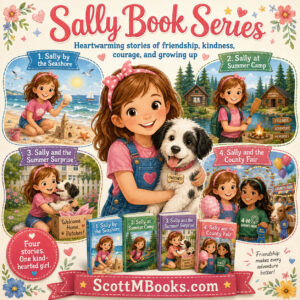
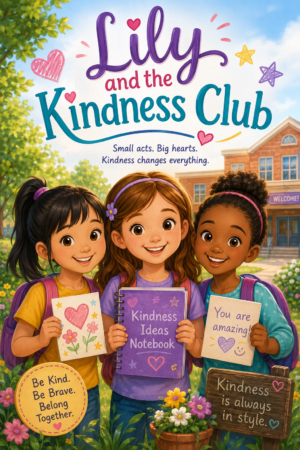
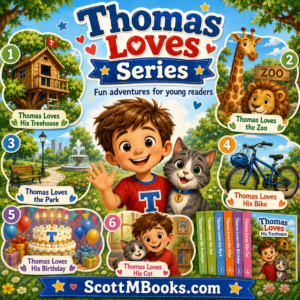
A child who has just read about Sally making a new friend might imagine another playground adventure. A child who follows Lily through an animal rescue story might invent a new animal that needs safe help. A Thomas story could inspire an adventure involving a new hobby, pet, or problem to solve.
The original story provides the foundation. The child supplies the imagination.
1. Write What Happens Next
One of the simplest creative writing activities is asking children to continue the story.
After finishing a book, ask:
“What do you think happens tomorrow?”
Children can imagine another event involving the same characters.
A younger child might dictate:
“The next day Sally went back to the playground. She saw another new student.”
A developing writer could add several sentences explaining what happens.
Older elementary children can write a complete continuation with a beginning, problem, solution, and ending.
This activity also gives you an opportunity to discuss whether the new events fit the personality of the original character.
2. Create a Different Ending
Ask children whether the story could have ended differently.
Perhaps the character made a different choice. Maybe someone new arrived. Maybe a problem was solved in another way.
Start with:
“What would happen if the character made a different choice?”
For example, if a character originally asked an adult for help, children could consider what might have happened if the character had tried to solve the problem alone.
This can lead to a valuable conversation about choices and consequences while also encouraging imaginative writing.
After children create the new ending, compare it with the original.
Ask:
Which ending do you like better, and why?
Now the activity combines creative writing, comprehension, critical thinking, and opinion writing.
3. Write a Letter to a Character
Children often develop strong opinions about story characters. Give them an opportunity to communicate directly with one.
A child might write:
Dear Lily,
I liked how you helped the animal. I think you were brave because you asked for help. I would have been nervous too.
Children could write to:
- Congratulate the character
- Offer advice
- Ask questions
- Thank the character
- Suggest a better choice
- Invite the character somewhere
- Explain what they learned from the story
This activity makes writing feel purposeful because the child has an imaginary audience.
4. Let the Character Write Back
Take the letter activity one step further.
After children write to a character, ask them to imagine how the character would respond.
If the child wrote:
“Dear Thomas, why didn’t you give up when it became difficult?”
The response might begin:
“Dear Sam, I wanted to give up, but I knew I would never improve if I stopped trying.”
Writing from another person’s point of view requires children to think about personality, feelings, and motivations.
It also introduces an important reading concept: point of view.
5. Create a Character Diary
Ask children to imagine that the main character keeps a diary.
Choose an important scene and have children write what the character might record that evening.
For example:
Today was a strange day. At first I was nervous because I did not know what to do. Then I remembered that I could ask someone for help.
Encourage children to include:
What happened? How did the character feel? What did the character learn?
Younger children can complete sentence starters such as:
Today I…
I felt…
I learned…
The result does not need to be lengthy. Even three sentences can demonstrate meaningful understanding.
6. Invent a Brand-New Adventure
Once children know a character well, invite them to create an entirely new adventure.
Ask:
“Where should this character go next?”
The answer might be a zoo, beach, campground, museum, farm, library, amusement park, school field trip, or completely imaginary place.
Then help the child create a simple story structure:
Beginning: Where does the character go?
Problem: What unexpected thing happens?
Choice: What does the character decide to do?
Solution: How is the problem handled?
Ending: What does the character learn?
This basic structure helps children organize their imagination into a story that readers can follow.
7. Introduce a New Character
Ask children to create someone who could join the story.
The new character could be a friend, neighbor, teacher, family member, classmate, pet, or even an animal.
Children can decide the character’s name, age, personality, favorite activity, and special qualities.
Then ask:
“How would this new person meet the characters from the book?”
That becomes the beginning of the story.
For an additional activity, children can draw the character and write a short description underneath.
8. Write the Story From Another Character’s View
Stories can look very different depending on who is telling them.
Choose an important event and ask children to retell it from another character’s perspective.
For example, if the story follows Sally during a friendship problem, what might the other student have been thinking?
The original version might say:
Sally saw a girl sitting alone.
The new version could become:
I sat by myself and wondered if anyone would ask me to play.
This teaches children that two people can experience the same event differently.
It is also a useful way to discuss empathy.
9. Create a “What If?” Story
“What if?” questions are excellent creative-writing starters because there is no single correct answer.
Try questions such as:
What if the story took place at night?
What if the character found a puppy?
What if two characters switched places?
What if the character forgot something important?
What if the story took place 100 years in the future?
What if the character had to solve the problem without speaking?
Let children choose one idea and develop it.
The more unusual the question, the more imaginative the response may become.
10. Write a Conversation Between Characters
Dialogue can make writing especially enjoyable.
Choose two characters and ask children to imagine a conversation between them.
For example:
“Are you sure we should do that?” Sally asked.
“Maybe we should ask a teacher first,” her friend answered.
Before writing, act out the conversation aloud.
Children often find it easier to write dialogue after they have heard themselves say it.
This activity can also introduce quotation marks, speaker changes, and expressive language without turning the activity into a formal grammar lesson.
11. Write a Kindness Story
Because many stories at ScottMBooks.com explore kindness and thoughtful choices, children can use a book as inspiration for a story about their own act of kindness. The ScottMBooks collection currently emphasizes themes including kindness, courage, friendship, responsibility, compassion, and positive choices.
Give children this opening:
“One day I noticed someone needed help…”
They can write about something that actually happened or invent a fictional situation.
The story might involve:
Helping a classmate, welcoming someone new, caring for a pet, helping at home, sharing, giving encouragement, or asking an adult to help someone safely.
This connects writing with character development.
12. Create a Story Sequencing Writing Activity
Sequencing provides a helpful structure for children who do not know how to organize a story.
Divide the page into four sections:
First
Next
Then
Finally
Children can draw an illustration and write one or two sentences for each part.
This format works especially well for first- and second-grade writers because it breaks a larger writing task into manageable pieces.
ScottMBooks already incorporates story-sequencing activities within its printable resources, making sequencing a natural bridge from reading comprehension into original writing.
13. Create a Comic Strip
Not every creative-writing activity needs to look like a traditional paragraph.
Divide a page into four or six boxes and ask children to create a comic strip inspired by the story.
Each box can include:
- A picture
- A speech bubble
- A short sentence
- A character thought
Comic strips are especially helpful for children who enjoy drawing or hesitate when presented with a large blank writing page.
Afterward, ask the child to read the comic aloud.
14. Create a New Book Cover and Description
Ask children to imagine that they are writing the next book in the series.
They can design the front cover and create a new title such as:
Sally and the New Student
Lily and the Injured Bird
Thomas Tries Something New
Then ask them to write two or three sentences describing what the new book would be about.
This is a wonderful combination of art, writing, prediction, and imagination.
15. Write a Book Review
Creative writing can also include opinions.
After finishing a story, ask children to become book reviewers.
They can explain:
What was your favorite part?
Who was your favorite character?
What lesson did the story teach?
Would you recommend the book?
How many stars would you give it?
Encourage children to explain why they gave their rating.
Instead of:
“I give it five stars.”
Encourage:
“I give this book five stars because I liked how the characters solved the problem together.”
That small change helps children practice supporting an opinion with evidence.
Keep Creative Writing Enjoyable
Creative writing should not become another source of frustration.
If a child has a wonderful idea but struggles with spelling, allow the idea to come first. Corrections can come later.
For beginning writers, adults can use sentence starters, word banks, pictures, or dictation.
A child might tell an adult the story while the adult writes it down. The child can then copy one favorite sentence or illustrate the page.
That is still writing development.
The goal is to help children discover:
“I have something worth saying.”
Connect Writing to ScottMBooks Activity Pages
After enjoying one of the free eBooks available through ScottMBooks.com, families and educators can continue the learning with writing activities connected to the story. The current ScottMBooks library presents its eBooks as resources for family reading, homeschool lessons, classroom read-alouds, and independent reading.
The ScottMBooks Activity Pages include book-specific exercises involving comprehension, vocabulary, sequencing, character feelings, story lessons, writing, and creative responses.
A simple lesson might follow this pattern:
Read the story → Talk about the characters → Choose one writing idea → Draw or write → Share the finished work.
That is enough to turn one children’s book into a complete literacy experience.
Create a ScottMBooks Creative Writing Notebook
Parents and teachers can also give children a dedicated notebook for story-inspired writing.
Every time the child finishes a book, add one new entry.
The child might write a new ending one week, create a character the next week, write a letter after another story, and eventually create an original book.
Over time, the notebook becomes a record of the child’s imagination and writing growth.
It can also make writing feel less like an isolated school assignment and more like an ongoing creative project.
One Story Can Inspire Many Lessons
A children’s book does not have to end when the final page is turned. The characters, problems, settings, and lessons can become starting points for new ideas.
Creative writing gives children permission to ask:
What happens next?
What would I do?
What if the story were different?
What story could I create?
Those questions transform children from readers into storytellers.
At ScottMBooks.com, families, homeschool parents, and teachers can begin with engaging children’s stories and extend them through discussion, writing, creativity, and printable learning activities.
For more reading and teaching ideas, visit the ScottMBooks.com Book Blog, where you’ll find articles about reading comprehension, character education, homeschooling, classroom activities, and helping children develop stronger reading habits.