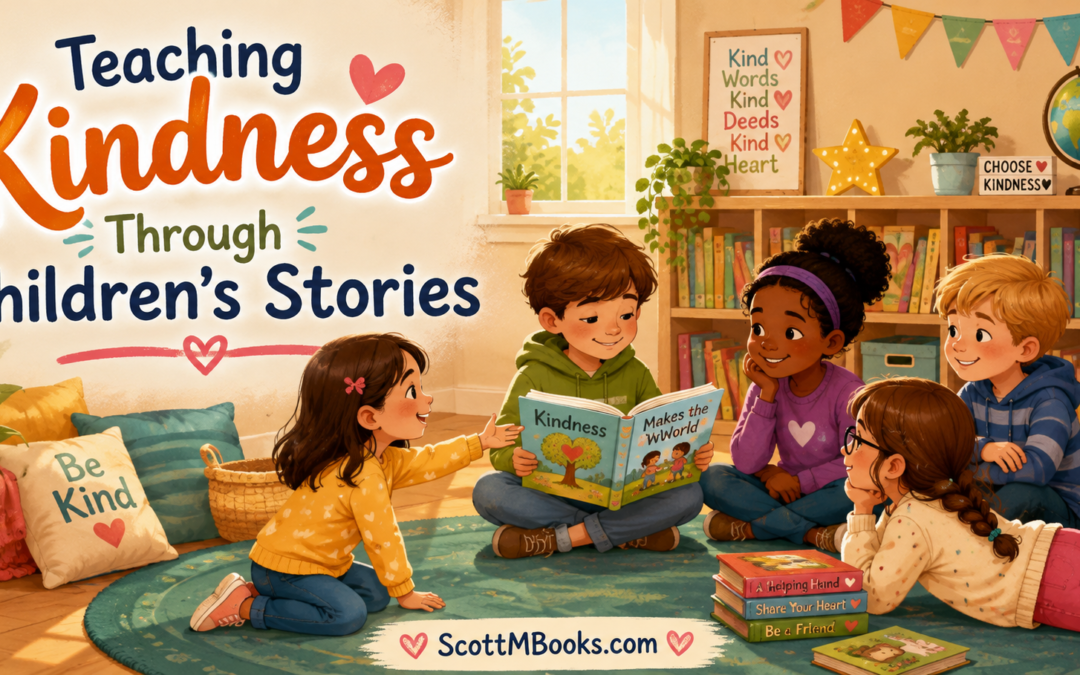
Teaching Kindness Through Children’s Stories
Kindness is one of the most important lessons we can help children develop, but it is not always something that can be taught through rules or reminders alone. Children often learn best when they can see kindness in action—when a character notices someone who feels left out, helps an animal in need, welcomes a new student, apologizes after making a mistake, or chooses to do the right thing even when it is difficult.
Children’s stories create a natural, comfortable way to start those conversations.
At ScottMBooks.com, stories are designed not only to help children enjoy reading but also to encourage conversations about kindness, courage, responsibility, friendship, compassion, inclusion, and making thoughtful choices.
Why Stories Are Powerful Tools for Teaching Kindness
When adults simply tell children to “be kind,” children may understand the words but not what kindness looks like in everyday situations.
A story makes the lesson more concrete.
A child can watch a character face a problem, consider choices, make a decision, and experience the result. Instead of hearing only a rule, the child sees an example.
For instance, kindness might mean:
- Inviting someone who is alone to play.
- Sharing something with a classmate.
- Helping a younger child.
- Caring for an animal.
- Listening when someone is upset.
- Saying something encouraging.
- Apologizing after hurting someone’s feelings.
- Asking an adult for help when a situation is unsafe.
- Including someone new.
- Helping without expecting a reward.
These situations give parents, teachers, and homeschool families opportunities to ask children an important question:
“What would you do?”
That simple question can turn story time into a meaningful character-building lesson.
Kindness Begins With Noticing
One of the strongest lessons children can learn is that kindness often begins by simply noticing what is happening around them.
Is someone sitting alone?
Does a new student look nervous?
Is a friend having a difficult day?
Does someone need help?
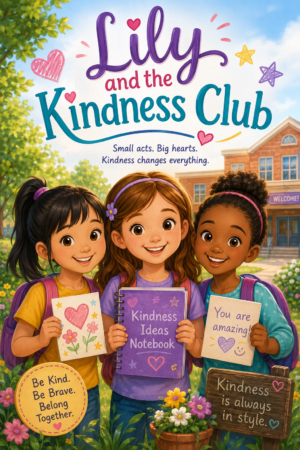
In Lily and the Kindness Club, Lily discovers that kindness often begins with noticing people who may need encouragement, friendship, or help. With May and Mary, she begins a Kindness Club built around small, thoughtful actions at school and in the community.
Children can learn an important lesson from Lily: kindness doesn’t have to be enormous.
A small action can matter.
Sharing a crayon matters.
Writing an encouraging note matters.
Inviting someone to play matters.
Sitting beside someone who is lonely matters.
Saying, “I’m glad you’re here,” matters.
Stories Help Children Develop Empathy
Kindness and empathy are closely connected.
Empathy means trying to understand how someone else may be feeling. Stories allow children to temporarily experience the world through another person’s eyes.
A child reading a story may begin to wonder:
Why is that character sad?
Why didn’t she join the game?
Why is he afraid?
Why did that character make that choice?
These questions help children move beyond simply identifying what happened in the story. They begin thinking about why people behave the way they do.
That kind of thinking is especially valuable when teaching friendship and inclusion. Stories can show children that someone standing alone may not want to be alone. A quiet child might be shy. A new student might be afraid to introduce themselves. Someone who appears angry might actually feel embarrassed or hurt.
The ScottMBooks article Teaching Friendship and Inclusion Through Reading offers additional ideas for using stories to discuss feelings, belonging, friendship, and empathy with children.
Teaching Children That Everyone Wants to Belong
Few lessons are more important for a young child than understanding that everyone wants to feel accepted.
This theme is central to Sally and the Kindness Bench, where Sally discovers a special playground bench for children who would like someone to talk to or play with. The story explores loneliness, friendship, inclusion, listening, and the importance of noticing others.
Stories like this create opportunities for adults to ask questions such as:
- How do you think the child sitting alone feels?
- What could Sally do?
- What would you say to someone who was new?
- Have you ever felt left out?
- How could you help someone feel welcome?
- Why might it take courage to ask someone to play?
- Can someone who usually helps others sometimes need help too?
These discussions help children realize that kindness is not just something we receive. It is something we can actively give to others.
Kindness Can Extend Beyond Other People
Children can also learn compassion by reading stories about caring for animals, nature, and their communities.
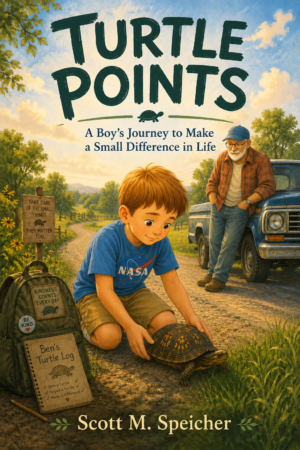
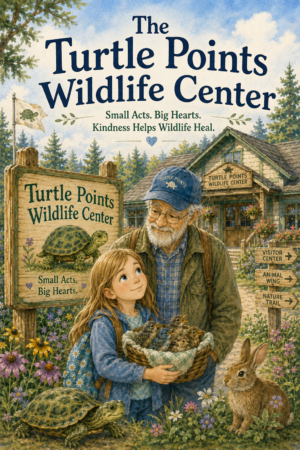
In Turtle Points, Ben’s experiences center on small acts of care, including helping turtles and inspiring others to recognize the value of simple acts of kindness.
This creates another valuable lesson:
Children do not have to wait until they are adults to make a difference.
They can help today.
They can care for animals safely.
They can clean up litter with an adult.
They can help a neighbor.
They can encourage a sibling.
They can thank a teacher.
They can comfort a friend.
They can take responsibility for something at home.
Small actions may seem insignificant individually, but they help children develop habits of compassion and responsibility.
Ask Questions After the Story
One of the easiest ways to strengthen a kindness lesson is to continue talking after the final page.
You do not need a complicated lesson plan. Try asking a few simple questions:
What kind thing happened in the story?
Which character needed help?
How did the character know someone needed help?
Did anyone make a poor choice?
What could that character have done differently?
How did the kind action make someone feel?
What would you have done?
Can you think of something kind you could do today?
There are no perfect answers required. The purpose is to encourage children to think, explain their ideas, and connect what they read with their own experiences.
Turn Reading Into Action
Kindness becomes especially meaningful when children move from talking about it to practicing it.
After reading a kindness-centered story, give children a simple challenge:
Do one small act of kindness today.
It could be:
- Helping with a chore without being asked.
- Giving someone a compliment.
- Sharing with a sibling.
- Thanking a teacher.
- Inviting someone to play.
- Helping clean a shared space.
- Writing someone an encouraging note.
- Reading to a younger child.
- Helping a parent.
- Making a card for someone.
- Picking up litter with adult supervision.
- Sitting with someone who seems lonely.
Then talk about what happened.
Ask:
How did the other person respond?
How did being kind make you feel?
Would you do it again?
The goal should never be to make kindness feel like another assignment. Instead, we want children to discover that helping someone else can be rewarding in itself.
Try the Kindness Reading Challenge
Families and educators who want to make kindness part of a larger reading experience can also explore the ScottMBooks Kindness Reading Challenge.
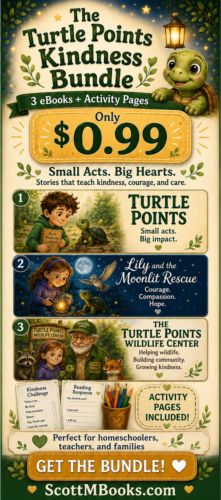
The challenge connects reading with real-world kindness. Children can earn Turtle Points for activities such as completing books, sharing something they learned, recording small acts of kindness, and working toward the Turtle Points Kindness Champion Award.
This gives teachers and homeschool parents an easy way to connect literacy and character development.
Instead of asking only:
“How many books did you read?”
children can also consider:
“What did those books inspire you to do?”
That is a powerful change in perspective.
Use Activities to Reinforce the Lesson
The lesson does not have to end when the book closes.
Printable ScottMBooks Activity Pages extend stories through comprehension questions, character feelings exercises, sequencing, vocabulary practice, writing, kindness challenges, responsibility charts, discussion guides, and other reading activities.
For a kindness-centered lesson, pair a story with one or two activities rather than doing everything at once.
A simple lesson could look like this:
1. Read the story.
Enjoy the book together without interrupting too often.
2. Talk about the characters.
Ask how they felt and why they made certain choices.
3. Identify the kindness lesson.
Ask the child to explain the lesson in their own words.
4. Complete one activity.
Choose a character feelings page, writing prompt, drawing activity, or kindness challenge.
5. Practice kindness.
Ask the child to choose one safe, age-appropriate act of kindness to complete that day.
6. Reflect.
Later, talk about what happened.
This simple approach works well in classrooms, homeschool programs, family reading time, and small reading groups.
Make Kindness Part of Your Reading Routine
Kindness does not need to be limited to one special lesson.
Whenever you read with children, look for opportunities to talk about character choices.
Ask:
Was that a kind choice?
Was it fair?
Was it responsible?
Could the character have handled the situation differently?
Who showed courage?
Who helped someone?
Who needed help?
Over time, children begin asking these questions themselves.
That is when children’s literature becomes more than reading practice. Stories become a safe place for children to explore real-life situations before they encounter them themselves.
Reading, Learning, and Growing Together
Teaching kindness is not about expecting children to behave perfectly.
Children will disagree. They will make mistakes. They will occasionally say the wrong thing, become frustrated, forget to share, or fail to notice when someone needs help.
Stories provide a comfortable way to discuss those situations without making children feel as though every conversation is a correction.
Characters can make mistakes first.
Children can examine those choices, talk about what happened, and imagine a better response.
Then, when similar situations happen in real life, children have something familiar to draw from.
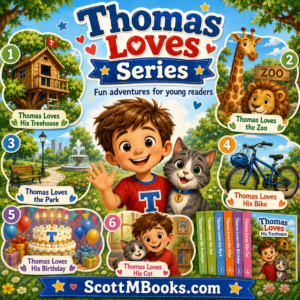
At ScottMBooks.com, characters such as Lily, Sally, Thomas, and Ben provide opportunities to explore kindness, friendship, responsibility, courage, inclusion, compassion, and thoughtful decision-making through stories and follow-up learning activities. The goal is not simply to finish another book. It is to help children read, think, talk, reflect, and grow.
Parents, teachers, and homeschool families can explore more books and educational resources at ScottMBooks.com, visit the Free Book Download page, or turn reading into a seasonal family or classroom project with the Free Summer Reading Challenge. The Summer Reading Challenge combines stories, printable activities, discussion, and simple character-building goals for young readers.
Because sometimes the most important lesson in a children’s story is not simply learning what happens next—it is helping a child discover what they can do next.