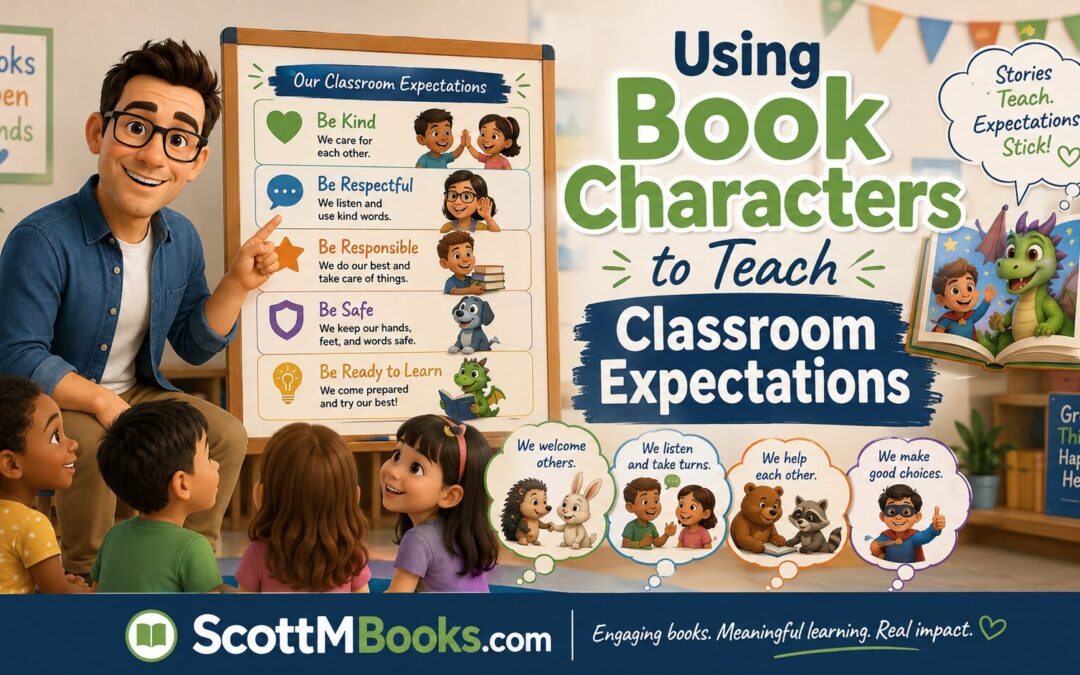
Using Book Characters to Teach Classroom Expectations
Classroom expectations are easier for children to understand when they can see those expectations in action. Rules such as “be respectful,” “listen carefully,” “take responsibility,” and “include others” are important, but young students may not always know what those ideas look like in everyday situations.
Children’s books can help bridge that gap. When students watch a familiar character make a choice, solve a problem, apologize, ask for help, or show kindness, classroom expectations become more concrete. Instead of simply hearing what they should do, children can see an example, discuss it, and connect the lesson to their own behavior.
For teachers and homeschool families, story characters can turn routine behavior expectations into meaningful reading and discussion lessons.
Why Use Story Characters?
Young children naturally connect with characters. They notice what characters say, how they behave, and what happens after they make a choice.
That makes stories useful for teaching expectations such as:
- Listening when someone else is speaking
- Following directions
- Taking turns
- Sharing materials
- Including others
- Using kind words
- Asking adults for help
- Completing responsibilities
- Respecting personal space
- Caring for classroom materials
- Solving disagreements calmly
A character gives children a safe way to examine behavior without feeling personally criticized.
Instead of saying:
“You need to be more responsible.”
A teacher can ask:
“Was the character being responsible in this part of the story? What could the character do differently?”
The lesson becomes less personal and more reflective.
Begin With a Few Clear Expectations
Too many classroom rules can overwhelm younger students. Choose a small number of expectations that can be used throughout the school day.
For example:
Be Kind
Use respectful words, include others, and help when appropriate.
Be Responsible
Take care of materials, complete tasks, and admit mistakes.
Be Safe
Follow safety rules and ask an adult for help when needed.
Be Ready to Learn
Listen, participate, and have materials prepared.
Be Respectful
Take turns, listen to others, and treat people and property carefully.
These expectations are broad enough to apply to reading time, centers, recess, group work, lunch, and transitions.
Connect Expectations to Specific Character Actions
After reading a story, identify one action that demonstrates a classroom expectation.
For example:
- A character invites someone to play — Be Kind
- A child admits making a mistake — Be Responsible
- A character asks a teacher for help — Be Safe
- A student listens while another person speaks — Be Respectful
- A character keeps trying after difficulty — Be Ready to Learn
Then ask students to explain the connection.
A useful sentence starter is:
“The character showed __________ when __________.”
For example:
“Sally showed kindness when she invited someone who was alone to join the group.”
This strengthens both behavior understanding and reading comprehension.
Use Characters to Teach What Expectations Look Like
Children sometimes understand the word but not the behavior.
Ask students:
What does kindness look like?
Possible answers:
- Inviting someone to join
- Sharing supplies
- Helping someone who dropped something
- Giving a sincere compliment
- Listening when someone feels upset
What does responsibility look like?
Possible answers:
- Returning books to the correct place
- Finishing an assignment
- Cleaning up materials
- Taking care of personal belongings
- Telling the truth about a mistake
What does respect look like?
Possible answers:
- Waiting for a turn
- Keeping hands to yourself
- Listening without interrupting
- Using appropriate words
- Treating classroom materials carefully
Stories make these examples easier to remember because students can connect each behavior to a character and situation.
Pause Before a Character Makes a Choice
One effective strategy is to stop reading before an important decision.
Ask:
“What should the character do?”
Let students suggest several possibilities.
Then ask:
- Which choice is kind?
- Which choice is safe?
- Which choice is responsible?
- Which choice follows our classroom expectations?
- What might happen after each choice?
Continue reading and compare the students’ predictions with what the character actually does.
This teaches decision-making while also developing prediction and cause-and-effect skills.
Use Mistakes as Teaching Opportunities
Characters do not need to behave perfectly for a book to be useful.
In fact, mistakes often provide the best lessons.
A character might:
- Interrupt someone
- Become impatient
- Forget a responsibility
- Refuse to share
- Say something hurtful
- Ignore a direction
- Blame someone else
- Rush instead of listening
Ask students:
- What happened?
- Which expectation was forgotten?
- Who was affected?
- What could the character do now?
- How could the character repair the problem?
This teaches children that classroom expectations are not about never making mistakes. They are about recognizing mistakes, taking responsibility, and making a better choice next time.
Create a Character Expectations Chart
After reading several books, create a classroom chart.
Our Story Characters Show Us How to…
| Expectation | What It Looks Like |
|---|---|
| Be Kind | Include others and use caring words |
| Be Responsible | Take care of belongings and complete tasks |
| Be Safe | Follow rules and ask for help |
| Be Respectful | Listen, take turns, and treat others well |
| Be Ready | Pay attention and keep trying |
Add character names or small drawings beside each expectation.
Students can contribute examples from new stories throughout the year.
The chart gradually becomes a visual reminder built from books the children already know.
Create “What Would the Character Do?” Questions
Characters can become helpful reference points when classroom situations arise.
Ask:
- What would Sally do if she saw someone sitting alone?
- What would Lily do if she found an animal that needed help?
- What might Thomas do if something was difficult?
- What would Ben do if someone needed a small act of kindness?
These questions encourage students to recall story lessons and apply them to real situations.
The goal is not to make characters seem perfect. Instead, students use the characters’ experiences as examples for thinking through choices.
Use ScottMBooks Characters to Reinforce Expectations
Stories from ScottMBooks.com provide many opportunities to connect reading with classroom behavior.
Sally
Sally’s stories can support discussions about:
- Friendship
- Inclusion
- Responsibility
- Fairness
- Helping others
- Handling misunderstandings
A story such as Sally and the Friendship Bench can lead naturally to a classroom expectation such as:
Everyone deserves to feel welcome.
Students can discuss what they should do when they notice someone sitting alone, feeling left out, or having difficulty joining a group.
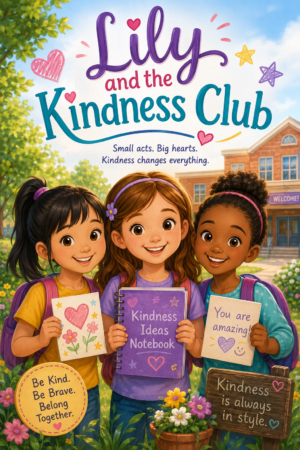
Lily
Lily’s stories can reinforce:
- Kindness
- Courage
- Safe helping
- Responsibility
- Community involvement
- Caring for animals
Her experiences can support the expectation:
Be helpful, but always be safe.
Students can learn that sometimes the responsible choice is asking an adult for assistance.
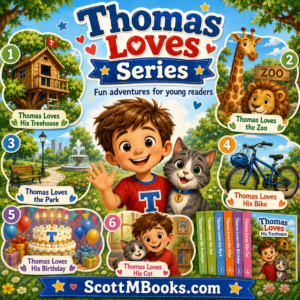
Thomas
Thomas’s stories can help teach:
- Perseverance
- Patience
- Responsibility
- Honesty
- Learning from mistakes
A classroom connection might be:
Keep trying when learning feels difficult.
Thomas can help students understand that making mistakes is part of learning.
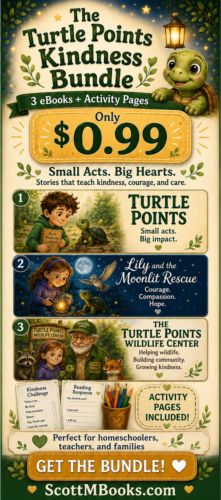
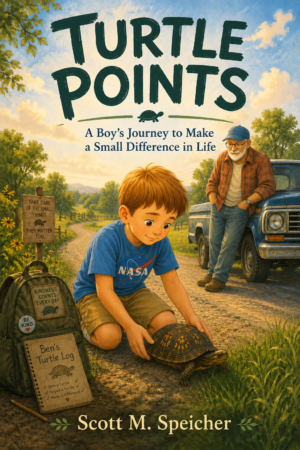
Ben and Turtle Points
Ben and the Turtle Points concept can reinforce:
- Small acts of kindness
- Helping without being asked
- Responsibility
- Caring for the community
Students can learn that positive classroom behavior is often made up of small choices repeated throughout the day.
Create Character Expectation Cards
After reading, create simple cards with a character on one side and an expectation on the other.
Examples:
Sally — Include Others
Lily — Help Safely
Thomas — Keep Trying
Ben — Small Acts Matter
Display the cards near the classroom library, morning meeting area, or behavior chart.
When a situation occurs, the teacher can point to the appropriate card rather than giving a lengthy reminder.
Use Role-Playing
Stories provide excellent situations for role-playing.
After reading, choose a scene and ask students to act it out.
Then change one part.
For example:
Scenario
A student is sitting alone during recess.
Students can role-play:
- Ignoring the child
- Inviting the child to play
- Asking whether the child is okay
- Getting an adult if the child seems upset
Afterward, discuss which response best matches classroom expectations.
Other role-play situations might include:
- Two students want the same book.
- Someone accidentally breaks a pencil.
- A student interrupts during group time.
- A child is nervous about asking for help.
- Someone makes a mistake during a game.
- A classmate forgets a classroom rule.
Role-playing gives children practice before they face the situation themselves.
Turn Expectations Into Reading Questions
Classroom behavior lessons can also strengthen comprehension.
After reading, ask:
- Which expectation did the character follow?
- Which expectation was difficult for the character?
- What choice caused the problem?
- How did the character solve it?
- What consequence followed?
- How did another character feel?
- What did the character learn?
These questions require students to analyze the plot while thinking about behavior.
Use Character Traits
Character traits are another natural connection.
Students might describe a character as:
- Kind
- Helpful
- Honest
- Responsible
- Patient
- Courageous
- Respectful
- Determined
Ask students to provide evidence.
For example:
“I think Lily is responsible because she asked an adult for help instead of trying to solve the dangerous problem alone.”
This teaches children to support ideas with evidence while reinforcing positive traits.
Create a Classroom Character Challenge
Choose one expectation for the week.
For example:
Kindness Week
Challenge students to:
- Invite someone to participate
- Give a sincere compliment
- Help clean up
- Share appropriately
- Thank someone
Responsibility Week
Students might:
- Keep track of materials
- Complete classroom jobs
- Return books properly
- Follow directions the first time
- Admit mistakes honestly
At the end of the week, discuss how the behaviors affected the classroom.
Students can write or draw one example.
Use Activity Pages
Printable Activity Pages can extend the lesson after the story ends.
Useful activities include:
- Character Traits Pages
- Feelings and Choices Pages
- Story Sequencing
- Cause and Effect
- Main Idea and Lesson
- Compare and Contrast
- Kindness Challenges
- Responsibility Charts
- Writing Prompts
- Book Review Pages
For example, after reading a story about inclusion, children might complete a Feelings and Choices Page asking:
- How did the character feel?
- What choice was made?
- Was the choice helpful?
- What would you do?
This provides a written connection between reading and classroom expectations.
Create a Classroom Promise
After reading several character-based stories, invite students to create a classroom promise.
It might say:
Our Classroom Promise
We will:
- Be kind.
- Include others.
- Listen carefully.
- Take responsibility.
- Ask for help when we need it.
- Keep trying.
- Treat people and materials with respect.
- Make safe choices.
Students can sign the promise or add a drawing.
Because the expectations were developed through stories and discussion, they are likely to feel more meaningful than a list of rules posted on the first day.
Reinforce Positive Examples
When students demonstrate an expectation, connect their behavior to the stories.
You might say:
“That reminded me of the way Sally noticed someone needed a friend.”
Or:
“You kept working even though that problem was difficult. That is the same kind of perseverance we discussed in Thomas’s story.”
This connects classroom behavior with previously learned concepts without turning every moment into a lecture.
Keep Expectations Positive
Whenever possible, describe what students should do rather than only what they should avoid.
Instead of:
“Don’t interrupt.”
Use:
“Listen while someone else is speaking.”
Instead of:
“Don’t leave a mess.”
Use:
“Take care of our classroom.”
Instead of:
“Don’t exclude people.”
Use:
“Make room for everyone.”
Positive language gives children a clearer action to follow.
A Simple Story-Based Classroom Lesson
Here is an easy lesson that can be used with almost any children’s book.
Step 1: Introduce the Expectation
Tell students:
“Today we are going to look for examples of responsibility.”
Step 2: Read the Story
Pause when a character faces an important decision.
Step 3: Discuss the Choice
Ask:
- What happened?
- What could the character do?
- Which choice would be responsible?
Step 4: Finish the Story
Discuss the result.
Step 5: Connect It to the Classroom
Ask:
“What does responsibility look like in our classroom?”
Create a short list.
Step 6: Complete an Activity
Students draw or write one responsible classroom action.
Step 7: Practice
Challenge students to demonstrate that expectation during the day.
This approach combines literacy instruction, discussion, character education, and classroom management in one lesson.
Stories Help Build Classroom Community
Classroom expectations are most effective when children understand why they matter.
Listening helps everyone learn.
Responsibility keeps the classroom organized.
Kindness helps people feel safe and welcome.
Inclusion builds friendships.
Honesty creates trust.
Perseverance helps students grow.
Children’s books can demonstrate these ideas in ways that simple rule lists often cannot. Through characters, students can explore decisions, feelings, mistakes, consequences, and better choices.
At ScottMBooks.com, stories and Activity Pages can help teachers, homeschool parents, and families use reading to reinforce kindness, courage, responsibility, friendship, empathy, inclusion, perseverance, and thoughtful decision-making.
When children see positive expectations modeled through memorable characters, classroom rules become more than words on a wall. They become behaviors students can recognize, discuss, practice, and eventually make part of their everyday lives.