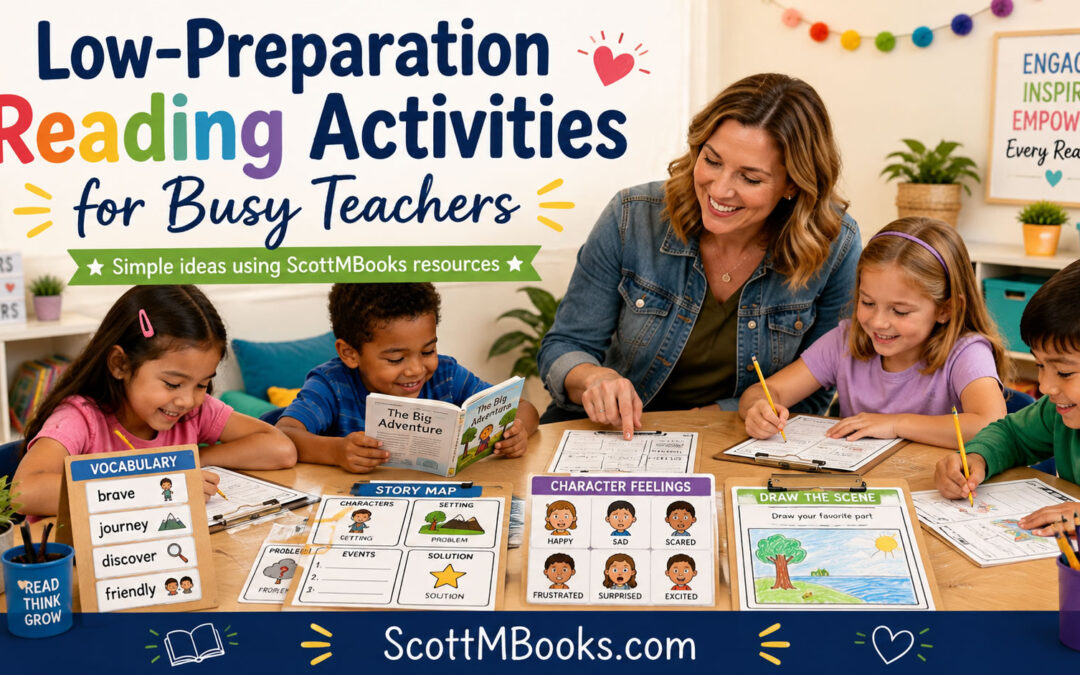
Low-Preparation Reading Activities for Busy Teachers
Teachers know meaningful reading instruction doesn’t always require a complicated lesson plan. Some of the most effective literacy activities are simple, flexible, and easy to use with almost any children’s book.
When time is limited, low-preparation reading activities can help students practice comprehension, vocabulary, writing, sequencing, critical thinking, and character development without adding hours of planning to a teacher’s workload.
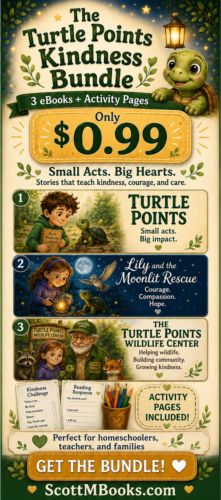
That is one of the goals behind ScottMBooks.com—to provide teachers with stories and ready-to-use reading activities that can fit naturally into the school day.
Whether you need a quick literacy-center activity, an early-finisher assignment, a substitute-teacher lesson, or a follow-up after a read-aloud, these ideas can help.
1. Beginning, Middle, and End
One of the easiest ways to reinforce comprehension is to ask students to retell a story in three parts.
Give students a sheet of paper divided into:
Beginning
Middle
End
Students can write one or two sentences in each section or draw a picture and add a short caption.
For younger students, prompts can be as simple as:
- What happened first?
- What happened next?
- How did the story end?
This activity helps students identify important events without requiring a complicated worksheet or lengthy instructions.
2. Character Feelings Check
Characters give students a natural way to practice comprehension and social-emotional learning at the same time.
Ask students to choose one important moment in the story and answer:
How did the character feel?
What happened that caused that feeling?
Did the character’s feelings change later?
Students can circle feeling words, draw an expression, or write a sentence.
For example:
The character felt worried because something important was missing.
This activity works especially well with stories in which characters face everyday problems, make choices, or learn from mistakes.
3. Draw the Scene
For a quick creative response, ask students to draw their favorite scene or an important moment from the story.
Under the picture, students complete:
My picture shows __________________________.
Older or more advanced students can add:
This scene is important because __________________________.
Drawing gives students another way to show comprehension, which can be especially helpful for younger readers or students still developing writing confidence.
4. Problem and Solution
Most children’s stories include a problem that a character must solve.
After reading, ask students to complete three simple prompts:
The Problem:
What went wrong?
What the Character Did:
How did the character respond?
The Solution:
How was the problem solved?
You can also ask:
Was it a good solution? Why?
This activity encourages students to think about both story structure and decision-making.
5. Three Vocabulary Words
Vocabulary practice does not need to involve a long word list.
Choose just three interesting words from the story.
For each word, students can:
- Write the word.
- Explain what it means.
- Use it in a sentence.
- Draw a small picture showing its meaning.
A three-word vocabulary activity can be completed quickly while still giving students meaningful practice with new language.
6. Character Trait + Evidence
Write several character traits on the board:
kind • patient • brave • responsible • helpful • determined • thoughtful
Ask students to choose one that describes the main character.
Then they complete:
The character is __________________ because __________________.
The second part of the sentence is important because it encourages students to support an idea with evidence from the story.
For example:
Mia is determined because she keeps searching for her lunchbox even when her first plan does not work.
That simple sentence combines comprehension, character analysis, and evidence-based thinking.
7. What Would You Do?
Choose one problem or decision from the book and ask students:
What would you do if you were the character?
Then have them explain why.
A simple response format is:
I would __________________ because __________________.
This can lead to thoughtful discussions about friendship, responsibility, patience, courage, honesty, inclusion, or kindness.
It also helps children connect literature with situations they may experience in their own lives.
8. Cause and Effect
Ask students to identify one important action and what happened because of it.
Use:
Cause: __________________________
Effect: _________________________
For younger students, provide the cause and ask them to finish the effect.
For example:
Cause: The character asked a teacher for help.
Effect: __________________________
Cause-and-effect practice helps students understand that characters’ choices often influence what happens next.
9. Write One Good Question
Instead of always giving students the questions, let them create one.
After reading, ask:
What is one question you would ask another student about this story?
Students might write:
- Why did the character make that choice?
- What was the main problem?
- How did the character feel?
- What lesson did the story teach?
- What would you have done differently?
Students can exchange questions with a partner and answer each other’s.
This requires almost no teacher preparation and encourages deeper thinking.
10. One-Sentence Story Lesson
Ask students:
What lesson does this story teach?
Then have them complete:
This story teaches us that __________________________.
Possible answers might involve:
- Kindness
- Responsibility
- Courage
- Patience
- Friendship
- Honesty
- Asking for help
- Including others
- Learning from mistakes
This is a simple way to connect reading comprehension with character education.
11. Quick Book Review
A book review can be completed in just a few minutes.
Students answer:
My Rating: ★★★★★
My Favorite Part: ______________________________
I Learned: ____________________________________
I Would / Would Not Recommend This Book Because:
Book reviews encourage students to form opinions and support them with reasons.
They can also help teachers quickly see how students responded to a story.
12. Turn-and-Talk Questions
Not every reading response needs to be written.
After a read-aloud, give students a question and allow them to discuss it with a partner.
Try:
- What was the biggest problem?
- Which character made the best choice?
- What surprised you?
- What was the most important part?
- What lesson did you learn?
- What would you change about the story?
A short partner discussion can strengthen speaking, listening, comprehension, and confidence without requiring any additional materials.
Create a Reusable Reading Activity Folder
One of the easiest ways to reduce preparation time is to create a folder of activities that work with many different books.
Include pages such as:
- Before You Read
- Story Comprehension
- Character Feelings
- Sequence the Story
- Main Idea and Story Lesson
- Vocabulary Builder
- Character Traits
- Problem and Solution
- Draw the Scene
- Cause and Effect
- Story Map
- Book Review
- Reading Response
Once the folder is prepared, you can choose the activity that best fits the book and your lesson objective.
There is no need to reinvent the reading lesson every week.
Use One Story for Several Days
A single children’s book can also become an easy literacy mini-unit.
Monday: Read the story and discuss it.
Tuesday: Complete a comprehension activity.
Wednesday: Work on vocabulary or character traits.
Thursday: Complete a writing or drawing response.
Friday: Discuss the story lesson and complete a book review.
This approach reduces lesson preparation while giving students repeated opportunities to think about the same text in different ways.
How ScottMBooks Can Help
ScottMBooks.com is designed to give teachers additional stories and reading activities that can be used for classroom instruction, literacy centers, independent practice, enrichment, substitute plans, or homework.
Resources can support skills such as:
Reading Comprehension • Vocabulary • Sequencing • Character Analysis • Main Idea • Problem and Solution • Cause and Effect • Writing • Creativity • Character Education
Stories can also introduce conversations about kindness, responsibility, patience, courage, friendship, inclusion, helping others, and making thoughtful choices.
Teachers can choose the activities that fit their students rather than feeling obligated to complete every page.
That flexibility is especially useful in busy classrooms.
Good Reading Instruction Does Not Have to Be Complicated
Low-preparation does not mean low-value.
A thoughtful question, a short writing prompt, a simple drawing activity, or a five-minute discussion can give students meaningful practice with reading skills.
The goal is not to create the most complicated lesson.
The goal is to help students:
Read carefully.
Think about what they read.
Explain their ideas.
Make connections.
Learn from the story.
With a good book, a few reusable activities, and resources from ScottMBooks.com, teachers can create meaningful reading experiences without adding unnecessary preparation to an already full schedule.
Simple activities. Meaningful reading. More time for teaching.